

The marketing landscape has transformed dramatically. What began as cautious experimentation with AI tools in 2025 has evolved into something far more powerful in 2026. AI as Every Marketer’s Copilot: Building and Optimizing Campaigns at Scale in 2026 represents a fundamental shift in how marketing teams operate, moving from manual campaign management to intelligent, autonomous systems that analyze, predict, and optimize in real time.
Marketing professionals no longer view AI as just another tool in their tech stack. Instead, AI has become an indispensable copilot—a strategic partner that handles complex data analysis, generates personalized customer journeys, and continuously refines campaigns across multiple channels. This evolution enables even lean marketing teams to compete with enterprise-level operations, delivering sophisticated, data-driven experiences that were previously impossible to achieve at scale.
Key Takeaways
- AI has matured from experimental tool to essential copilot that autonomously analyzes customer data, builds personalized workflows, and optimizes campaigns in real time across all marketing channels
- Autonomous campaign orchestration now enables self-optimizing systems that plan, execute, and adjust marketing strategies without constant human intervention while maintaining brand consistency
- First-party and zero-party data integration powers predictive analytics that forecast customer intent, reduce churn, and deliver truly personalized one-to-one communication at scale
- Privacy-compliant automation has become a competitive advantage, with successful brands using AI to deliver value with explicit customer consent while navigating stricter regulations
- Practical implementation requires training AI on brand tone, integrating copilot systems into existing funnels, and establishing clear workflows that keep humans in strategic control
The Evolution from AI Tool to Marketing Copilot
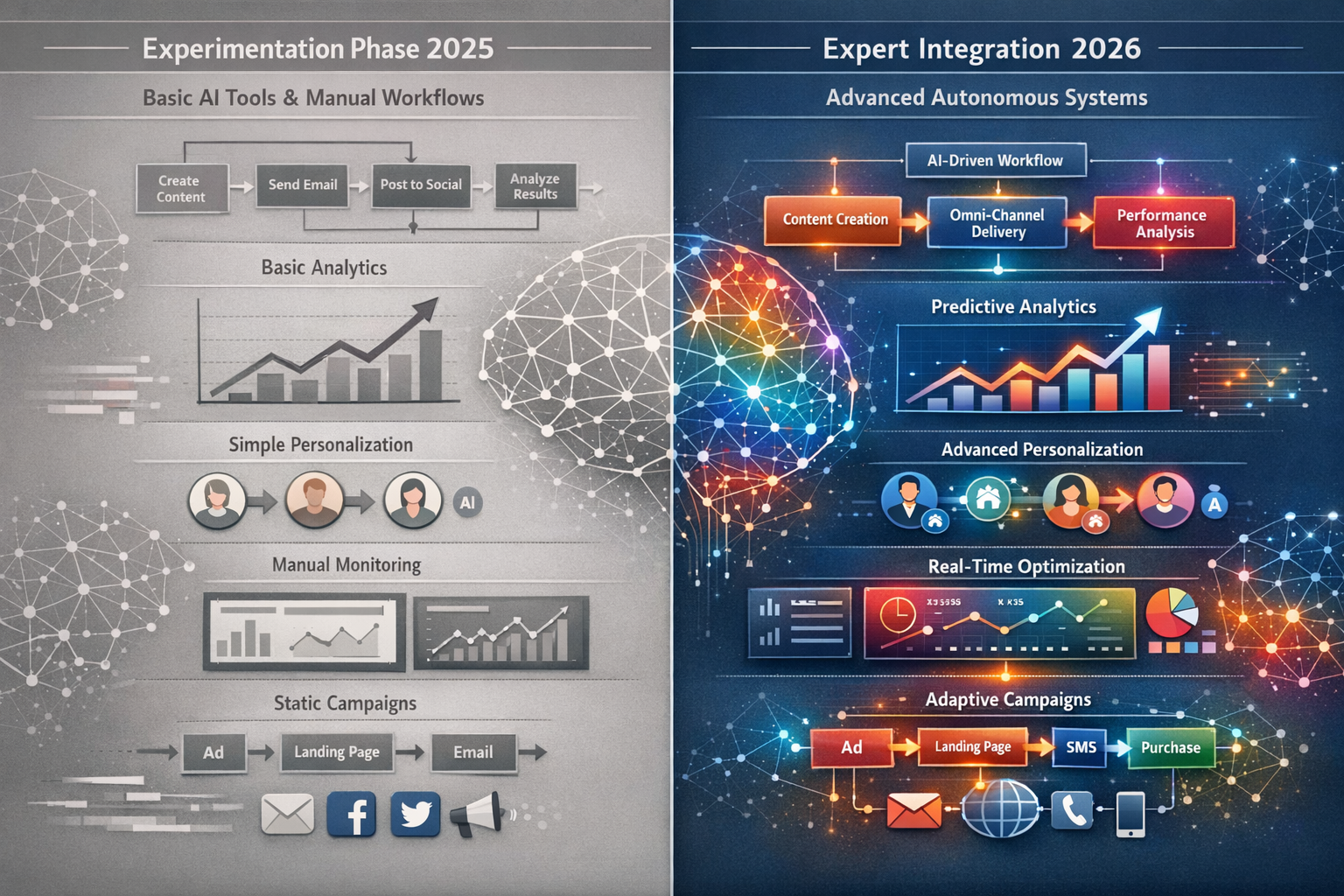
The transition from 2025 to 2026 marks a pivotal moment in marketing technology. While 2025 was characterized by marketers experimenting with AI as a creative shortcut—using it to generate ad copy or create social media posts—2026 has ushered in the era of true expertise and integration[1].
What Makes AI a True Copilot?
A marketing copilot differs fundamentally from basic AI tools. Rather than simply executing commands, AI copilots actively participate in strategic decision-making. They analyze vast amounts of customer data, identify patterns invisible to human marketers, and recommend specific actions based on predictive insights[2].
Modern AI copilots can:
✅ Rapidly build workflow sequences that adapt to customer behavior
✅ Test multiple campaign variations simultaneously across channels
✅ Personalize messaging for individual customers at scale
✅ Analyze performance metrics and suggest improvements automatically
✅ Predict customer intent before they take action
The key distinction is that copilots augment rather than replace human marketers. They accelerate tasks, provide data-driven recommendations, and handle repetitive optimization work while keeping strategic decisions in human hands[1].
The Maturation Timeline
Understanding how we arrived at this point helps marketers leverage AI copilot capabilities more effectively:
| Phase | Timeline | Characteristics |
|---|---|---|
| Experimentation | 2023-2024 | Basic content generation, simple automation |
| Integration | 2025 | Testing AI across workflows, learning limitations |
| Expertise | 2026 | Full copilot deployment, autonomous optimization |
| Mastery | 2027+ | Predictive strategy, complete channel orchestration |
This progression shows that AI as Every Marketer’s Copilot: Building and Optimizing Campaigns at Scale in 2026 isn’t just about adopting new technology—it’s about fundamentally reimagining how marketing operations function. For those looking to understand the broader context of digital marketing evolution, exploring the difference between affiliate marketing and digital marketing provides valuable perspective on how specialized strategies integrate with AI-powered approaches.
Autonomous Campaign Orchestration: Self-Optimizing Marketing Systems
The most significant advancement in AI as Every Marketer’s Copilot: Building and Optimizing Campaigns at Scale in 2026 is the shift from scheduled workflows to autonomous campaign orchestration. Marketing automation has evolved beyond simple trigger-based sequences into intelligent systems that plan, execute, and continuously refine campaigns across multiple channels[1].
From Scheduled Workflows to Intelligent Orchestration
Traditional marketing automation relied on predetermined rules: “If customer opens email, wait 2 days, then send follow-up.” These rigid workflows couldn’t adapt to changing customer behavior or market conditions.
Autonomous orchestration changes everything. AI copilots now analyze real-time customer interactions, competitive landscape shifts, and performance data to make dynamic adjustments without human intervention[3]. The system doesn’t just trigger messages—it generates and evolves them based on brand tone, customer context, and predicted response patterns[1].
How Self-Optimizing Systems Work
Modern AI copilots orchestrate campaigns through several interconnected capabilities:
1. Real-Time Performance Analysis
The system continuously monitors every touchpoint—email opens, website visits, social engagement, purchase behavior—and identifies patterns that indicate intent or disengagement[2].
2. Predictive Behavioral Modeling
Using historical data alongside current behaviors, AI copilots forecast what customers are likely to do next. This enables proactive campaign adjustments rather than reactive responses[2].
3. Automated Content Generation
Instead of selecting from pre-written templates, AI copilots generate messaging that adapts to individual customer contexts while maintaining consistent brand voice[1].
4. Cross-Channel Coordination
The copilot ensures message consistency across email, social media, paid advertising, and website personalization, creating cohesive customer experiences[3].
Practical Implementation for Campaign Building
For marketers ready to implement autonomous orchestration, the process involves several key steps:
Step 1: Define Brand Parameters
Train your AI copilot on brand voice, messaging guidelines, and value propositions. This ensures generated content maintains consistency even when personalized[1].
Step 2: Establish Performance Benchmarks
Set clear KPIs for the copilot to optimize against—conversion rates, customer lifetime value, engagement metrics, or revenue targets[2].
Step 3: Create Feedback Loops
Implement systems where campaign performance data automatically feeds back into the AI model, enabling continuous learning and improvement[3].
Step 4: Set Guardrails
Define boundaries for autonomous decision-making. Specify which changes the copilot can make independently and which require human approval.
This approach to search engine optimization techniques and campaign management enables even small teams to operate with enterprise-level sophistication.
Predictive Analytics and Behavioral Intelligence at Scale
One of the most powerful aspects of AI as Every Marketer’s Copilot: Building and Optimizing Campaigns at Scale in 2026 is the integration of predictive analytics into everyday marketing operations. AI systems now spot trends and gaps in customer retention cycles that would take human analysts weeks to identify[1].
Understanding Predictive Behavioral Analysis
Predictive analytics uses historical customer data combined with real-time behavioral signals to forecast future actions with remarkable accuracy[2]. This capability transforms how marketers approach customer retention, acquisition, and lifecycle management.
Key predictive capabilities include:
🔮 Intent Forecasting – Identifying customers likely to purchase within specific timeframes
🔮 Churn Risk Detection – Spotting early warning signs of customer disengagement
🔮 Lifetime Value Prediction – Calculating expected revenue from customer segments
🔮 Optimal Timing Analysis – Determining the best moments to send messages
🔮 Channel Preference Modeling – Predicting which communication channels customers prefer
Automated Trigger and Messaging Recommendations
Rather than marketers manually designing every customer journey, AI copilots now analyze behavior patterns and automatically recommend triggers, delays, and messaging angles[1]. This enables sophisticated retention work at scale while maintaining the intimate, personalized feel of one-to-one communication.
For example, an AI copilot might detect that customers who view a specific product category three times within a week have a 73% conversion probability if contacted within 24 hours via email with a limited-time offer. The system then automatically creates and deploys that campaign without human intervention.
Real-Time Data Collection and Iteration
The power of predictive analytics depends on continuous data flow. Modern marketing copilots integrate with multiple data sources to maintain current customer profiles[2]:
- Website behavior tracking (pages viewed, time spent, scroll depth)
- Email engagement metrics (opens, clicks, forwards)
- Purchase history and cart abandonment patterns
- Social media interactions and sentiment
- Customer service inquiries and resolution outcomes
- Preference center data and zero-party information
This comprehensive data collection enables marketers to experiment, iterate, and refine strategies based on actual performance rather than assumptions[2]. For those building affiliate marketing funnels, integrating predictive analytics can dramatically improve conversion rates by identifying high-intent prospects.
Segmentation Beyond Demographics
Traditional segmentation relied on basic demographics—age, location, income level. AI copilots create dynamic behavioral segments that update in real time based on actions and predicted intent[2].
These segments might include:
- High-intent browsers who haven’t purchased yet
- Loyal customers at risk of churn
- One-time buyers with high lifetime value potential
- Engaged subscribers ready for premium offers
- Dormant customers responsive to reactivation campaigns
Each segment receives tailored messaging and offers optimized for their specific behavioral profile and predicted next action.
Achieving True One-to-One Personalization at Scale
Perhaps the most transformative promise of AI as Every Marketer’s Copilot: Building and Optimizing Campaigns at Scale in 2026 is the ability to deliver genuinely personalized experiences to every customer simultaneously. This represents the holy grail of marketing—making each customer feel like the brand is speaking directly to them, understanding their unique needs and preferences[1].
The Shift from Segmentation to Individualization
While behavioral segmentation represents a significant advancement, true one-to-one personalization goes further. AI copilots now take the full context of a customer’s relationship with the brand—every interaction, purchase, support inquiry, and preference—and generate messaging that feels handcrafted for that individual[1].
Every touchpoint becomes a live conversation rather than a scheduled broadcast. Instead of sending the same “abandoned cart” email to thousands of customers, the AI copilot creates unique messages that reference specific products viewed, acknowledge browsing patterns, and suggest complementary items based on individual preferences.
First-Party and Zero-Party Data as Foundation
The most successful marketing strategies in 2026 aggregate insights from two critical data sources[2]:
First-Party Data – Information gathered from owned properties like websites, apps, email interactions, and purchase histories. This data reveals what customers do.
Zero-Party Data – Information customers willingly share through quizzes, preference centers, surveys, and profile updates. This data reveals what customers want and value.
The combination creates unprecedented insight. For example, first-party data might show that a customer frequently browses athletic wear, while zero-party data from a style quiz reveals they prefer sustainable materials and minimalist designs. The AI copilot uses both to recommend eco-friendly, simple athletic pieces.
Privacy-Compliant Personalization
With stricter privacy regulations and rising consumer awareness, compliant automation has become a competitive advantage[1]. The winning brands in 2026 are those that use automation to deliver value with explicit consent.
Best practices for privacy-compliant personalization:
✓ Transparent data collection – Clearly explain what data is collected and how it’s used
✓ Value exchange – Provide immediate benefits when customers share preferences
✓ Easy opt-out mechanisms – Make it simple to adjust privacy settings
✓ Consent-based personalization – Only use data customers have explicitly agreed to share
✓ Regular preference updates – Allow customers to refine their preferences over time
This approach not only ensures regulatory compliance but also builds trust that strengthens customer relationships. Marketers exploring AI marketing tools and platforms should prioritize solutions with built-in privacy compliance features.
Owned Identification Strategy
With rising customer acquisition costs and the disappearance of third-party cookies, owned identification has become the cornerstone of cross-channel personalization[1]. Brands are shifting focus from tracking anonymous visitors to building direct relationships with identified customers.
Owned identification strategies include:
- Interactive quizzes that provide personalized recommendations in exchange for preferences
- Preference centers where customers control their communication settings
- Account creation incentives that offer exclusive benefits
- Progressive profiling that gradually builds customer profiles over time
- Value-driven data requests that clearly explain personalization benefits
The smartest brands activate this data across the entire funnel to drive conversions, creating seamless experiences from first touch to loyal advocacy[1].
Training Your AI Copilot on Brand Voice and Strategy
Successfully implementing AI as Every Marketer’s Copilot: Building and Optimizing Campaigns at Scale in 2026 requires more than just deploying technology—it demands intentional training to ensure the AI understands and maintains brand identity across all automated touchpoints.
Establishing Brand Parameters
AI copilots need clear guidelines to generate content that aligns with brand voice, values, and positioning. This training process involves several key elements:
1. Voice and Tone Documentation
Create comprehensive guidelines that define how the brand communicates across different contexts—formal vs. casual, technical vs. accessible, enthusiastic vs. measured[4].
2. Messaging Frameworks
Provide the AI with core value propositions, key differentiators, and messaging pillars that should appear consistently across campaigns[4].
3. Example Library
Feed the copilot high-performing content examples that exemplify the desired brand voice, from email subject lines to social media posts to landing page copy[3].
4. Boundary Definitions
Specify what the brand never says or does—topics to avoid, language that’s off-brand, claims that overstate capabilities[4].
Iterative Refinement Process
Training an AI copilot isn’t a one-time setup—it’s an ongoing refinement process:
Week 1-2: Initial Training
Upload brand guidelines, example content, and strategic frameworks. Run test campaigns with human review of all AI-generated content.
Week 3-4: Supervised Deployment
Allow the copilot to generate content for small segments while marketers review and approve before sending. Provide feedback on what works and what needs adjustment.
Month 2-3: Expanded Autonomy
Gradually increase the copilot’s autonomous decision-making authority as it demonstrates consistent brand alignment. Continue spot-checking generated content.
Month 4+: Full Deployment with Monitoring
Enable autonomous campaign generation and optimization while maintaining oversight dashboards that flag anomalies for human review.
Integration with Affiliate Marketing Funnels
For affiliate marketers, AI copilots offer particular advantages in optimizing conversion funnels. The key is training the AI to understand the unique dynamics of affiliate relationships and commission-driven outcomes.
Affiliate-specific training includes:
- Product positioning for various merchant partners
- Disclosure requirements and compliance language
- Value proposition emphasis that drives clicks and conversions
- Audience segmentation based on product interest and purchase intent
- Commission optimization that prioritizes high-value offers
Those working in affiliate marketing can leverage AI copilots to test multiple product angles simultaneously, automatically optimizing for conversion rates and commission earnings. The copilot can analyze which product presentations resonate with specific audience segments and adjust messaging accordingly.
Quality Control and Human Oversight
Even with advanced AI capabilities, human oversight remains essential. Establish clear workflows that define when human review is required:
Automatic Approval:
- Routine email sequences to engaged subscribers
- Retargeting messages to previous customers
- Standard product recommendations based on browsing behavior
Human Review Required:
- New campaign concepts or messaging angles
- Sensitive topics or crisis communications
- High-value customer segments or VIP communications
- Significant budget allocations or strategic pivots
This balanced approach ensures efficiency while maintaining brand integrity and strategic alignment.
Practical Implementation: Getting Started with AI Copilot Marketing
Transitioning to AI as Every Marketer’s Copilot: Building and Optimizing Campaigns at Scale in 2026 doesn’t require a complete marketing overhaul. Strategic, phased implementation allows teams to build expertise while demonstrating ROI.
Phase 1: Foundation Building (Weeks 1-4)
Audit Current Marketing Operations
Document existing workflows, campaign types, performance metrics, and pain points. Identify repetitive tasks that consume significant time but don’t require strategic thinking.
Select Initial Use Cases
Choose 2-3 specific applications where AI copilot capabilities can deliver immediate value:
- Email sequence optimization
- Social media content scheduling and variation testing
- Landing page personalization
- Predictive lead scoring
Choose the Right Platform
Evaluate AI marketing platforms based on integration capabilities with existing tools, ease of use, training requirements, and scalability. Many marketers find success with platforms that offer AI-powered automation features specifically designed for their industry.
Establish Success Metrics
Define clear KPIs for measuring AI copilot impact:
- Time saved on campaign creation
- Conversion rate improvements
- Revenue per campaign
- Customer engagement metrics
- Cost per acquisition reductions
Phase 2: Pilot Programs (Months 2-3)
Launch Limited Campaigns
Deploy AI copilot capabilities for specific customer segments or campaign types. Start with lower-risk applications where mistakes won’t significantly impact revenue.
Collect Performance Data
Track detailed metrics on AI-generated campaigns versus human-created baselines. Document time savings, performance differences, and unexpected outcomes.
Refine Training and Parameters
Use pilot results to adjust brand voice training, optimization parameters, and autonomous decision-making boundaries.
Expand Team Capabilities
Train marketing team members on copilot interaction, prompt engineering, and performance analysis. Build internal expertise that enables broader deployment.
Phase 3: Scaled Deployment (Months 4-6)
Expand to Additional Channels
Extend AI copilot capabilities across email, social media, paid advertising, website personalization, and content marketing.
Implement Cross-Channel Orchestration
Enable the copilot to coordinate messaging across touchpoints, ensuring consistent customer experiences regardless of channel.
Activate Advanced Features
Deploy predictive analytics, behavioral segmentation, and autonomous optimization across the full customer lifecycle.
Optimize for Specific Goals
Fine-tune copilot parameters for different objectives—acquisition campaigns prioritize reach and conversion, retention campaigns focus on engagement and lifetime value.
Efficiency Gains for Lean Teams
One of the most compelling aspects of AI copilot marketing is how it empowers small teams to compete with enterprise operations. A one-person marketing department can now ask AI Marketing Agents to analyze workflow performance and make adjustments based on results—tasks that previously required entire teams[1].
Time savings typically include:
⏰ Campaign creation: 75% reduction in time from concept to launch
⏰ A/B testing: Automated variation generation and performance analysis
⏰ Reporting: Real-time dashboards replace manual report compilation
⏰ Optimization: Continuous adjustment eliminates periodic manual reviews
⏰ Personalization: Automated individual messaging replaces segment-based campaigns
These efficiency gains allow marketers to focus on strategy, creative direction, and customer relationship building rather than execution mechanics. For those managing affiliate marketing programs, this means more time for partner relationship development and strategic offer selection.
Overcoming Common Implementation Challenges
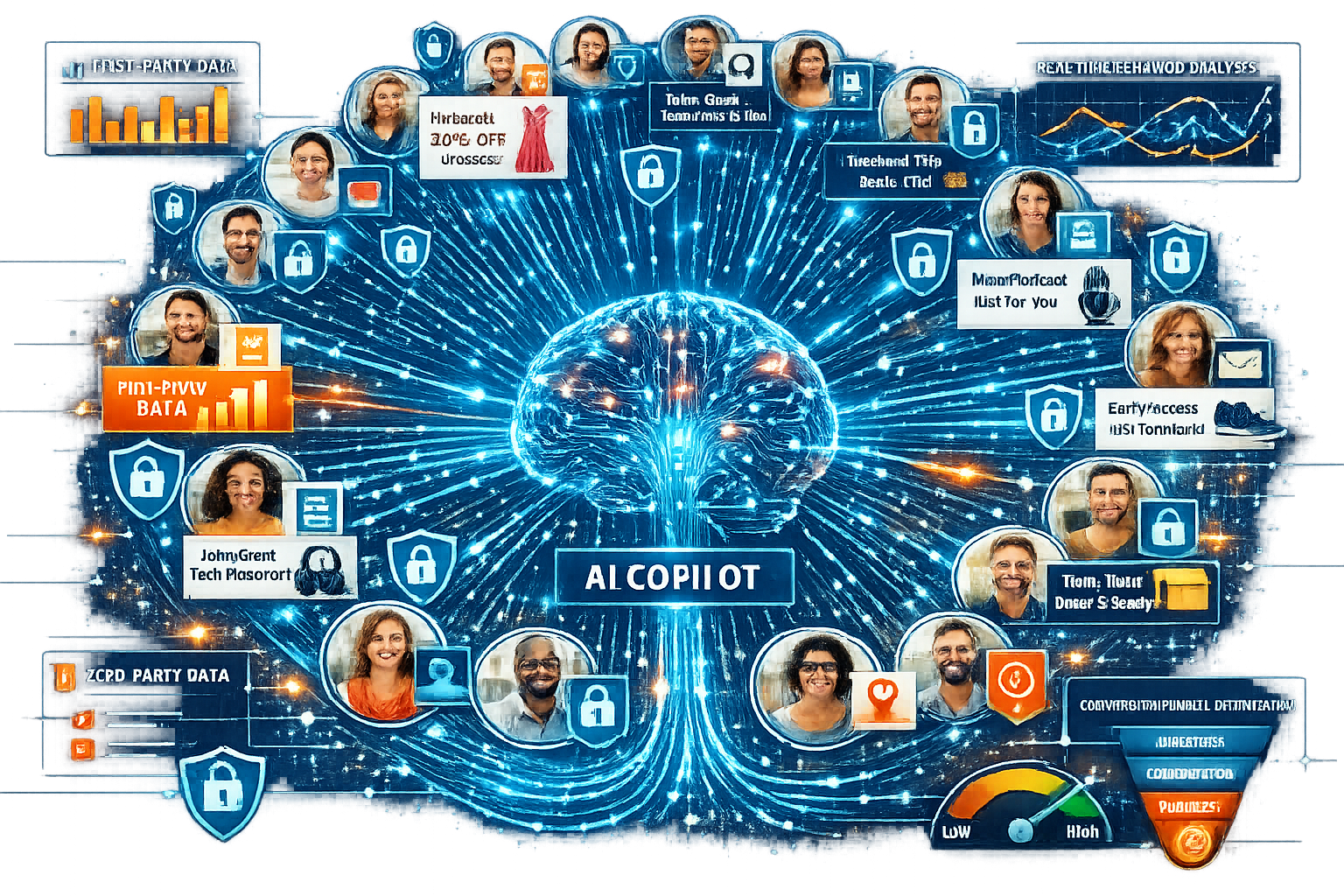
While AI as Every Marketer’s Copilot: Building and Optimizing Campaigns at Scale in 2026 offers tremendous potential, implementation isn’t without obstacles. Understanding common challenges and solutions helps ensure successful deployment.
Challenge 1: Data Quality and Integration
Problem: AI copilots require clean, integrated data to function effectively. Many organizations struggle with siloed data across multiple platforms, incomplete customer profiles, and inconsistent data formats[3].
Solution:
- Conduct data audit to identify gaps and inconsistencies
- Implement customer data platform (CDP) that unifies information from all sources
- Establish data governance policies for consistent collection and formatting
- Prioritize first-party data collection through owned channels
- Use AI-powered data cleaning tools to standardize existing information
Challenge 2: Brand Voice Consistency
Problem: AI-generated content sometimes lacks the nuance and personality that defines brand identity, resulting in generic or off-brand messaging[4].
Solution:
- Invest time in comprehensive brand voice training with extensive examples
- Create detailed style guides that cover tone, vocabulary, and messaging frameworks
- Implement human review workflows for new content types
- Use feedback loops to continuously refine AI understanding
- Maintain a library of approved content the AI can reference
Challenge 3: Team Resistance and Skill Gaps
Problem: Marketing teams may resist AI adoption due to job security concerns or feel overwhelmed by new technology requirements[5].
Solution:
- Frame AI as augmentation rather than replacement
- Provide comprehensive training on copilot interaction and optimization
- Start with pilot programs that demonstrate value without disrupting workflows
- Celebrate early wins and share success stories
- Develop clear career paths that incorporate AI expertise
Challenge 4: Privacy Compliance Complexity
Problem: Navigating privacy regulations while implementing personalization at scale requires careful attention to consent management and data usage[1].
Solution:
- Build privacy compliance into copilot configuration from the start
- Implement transparent data collection with clear value exchange
- Use preference centers that give customers control over personalization
- Regularly audit data usage against consent parameters
- Partner with legal teams to ensure regulatory alignment
Challenge 5: ROI Measurement and Attribution
Problem: Demonstrating clear ROI from AI copilot investment can be difficult when benefits include time savings and incremental improvements across multiple touchpoints[3].
Solution:
- Establish baseline metrics before implementation
- Track both efficiency gains (time saved) and performance improvements (conversion rates)
- Use control groups to compare AI-optimized campaigns against traditional approaches
- Calculate total cost of ownership including time savings and revenue impact
- Document qualitative benefits like improved customer experience and team satisfaction
For marketers facing these challenges while building their programs, exploring resources on overcoming common affiliate marketing obstacles provides additional strategic frameworks applicable to AI implementation.
The Future of Marketing: Dual AI Copilots for Marketing and Service
As AI as Every Marketer’s Copilot: Building and Optimizing Campaigns at Scale in 2026 matures, forward-thinking organizations are already exploring the next evolution: integrated AI copilots that serve both marketing and customer service functions simultaneously[1].
Breaking Down Departmental Silos
Traditionally, marketing and customer service operated in separate systems with limited information sharing. A customer might receive promotional emails about products they just contacted support to complain about—a disconnect that damages relationships and wastes resources.
Integrated AI copilots solve this problem by operating across a unified CRM that captures the complete customer relationship. The same AI system that personalizes marketing messages also understands support history, product issues, and satisfaction levels[1].
Coordinated Customer Experiences
This integration enables unprecedented coordination:
Scenario 1: Support-Informed Marketing
A customer contacts support about a product issue. The AI customer service agent resolves the problem and logs the interaction. The AI marketing copilot automatically pauses promotional emails for that product category and instead sends a satisfaction follow-up. Once the customer confirms resolution, targeted campaigns resume with appropriate messaging.
Scenario 2: Marketing-Informed Service
A customer clicks on an email about a premium product upgrade but doesn’t purchase. When they later contact support with a question, the AI service agent recognizes their interest and can proactively address concerns about the premium features, facilitating conversion.
Scenario 3: Predictive Intervention
The AI detects behavioral patterns indicating dissatisfaction—reduced engagement, browsing competitor sites, negative sentiment in support interactions. Both marketing and service copilots coordinate a retention strategy combining personalized offers with proactive support outreach.
Unified Data, Seamless Experiences
The power of dual copilots comes from shared intelligence. Every interaction—whether marketing engagement or service inquiry—enriches the customer profile and informs future touchpoints across both functions[1].
Benefits include:
🔄 Consistent messaging across all customer interactions
🔄 Reduced customer friction from departmental handoffs
🔄 Improved retention through coordinated experience management
🔄 Higher lifetime value from personalized service and marketing
🔄 Operational efficiency from shared systems and workflows
This represents the ultimate realization of customer-centric marketing—where every touchpoint, regardless of department, contributes to a cohesive relationship that serves customer needs while driving business outcomes.
Measuring Success: KPIs for AI Copilot Marketing
Implementing AI as Every Marketer’s Copilot: Building and Optimizing Campaigns at Scale in 2026 requires clear metrics to evaluate performance and guide optimization. The right KPIs vary based on business goals but generally fall into several key categories.
Efficiency Metrics
These measurements quantify how AI copilots improve marketing operations:
| Metric | Description | Target Improvement |
|---|---|---|
| Campaign Creation Time | Hours from concept to launch | 60-80% reduction |
| Personalization Scale | Number of unique message variations | 10-100x increase |
| Testing Velocity | A/B tests completed per month | 5-10x increase |
| Manual Optimization Hours | Time spent on campaign adjustments | 70-90% reduction |
| Content Production Rate | Marketing assets created per week | 3-5x increase |
Performance Metrics
These measurements track whether AI-optimized campaigns outperform traditional approaches:
Conversion Metrics:
- Conversion rate improvements across funnel stages
- Cost per acquisition (CPA) reductions
- Revenue per campaign increases
- Average order value (AOV) growth
Engagement Metrics:
- Email open and click-through rates
- Website engagement time and page depth
- Social media interaction rates
- Content consumption patterns
Retention Metrics:
- Customer lifetime value (CLTV) improvements
- Churn rate reductions
- Repeat purchase frequency
- Net promoter score (NPS) changes
Predictive Accuracy Metrics
For AI copilots using predictive analytics, measuring forecast accuracy is essential:
- Intent prediction accuracy: Percentage of predicted purchases that occur
- Churn prediction precision: Accuracy of at-risk customer identification
- Optimal timing effectiveness: Conversion rate of AI-timed messages vs. scheduled
- Recommendation relevance: Click-through and conversion rates on AI suggestions
ROI Calculation Framework
Total AI Copilot ROI = (Revenue Impact + Cost Savings) – Total Investment
Revenue Impact:
- Incremental revenue from improved conversion rates
- Increased customer lifetime value from better retention
- New revenue from scaled personalization capabilities
Cost Savings:
- Labor hours saved × average hourly cost
- Reduced agency or freelance expenses
- Lower customer acquisition costs
- Decreased churn-related revenue loss
Total Investment:
- Platform subscription costs
- Implementation and training expenses
- Ongoing optimization and management time
- Integration and maintenance costs
Most organizations implementing AI copilot marketing see positive ROI within 3-6 months, with returns increasing as the system learns and optimizes over time[3].
Conclusion: Embracing Your AI Marketing Copilot
AI as Every Marketer’s Copilot: Building and Optimizing Campaigns at Scale in 2026 represents more than a technological upgrade—it’s a fundamental transformation in how marketing teams operate, compete, and deliver value to customers. The shift from manual campaign management to intelligent, autonomous systems enables unprecedented personalization, efficiency, and performance.
The marketers who thrive in 2026 and beyond won’t be those who resist AI adoption but rather those who embrace it strategically, training their copilots to amplify human creativity and strategic thinking. By combining AI’s analytical power and automation capabilities with human insight, empathy, and brand vision, marketing teams can achieve what was previously impossible: truly personalized relationships with every customer, delivered at scale.
Actionable Next Steps
Ready to implement AI copilot marketing in your organization? Follow these concrete steps:
1. Assess Your Current State
Audit existing marketing workflows, data infrastructure, and team capabilities. Identify the biggest bottlenecks and opportunities for AI enhancement.
2. Start Small and Specific
Choose one high-impact use case—email personalization, predictive lead scoring, or content optimization—and implement a focused pilot program.
3. Invest in Training
Both AI training (brand voice, messaging frameworks) and team training (copilot interaction, prompt engineering) are essential for success.
4. Establish Clear Metrics
Define success criteria before implementation and track both efficiency gains and performance improvements throughout deployment.
5. Build Iteratively
Start with supervised AI assistance, gradually expanding autonomy as the system demonstrates consistent brand alignment and performance.
6. Prioritize Privacy Compliance
Build consent management and transparent data usage into your copilot implementation from day one.
7. Plan for Integration
Consider how AI copilots can eventually coordinate across marketing, service, and other customer-facing functions for seamless experiences.
The future of marketing isn’t human versus machine—it’s human plus machine, working together as copilots to deliver exceptional customer experiences at scale. Those who embrace this partnership position themselves for sustained competitive advantage in an increasingly AI-powered marketplace.
For marketers looking to expand their expertise, exploring comprehensive resources on how to become an affiliate marketer and SEO fundamentals provides the foundational knowledge needed to maximize AI copilot capabilities across all marketing channels.
The copilot era has arrived. The question isn’t whether to adopt AI marketing automation, but how quickly you can implement it effectively to stay competitive in 2026’s rapidly evolving landscape.
References
[1] Marketing Automation Trends – https://www.klaviyo.com/blog/marketing-automation-trends
[2] Personalisation At Scale Ai Marketing Trends For 2026 – https://www.roboticmarketer.com/personalisation-at-scale-ai-marketing-trends-for-2026/
[3] Ai Marketing Automation – https://improvado.io/blog/ai-marketing-automation
[4] Ai Trends In Marketing For 2026 What To Expect – https://www.narrativa.com/ai-trends-in-marketing-for-2026-what-to-expect/
[5] Ai Automation Trends – https://www.redwood.com/article/ai-automation-trends/
