

The affiliate marketing landscape in 2026 has transformed dramatically. Manual processes that once consumed hours of daily work now run automatically through intelligent systems. AI Factory Blueprints: Low-Code Stacks for Affiliate Marketers to Automate End-to-End Funnels represent the cutting edge of this revolution, enabling marketers to build sophisticated automation systems without extensive coding knowledge. These blueprints combine artificial intelligence with low-code platforms to create seamless, self-optimizing marketing machines that generate revenue around the clock.
Key Takeaways
- Low-code AI stacks eliminate technical barriers, allowing affiliate marketers to automate complex funnels without programming expertise
- End-to-end automation covers everything from content creation and lead capture to email sequences and conversion optimization
- AI-powered personalization increases conversion rates by delivering customized experiences to each prospect automatically
- Factory blueprint approach provides replicable systems that can be deployed across multiple affiliate campaigns simultaneously
- 2026 automation tools offer unprecedented integration capabilities, connecting marketing platforms seamlessly with minimal manual setup
Understanding AI Factory Blueprints for Affiliate Marketing Automation
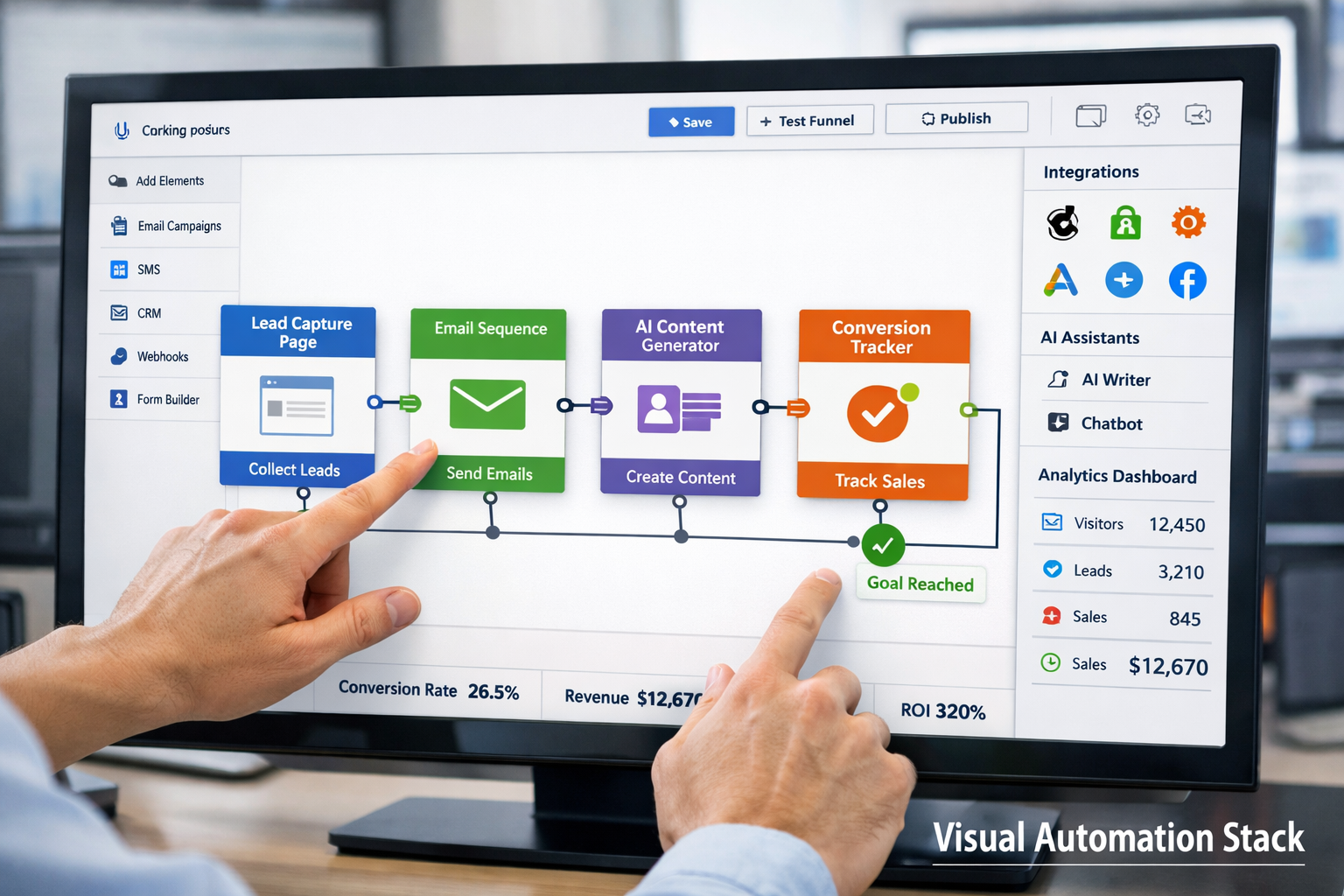
AI Factory Blueprints represent a systematic approach to building automated affiliate marketing systems. Think of them as architectural plans for constructing a digital factory where AI workers handle repetitive tasks while low-code platforms provide the assembly line infrastructure.
What Makes a Blueprint "Factory-Ready"
A true factory blueprint for affiliate marketing includes several critical components:
🔧 Modular Design: Each component (lead capture, content generation, email nurturing, conversion tracking) functions independently but connects seamlessly with others.
🤖 AI Integration Points: Strategic placement of artificial intelligence to handle content creation, personalization, and optimization decisions.
⚡ Automation Triggers: Pre-configured rules that move prospects through the funnel without manual intervention.
📊 Data Flow Architecture: Clear pathways for information to move between systems, enabling real-time personalization and reporting.
The concept draws inspiration from manufacturing principles—creating standardized, repeatable processes that deliver consistent results. For those just starting their affiliate marketing journey, these blueprints provide a proven framework rather than forcing beginners to reinvent the wheel.
The Low-Code Advantage in 2026
Low-code platforms have matured significantly, offering visual builders that replace traditional programming. According to industry analysis, AI tools in 2026 enable marketers to automate tasks that previously required dedicated development teams [2].
Benefits of Low-Code Stacks:
| Feature | Traditional Coding | Low-Code Platforms |
|---|---|---|
| Setup Time | Weeks to months | Hours to days |
| Technical Skill Required | Advanced programming | Basic logic understanding |
| Modification Speed | Slow (requires developer) | Instant (visual editor) |
| Cost | High (developer salaries) | Low (subscription fees) |
| Maintenance | Ongoing technical debt | Platform-managed updates |
This democratization of technology means that understanding what affiliate marketing truly involves no longer requires mastering complex code—just strategic thinking and system design.
Core Components of AI Factory Blueprints: Low-Code Stacks for Affiliate Marketers
Building an effective automated funnel requires assembling the right technology stack. The following components form the foundation of most successful AI factory blueprints in 2026.
Traffic Generation and Lead Capture Layer
The funnel begins with attracting potential customers and capturing their information:
AI-Powered Content Creation: Tools that generate blog posts, social media content, and video scripts tailored to target audiences. These systems analyze trending topics and competitor content to produce material that ranks well and converts visitors [1].
Smart Landing Page Builders: Low-code platforms that create responsive, conversion-optimized pages with A/B testing built in. AI adjusts headlines, images, and calls-to-action based on visitor behavior.
Lead Magnet Automation: Systems that automatically deliver valuable content (ebooks, checklists, mini-courses) in exchange for email addresses, then tag and segment new subscribers based on their interests.
AI-Driven Nurture and Engagement Systems
Once leads enter the system, AI takes over the relationship-building process:
Intelligent Email Sequences: Rather than sending the same emails to everyone, modern systems personalize content based on:
- Opening and clicking behavior
- Time zone and optimal send times
- Previous purchases or interests
- Engagement level and readiness to buy
Chatbot Integration: AI conversational agents that answer questions, recommend products, and guide prospects through the decision-making process 24/7. These bots learn from each interaction, improving their responses over time.
Dynamic Content Personalization: Website content, product recommendations, and promotional offers that change based on individual visitor profiles and behavior patterns.
For marketers wondering whether affiliate marketing can actually generate income, these automation systems dramatically increase conversion rates by delivering the right message at precisely the right moment.
Conversion and Optimization Layer
The final components focus on turning prospects into customers and continuously improving performance:
AI-Powered Analytics: Systems that identify patterns in customer behavior, predict which leads are most likely to convert, and recommend optimization strategies.
Automated Split Testing: Continuous experimentation with different funnel elements, with AI determining winners and automatically implementing improvements.
Attribution Tracking: Sophisticated systems that track customer journeys across multiple touchpoints, ensuring proper credit assignment for affiliate commissions.
Retargeting Automation: Intelligent systems that re-engage prospects who didn't convert initially, using personalized messaging based on their specific objections or hesitations.
Building Your First AI Factory Blueprint: A Practical Framework
Creating an automated affiliate funnel doesn't require starting from scratch. Following these steps helps marketers implement their first blueprint systematically.
Step 1: Define Your Funnel Architecture
Before selecting tools, map out the customer journey:
- Traffic Source: Where will prospects come from? (SEO, paid ads, social media, partnerships)
- Entry Point: What's the first interaction? (Blog post, lead magnet, webinar)
- Nurture Sequence: How will you build trust? (Email series, educational content, case studies)
- Conversion Trigger: What prompts the purchase decision? (Limited-time offer, bonus package, scarcity)
- Post-Purchase: How will you maximize customer value? (Upsells, cross-sells, recurring commissions)
Step 2: Select Your Low-Code Stack
Choose platforms that integrate seamlessly. A typical 2026 stack might include:
Foundation Tools:
- Funnel Builder: Platforms like ClickFunnels, Systeme.io, or Kartra for page creation and automation
- Email Marketing: AI-enhanced systems like ActiveCampaign, ConvertKit, or GetResponse
- AI Content Generator: Tools like Jasper, Copy.ai, or ChatGPT for creating marketing materials
- Analytics Platform: Google Analytics 4 with AI insights or dedicated affiliate tracking software
Enhancement Tools:
- Chatbot Platform: ManyChat, MobileMonkey, or custom AI assistants
- Video Creation: AI video generators for social media and ads
- SEO Optimization: AI-powered tools that identify keywords and optimize content
The key is ensuring these tools connect through native integrations or automation platforms like Zapier or Make (formerly Integromat). Those exploring affiliate marketing optimization techniques will find that proper integration eliminates data silos and enables true end-to-end automation.
Step 3: Implement AI Decision Points
Identify where artificial intelligence adds the most value:
Content Creation: Use AI to generate first drafts of emails, blog posts, and social media content, then refine with human oversight.
Send-Time Optimization: Let AI determine when each subscriber is most likely to open emails and schedule accordingly.
Product Recommendations: Implement AI algorithms that suggest relevant affiliate products based on browsing behavior and purchase history.
Predictive Lead Scoring: Train AI models to identify which leads are most likely to convert, allowing you to focus energy on high-potential prospects.
Step 4: Test and Refine Your Blueprint
No funnel performs optimally from day one. Implement continuous improvement:
📈 Monitor Key Metrics: Track conversion rates at each funnel stage, email open and click rates, cost per acquisition, and overall ROI.
🔄 Run Systematic Tests: Change one variable at a time (subject lines, landing page headlines, call-to-action buttons) and measure impact.
🤖 Let AI Optimize: Enable automated optimization features that adjust campaigns based on performance data.
📊 Review Weekly: Schedule regular analysis sessions to identify bottlenecks and opportunities for improvement.
Successful marketers who implement best practices understand that automation doesn't mean "set and forget"—it means systematic, data-driven refinement.
Advanced Strategies for Scaling AI Factory Blueprints
Once the foundational blueprint proves successful, scaling becomes the next priority.
Multi-Funnel Management
Rather than building separate systems for each affiliate offer, create a master blueprint that can be replicated:
Template Approach: Develop a proven funnel structure, then duplicate it for different niches or products with minimal customization.
Centralized Data: Use a unified customer database that tracks behavior across all funnels, enabling cross-promotion and comprehensive analytics.
Shared Resources: Leverage the same AI content generators, email infrastructure, and automation rules across multiple campaigns to reduce costs and complexity.
AI-Enhanced Personalization at Scale
Modern AI enables individualized experiences even with thousands of subscribers:
Dynamic Content Blocks: Email templates that automatically insert different product recommendations, testimonials, or offers based on recipient profiles.
Behavioral Triggers: Advanced automation that responds to specific actions (watching a video, downloading a resource, abandoning a cart) with perfectly timed follow-up.
Predictive Analytics: AI systems that forecast which subscribers are at risk of unsubscribing and automatically deploy retention campaigns.
Integration with Emerging Technologies
The most forward-thinking affiliate marketers in 2026 are incorporating:
Voice Search Optimization: Adapting content for voice-activated searches as smart speakers become primary research tools [1].
AI Video Personalization: Technology that inserts viewer names or customizes video content based on individual preferences.
Blockchain Tracking: Transparent, fraud-resistant affiliate tracking systems that ensure accurate commission attribution.
For those interested in semi-automated client onboarding and other advanced automation techniques, these emerging technologies represent the next frontier.
Common Pitfalls and How to Avoid Them
Even with sophisticated blueprints, marketers encounter challenges:
Over-Automation Without Human Touch
Problem: Completely automated systems can feel robotic and impersonal, reducing trust and engagement.
Solution: Inject personality through:
- Personal video messages at key funnel stages
- Occasional "from the founder" emails with authentic stories
- Community building elements (Facebook groups, live Q&A sessions)
- Human support for complex questions or objections
Tool Overload and Integration Complexity
Problem: Adding too many platforms creates technical headaches and increases costs without proportional benefits.
Solution: Start minimal and expand strategically:
- Begin with 3-5 core tools that handle essential functions
- Add new platforms only when clear ROI justifies the complexity
- Prioritize tools with strong native integrations
- Document your entire stack and data flow for troubleshooting
Neglecting Compliance and Ethics
Problem: Aggressive automation can cross ethical lines or violate regulations (GDPR, CAN-SPAM, FTC disclosure requirements).
Solution: Build compliance into your blueprint:
- Clear opt-in processes with explicit consent
- Easy unsubscribe mechanisms in every communication
- Prominent affiliate disclosures on all promotional content
- Regular audits to ensure AI-generated content meets quality and accuracy standards
Understanding whether affiliate marketing is legitimate includes recognizing that ethical automation builds sustainable businesses while aggressive tactics create short-term gains followed by account bans and reputation damage.
Real-World Blueprint Examples
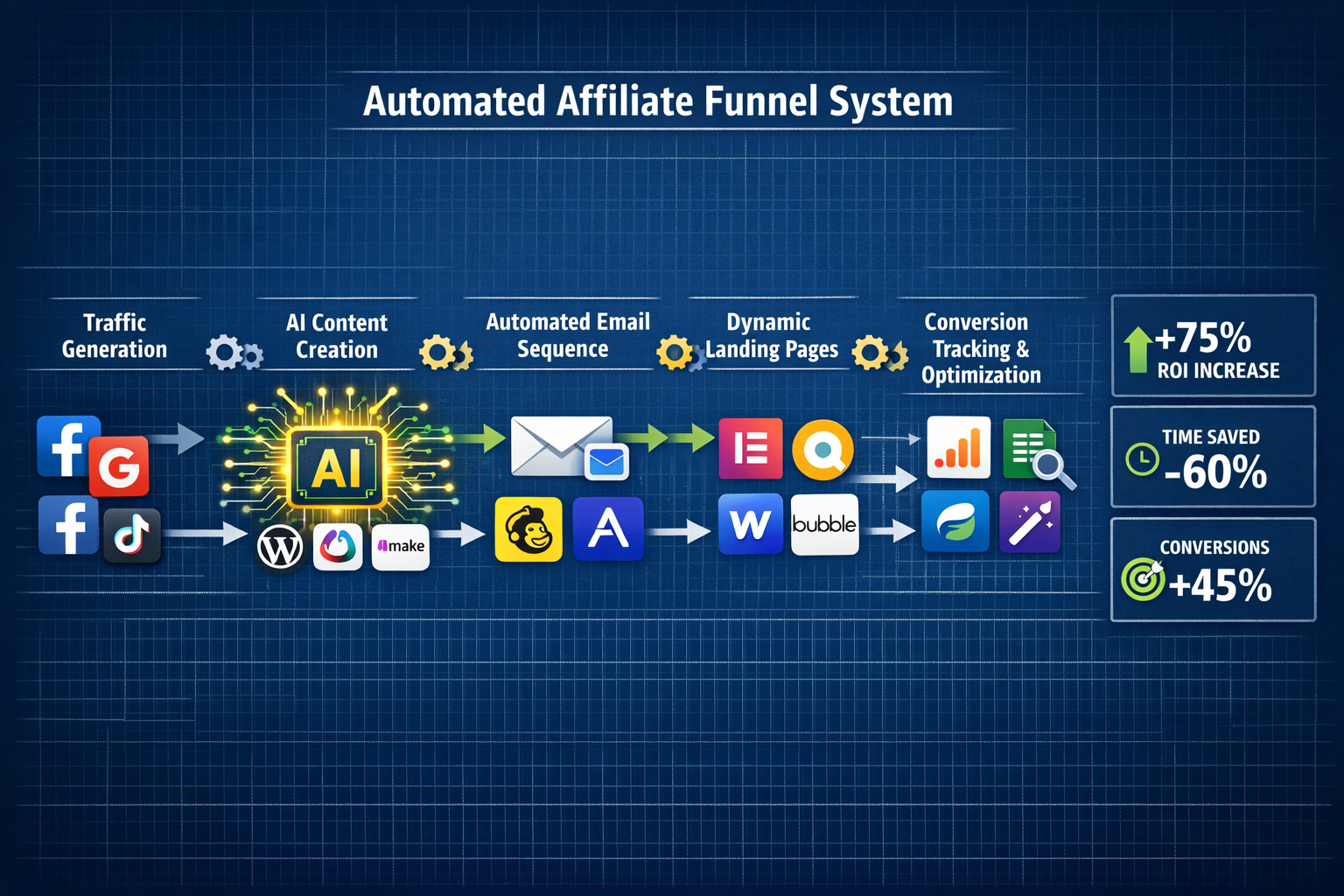
To make these concepts concrete, consider these simplified blueprint scenarios:
The Content Authority Blueprint
Niche: Health and wellness supplements
Traffic Source: SEO-optimized blog content generated with AI assistance
Lead Capture: Free "7-Day Meal Plan" delivered via email sequence
Nurture: 14-day educational email series about nutrition, with AI-personalized product recommendations based on stated health goals
Conversion: Time-limited discount on recommended supplements with social proof and testimonials
Optimization: AI analyzes which topics drive highest conversions and automatically generates more content in those areas
The Social Engagement Blueprint
Niche: Digital marketing tools and software
Traffic Source: AI-generated social media content across LinkedIn, Twitter, and Facebook
Lead Capture: Free webinar on "Automating Your Marketing in 2026"
Nurture: Post-webinar sequence with case studies, tool comparisons, and implementation guides
Conversion: Exclusive bonuses for purchasing through affiliate links during limited enrollment period
Optimization: Chatbot qualifies leads during webinar, segments audience, and delivers customized follow-up based on business size and needs
These examples demonstrate how successful affiliate marketers combine multiple automation elements into cohesive systems that generate consistent results.
Conclusion
AI Factory Blueprints: Low-Code Stacks for Affiliate Marketers to Automate End-to-End Funnels represent the convergence of accessible technology and proven marketing strategy. In 2026, affiliate marketers no longer need technical degrees or large development teams to build sophisticated automation systems. Low-code platforms provide the infrastructure, while artificial intelligence handles personalization, optimization, and content creation at scale.
The key to success lies not in the technology itself, but in strategic implementation. Start with a clear blueprint that maps the customer journey, select integrated tools that work seamlessly together, and implement AI at decision points where it adds genuine value. Avoid the temptation to over-automate at the expense of human connection, and always prioritize ethical practices that build long-term trust.
Your Next Steps
- Map your current funnel: Document every step from traffic generation to conversion, identifying manual bottlenecks
- Research low-code platforms: Evaluate 2-3 tools that align with your budget and technical comfort level
- Start with one blueprint: Choose your highest-performing affiliate offer and build an automated funnel around it
- Implement incrementally: Add automation in phases, testing each component before moving to the next
- Measure and optimize: Track key metrics weekly and let data guide your refinement decisions
The affiliate marketing landscape will continue evolving, but the principles of systematic automation, intelligent personalization, and continuous optimization remain constant. Those who master AI factory blueprints today position themselves to thrive as the industry advances tomorrow.
Ready to transform your affiliate marketing from manual labor to automated machine? The blueprint awaits—start building your first AI-powered funnel today.
References
[1] Ai Affiliate Marketing In 2026 – https://blueprinttopassive.com/ai-affiliate-marketing-in-2026/
[2] Best Ai Tools Marketing 2026 – https://thesmarketers.com/blogs/best-ai-tools-marketing-2026/