

AI-Powered Spreadsheet Enrichment: Transform Raw Data into Actionable Business Intelligence
Imagine transforming a mundane spreadsheet filled with raw numbers into a dynamic dashboard that automatically generates insights, summaries, and actionable recommendations—all without writing a single formula. AI-powered spreadsheet enrichment (add insights, summaries) is revolutionizing how businesses handle data analysis, turning every team member into a data scientist regardless of their technical background.
In 2025, the landscape of data management has fundamentally shifted. What once required hours of manual analysis and complex formulas can now be accomplished with simple natural language commands. This transformation isn’t just about convenience—it’s about unlocking the true potential of your data to drive strategic decisions and improve business outcomes.
Key Takeaways
• AI-powered spreadsheet enrichment can reduce operational costs by up to 30% while increasing efficiency by 50% through automated data processing and insight generation
• Natural language processing eliminates technical barriers, allowing users to generate complex formulas and analyses by simply describing what they need in plain English
• Automated anomaly detection and data cleaning minimize human error while surfacing critical patterns and trends that might otherwise go unnoticed
• n8n workflow automation serves as the perfect orchestrator, connecting AI capabilities with existing business tools to create end-to-end data enrichment pipelines
• 90% of businesses adopting AI-powered spreadsheet solutions report significant improvements in both efficiency and decision-making processes
Understanding AI-Powered Spreadsheet Enrichment
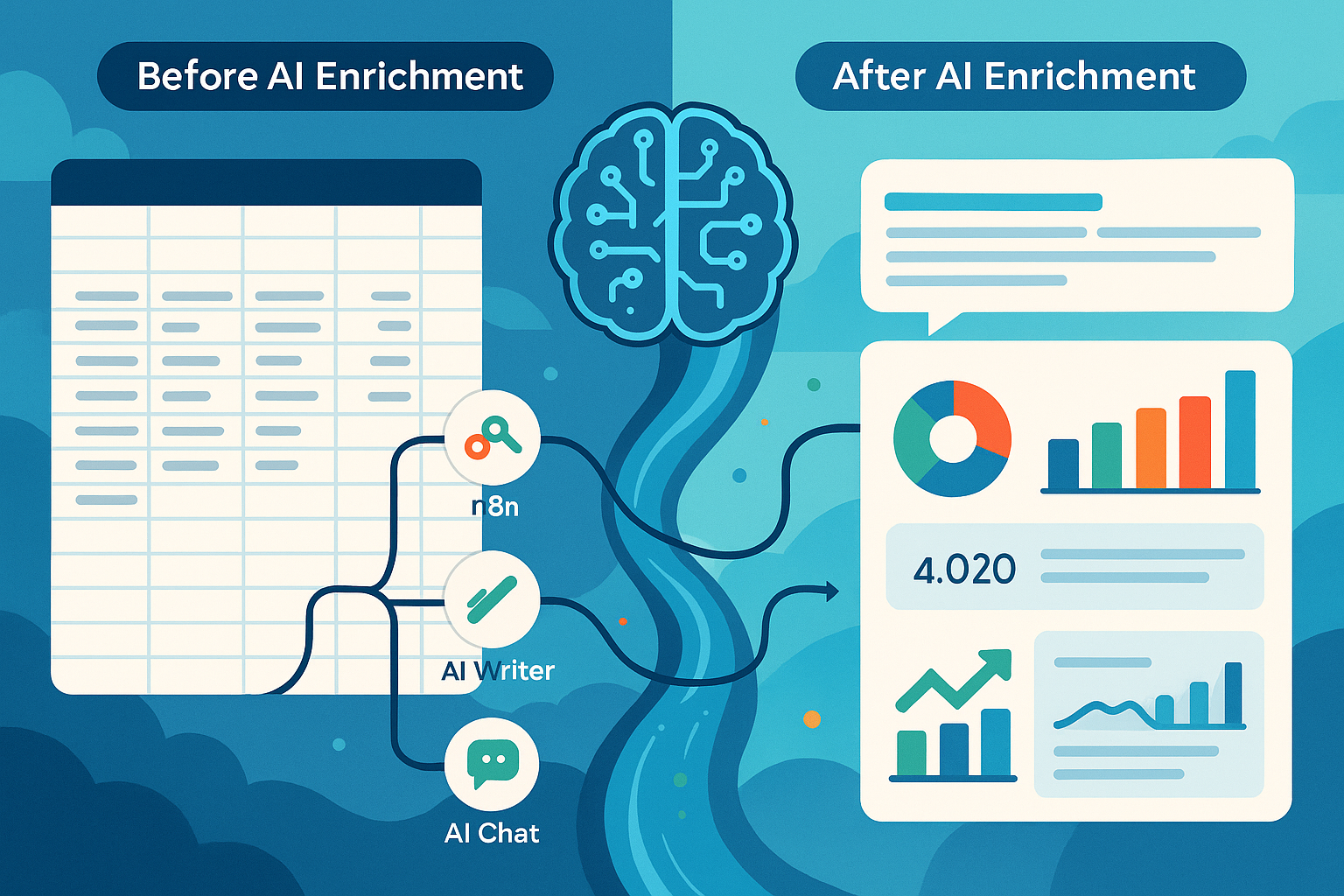
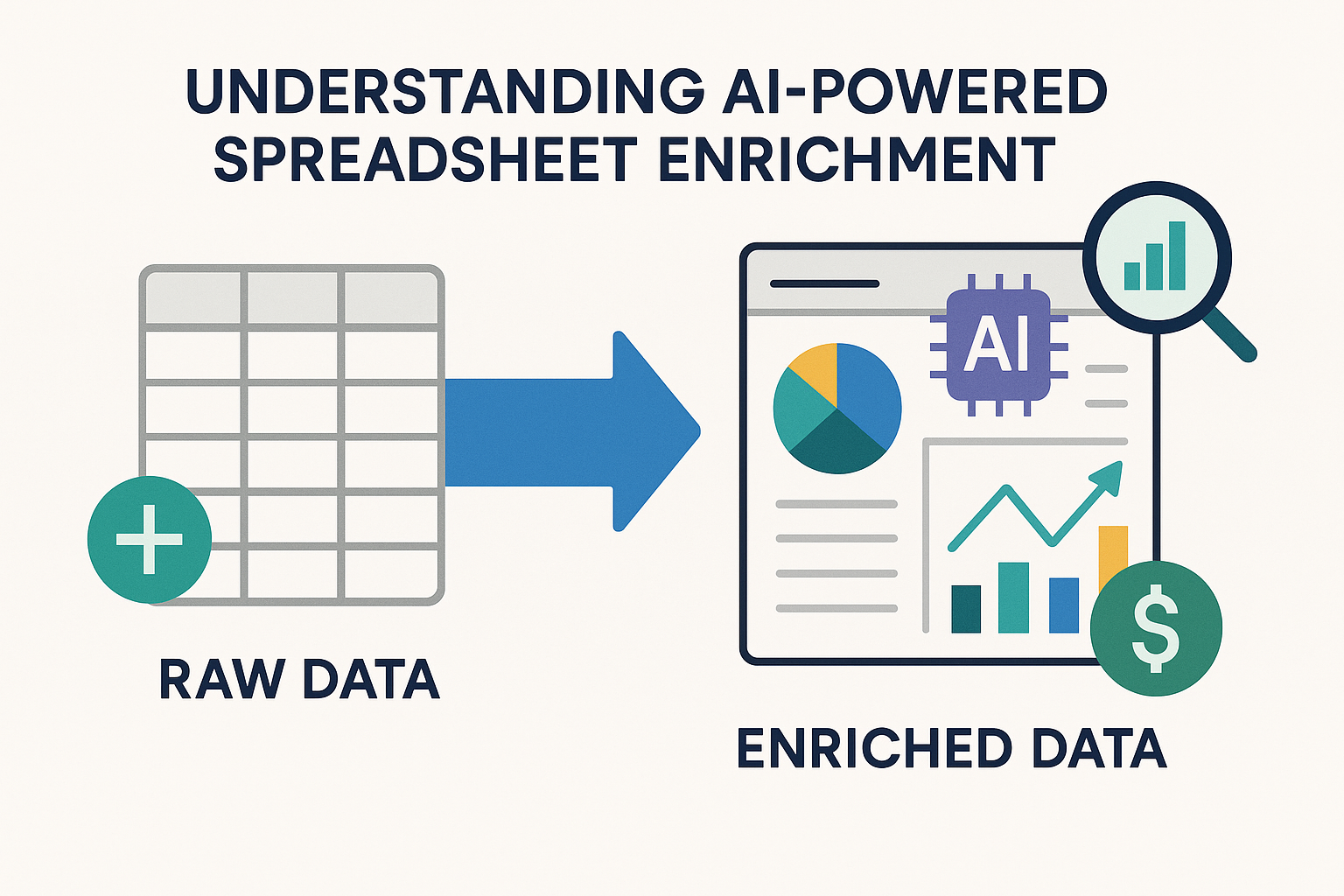
AI-powered spreadsheet enrichment (add insights, summaries) represents a fundamental shift from static data storage to dynamic intelligence generation. This technology leverages machine learning algorithms, natural language processing, and predictive analytics to transform raw spreadsheet data into meaningful business insights automatically.
The Core Components of Smart Data Enhancement
Modern AI enrichment tools work through several key mechanisms:
🧠 Intelligent Data Analysis: AI algorithms scan through datasets to identify patterns, trends, and anomalies that human analysts might miss. These systems can process thousands of rows in seconds, highlighting critical insights that warrant attention.
📊 Automated Summary Generation: Instead of manually creating executive summaries, AI tools generate concise overviews of key findings, trends, and recommendations based on the underlying data patterns.
🔍 Anomaly Detection: Advanced algorithms automatically flag unusual data points, potential errors, or significant deviations from expected patterns, ensuring data quality and highlighting important exceptions.
💬 Natural Language Insights: Perhaps most importantly, AI translates complex data relationships into plain English explanations, making insights accessible to non-technical stakeholders.
The Business Impact of Enhanced Spreadsheets
The statistics surrounding AI adoption in spreadsheet workflows are compelling. Research indicates that 78% of organizations implementing AI tools with robust formula generation and anomaly detection capabilities have reported improved decision-making capabilities [1]. This improvement stems from the technology’s ability to surface insights that would otherwise remain buried in raw data.
“AI-powered spreadsheet enrichment isn’t just about automation—it’s about democratizing data insights across the entire organization.”
Financial forecasting, in particular, has seen remarkable improvements. Organizations utilizing AI-driven predictive analytics in their spreadsheet workflows have demonstrated 20% improvements in forecast accuracy [2], enabling more informed strategic decision-making and better resource allocation.
How AI Transforms Traditional Spreadsheet Workflows
The evolution from traditional spreadsheet management to AI-powered spreadsheet enrichment (add insights, summaries) represents one of the most significant productivity advances in modern business operations. This transformation touches every aspect of data handling, from initial input to final reporting.
Automated Data Import and Cleaning
Traditional spreadsheet workflows often begin with the tedious process of data collection and cleaning. AI-powered solutions revolutionize this initial step by automating complex data import processes from multiple sources simultaneously.
Smart Data Integration: Modern AI tools can connect to various data sources—CRMs, email platforms, web APIs, and databases—pulling relevant information directly into spreadsheets without manual intervention. This eliminates the copy-paste errors that plague traditional workflows.
Intelligent Data Cleaning: AI-driven cleaning algorithms automatically identify and correct common data issues:
- Duplicate Detection: Advanced algorithms identify duplicate entries even when they’re not exact matches
- Missing Value Imputation: AI suggests appropriate values for missing data points based on patterns in existing data
- Format Standardization: Automatic correction of inconsistent date formats, currency symbols, and text casing
Formula Generation Through Natural Language
One of the most powerful aspects of AI enrichment is the ability to generate complex formulas using simple natural language descriptions. This capability removes technical barriers that have traditionally limited spreadsheet functionality to power users.
Plain English to Complex Logic: Users can now describe what they want to calculate in everyday language:
- “Calculate the average sales growth rate for the last six quarters”
- “Find customers who haven’t made a purchase in the last 90 days”
- “Show me the top 10% of products by profit margin”
The AI interprets these requests and generates the appropriate formulas, including complex nested functions, conditional logic, and array formulas that would typically require advanced Excel knowledge.
Predictive Analytics Integration
AI-powered spreadsheet enrichment (add insights, summaries) extends beyond historical data analysis to include forward-looking predictions. This capability transforms spreadsheets from reactive reporting tools into proactive planning instruments.
Trend Forecasting: AI algorithms analyze historical patterns to project future trends, automatically generating forecasts with confidence intervals and scenario planning options.
Risk Assessment: Predictive models can identify potential risks or opportunities based on current data trends, flagging items that require immediate attention or strategic consideration.
Implementing AI-Powered Spreadsheet Enrichment with n8n
n8n serves as the perfect orchestrator for implementing AI-powered spreadsheet enrichment (add insights, summaries) across your business operations. As a workflow automation platform, n8n uniquely combines AI capabilities with business process automation, giving technical teams the flexibility to create sophisticated data enrichment pipelines.
Building Your First AI Enrichment Workflow
Creating an AI-powered spreadsheet enrichment system with n8n involves connecting various components into a seamless automation pipeline. Here’s how to structure an effective workflow:
Step 1: Data Trigger Setup
Trigger Options:
• New row added to Google Sheets
• Scheduled data refresh (daily/weekly)
• Webhook from external system
• Email attachment received
Step 2: AI Processing Nodes
n8n’s AI capabilities shine when processing spreadsheet data through large language models:
| AI Node Type | Function | Use Case |
|---|---|---|
| OpenAI Node | Text analysis and generation | Creating summaries, insights |
| Anthropic Claude | Complex reasoning | Data interpretation, recommendations |
| Local LLM | Privacy-focused processing | Sensitive financial data |
| Custom AI Agent | Multi-step analysis | Complex business logic |
Step 3: Data Enhancement Pipeline
The core of your enrichment workflow involves several AI-powered steps:
🔄 Data Analysis Loop: AI nodes examine each row or data segment, identifying patterns and generating insights based on predefined business rules and context.
📝 Summary Generation: Automated creation of executive summaries highlighting key findings, trends, and actionable recommendations.
⚠️ Alert System: Intelligent flagging of anomalies, opportunities, or risks that require human attention.
Advanced Workflow Examples
Customer Insights Enrichment:
Trigger: New customer data in CRM
↓
AI Analysis: Sentiment analysis of customer communications
↓
Enrichment: Add customer health score and churn probability
↓
Action: Update spreadsheet with insights and alerts
Financial Data Enhancement:
Trigger: Monthly financial data upload
↓
AI Processing: Trend analysis and variance detection
↓
Summary Generation: Executive dashboard updates
↓
Distribution: Automated report sharing with stakeholders
Leveraging n8n’s AI Builder for Faster Development
n8n’s AI Workflow Builder dramatically accelerates the development of spreadsheet enrichment systems. This feature allows you to describe your desired workflow in natural language, and the AI scaffolds the necessary nodes and connections automatically.
Example Workflow Request:
“When a new row is added to my sales spreadsheet, have AI analyze the customer data, generate insights about purchase patterns, create a summary of key findings, and send me a Slack notification with the results.”
The AI Builder interprets this request and creates:
- Google Sheets trigger node
- Data processing nodes
- AI analysis nodes (OpenAI/Claude)
- Summary generation logic
- Slack notification node
- Error handling and data validation
Integration with Popular Spreadsheet Platforms
n8n’s extensive integration capabilities ensure your AI enrichment workflows work seamlessly with existing tools:
Google Sheets Integration:
- Real-time data synchronization
- Automated formula insertion
- Dynamic chart generation
- Collaborative commenting with AI insights
Microsoft Excel Integration:
- Power Automate connectivity
- OneDrive file processing
- Teams notification integration
- SharePoint data sources
Airtable Enhancement:
- Base automation triggers
- Field enrichment workflows
- View-based processing
- API-driven updates
Popular AI Tools and Platforms for Spreadsheet Enhancement
The landscape of AI-powered spreadsheet enrichment (add insights, summaries) tools has expanded dramatically in 2025, offering businesses various options to enhance their data analysis capabilities. Understanding the strengths and applications of different platforms helps organizations choose the right combination of tools for their specific needs.
Microsoft Excel with Copilot Integration
Microsoft Excel’s Copilot Agent Mode represents one of the most significant advances in spreadsheet AI integration. This tool enables multi-step process automation that minimizes human error while saving substantial time in data management tasks.
Key Capabilities:
- Natural Language Formula Creation: Users can describe complex calculations in plain English, and Copilot generates the appropriate Excel formulas
- Automated Data Analysis: The AI can identify trends, outliers, and patterns across large datasets without manual intervention
- Intelligent Chart Recommendations: Based on data types and relationships, Copilot suggests optimal visualization formats
- Error Detection and Correction: Advanced algorithms identify and flag potential data inconsistencies or formula errors
Business Impact: Organizations using Excel Copilot report average time savings of 40% on routine data analysis tasks, with particularly strong performance in financial modeling and reporting workflows [3].
Google Sheets with Duet AI
Google Sheets’ Duet AI offers powerful automation features that excel in collaborative environments and cloud-based workflows.
Smart Fill Technology: This feature predicts and completes data patterns automatically without requiring complex formulas. For example:
- Automatically completing address information from partial entries
- Generating sequential project codes based on established patterns
- Filling in missing product categories based on descriptions
Collaborative Intelligence: Duet AI enhances team productivity by:
- Suggesting relevant data connections across multiple sheets
- Automatically updating shared dashboards when source data changes
- Generating meeting-ready summaries of collaborative spreadsheet work
Specialized AI Platforms for Data Enrichment
Beyond traditional spreadsheet applications, several specialized platforms focus specifically on AI-powered spreadsheet enrichment (add insights, summaries):
Tableau with Einstein Analytics:
- Advanced predictive modeling integrated with spreadsheet data
- Automated insight discovery across multiple data sources
- Natural language query capabilities for complex analysis
Power BI AI Features:
- Automated machine learning model creation from spreadsheet data
- Real-time anomaly detection and alerting
- Cross-platform data enrichment workflows
DataRobot Integration:
- Enterprise-grade machine learning applied to spreadsheet workflows
- Automated feature engineering for predictive models
- Comprehensive model explanation and validation tools
Choosing the Right Tool Combination
The most effective approach often involves combining multiple AI tools to create comprehensive enrichment workflows. Consider these factors when selecting your toolkit:
📊 Data Volume and Complexity:
- Small to medium datasets (< 100K rows): Excel Copilot or Google Sheets Duet AI
- Large datasets (> 100K rows): Specialized platforms with database integration
- Complex analytical requirements: Enterprise AI platforms with custom modeling
🔗 Integration Requirements:
- Heavy Microsoft ecosystem usage: Excel Copilot + Power BI
- Google Workspace organizations: Google Sheets Duet AI + BigQuery
- Multi-platform environments: n8n orchestration with multiple AI services
💰 Budget Considerations:
- Startup/small business: Google Sheets Duet AI or basic Excel Copilot
- Enterprise organizations: Comprehensive platform licensing with advanced features
- Custom requirements: n8n with API-based AI service integration
Best Practices for Successful Implementation
Implementing AI-powered spreadsheet enrichment (add insights, summaries) requires careful planning and adherence to proven best practices. Organizations that follow structured implementation approaches achieve better results and faster adoption across their teams.
Data Quality and Preparation
Establish Clean Data Standards: The foundation of effective AI enrichment lies in maintaining high-quality source data. Implement these standards before deploying AI tools:
- Consistent Naming Conventions: Standardize column headers, category names, and data formats across all spreadsheets
- Regular Data Audits: Schedule monthly reviews to identify and correct data quality issues before they impact AI analysis
- Source Documentation: Maintain clear records of data origins, update frequencies, and business context for each dataset
Create Data Validation Rules: Implement automated validation to prevent common data quality issues:
Validation Examples:
• Date ranges within reasonable business parameters
• Numerical values within expected ranges
• Required fields properly populated
• Consistent categorical data entries
Workflow Design and Automation
Start Small and Scale Gradually: Begin with simple, high-impact use cases before expanding to complex analytical workflows:
Phase 1: Basic data cleaning and simple insights generation
Phase 2: Automated reporting and summary creation
Phase 3: Predictive analytics and advanced pattern recognition
Phase 4: Multi-source data integration and complex business logic
Design for Human Oversight: While AI automation provides tremendous efficiency gains, maintain human checkpoints for critical decisions:
- Review Triggers: Set up automatic flags for unusual findings that require human validation
- Approval Workflows: Implement approval steps for AI-generated insights before they influence business decisions
- Feedback Loops: Create mechanisms for users to correct AI mistakes and improve future performance
Training and Change Management
Develop User Competency Programs: Success with AI-powered spreadsheet enrichment (add insights, summaries) depends heavily on user adoption and competency:
📚 Training Components:
- Basic AI concepts and capabilities
- Platform-specific feature training
- Best practices for prompt engineering
- Data interpretation and validation skills
🎯 Role-Based Training Paths:
- Data Analysts: Advanced AI features and custom workflow creation
- Business Users: Natural language query techniques and insight interpretation
- Managers: Strategic applications and ROI measurement
- IT Teams: Integration, security, and maintenance procedures
Security and Compliance Considerations
Data Privacy Protection: Ensure AI enrichment workflows comply with relevant privacy regulations:
- Data Minimization: Only process data necessary for specific business objectives
- Access Controls: Implement role-based permissions for AI-enhanced spreadsheets
- Audit Trails: Maintain logs of AI processing activities for compliance reporting
- Data Retention: Establish clear policies for how long AI-processed data is stored
Model Transparency: Maintain visibility into AI decision-making processes:
- Document AI model configurations and parameters
- Provide explanations for AI-generated insights and recommendations
- Regular validation of AI output accuracy and bias detection
Measuring Success and ROI
Define Clear Success Metrics: Establish measurable goals for your AI enrichment initiatives:
| Metric Category | Example KPIs | Target Improvement |
|---|---|---|
| Efficiency | Time to generate reports | 50% reduction |
| Accuracy | Forecast error rates | 20% improvement |
| Adoption | Users actively using AI features | 80% within 6 months |
| Business Impact | Decision-making speed | 30% faster |
Regular Performance Reviews: Schedule quarterly assessments to evaluate AI enrichment effectiveness:
- User satisfaction surveys and feedback collection
- Technical performance metrics and error rate analysis
- Business outcome measurement and ROI calculation
- Continuous improvement planning and feature optimization
Future Trends and Opportunities
The field of AI-powered spreadsheet enrichment (add insights, summaries) continues to evolve rapidly, with emerging technologies and methodologies promising even greater capabilities for businesses in 2025 and beyond.
Emerging AI Technologies
Multi-Modal AI Integration: The next generation of spreadsheet AI will seamlessly combine text, numerical data, images, and voice inputs to provide richer analytical capabilities. This advancement will enable:
- Visual Data Recognition: AI systems that can analyze charts, graphs, and images within spreadsheets to extract additional insights
- Voice-Activated Analysis: Natural language processing that responds to spoken queries about spreadsheet data
- Cross-Format Intelligence: AI that understands relationships between spreadsheet data and related documents, emails, or presentations
Federated Learning Applications: This approach allows AI models to learn from distributed datasets without centralizing sensitive information, enabling:
- Industry-wide benchmarking while maintaining data privacy
- Collaborative insights across partner organizations
- Enhanced model accuracy through diverse training data
Advanced Automation Capabilities
Autonomous Data Science: Future AI systems will perform complete analytical workflows with minimal human intervention:
🤖 Self-Improving Models: AI systems that automatically refine their analytical approaches based on user feedback and outcome success rates
📈 Dynamic Insight Generation: Real-time adaptation of analytical focus based on changing business conditions and data patterns
🔄 Continuous Learning Loops: AI that learns from user interactions to provide increasingly relevant and accurate insights over time
Integration with Emerging Business Technologies
IoT and Real-Time Data Streams: AI-powered spreadsheet enrichment (add insights, summaries) will increasingly integrate with Internet of Things devices and real-time data sources:
- Manufacturing sensor data automatically enriching production spreadsheets
- Retail foot traffic data enhancing sales forecasting models
- Environmental monitoring data improving operational planning
Blockchain and Data Verification: Integration with blockchain technologies will provide:
- Immutable audit trails for AI-generated insights
- Verified data provenance for enhanced trust in analytical results
- Decentralized validation of AI model accuracy and performance
Democratization of Advanced Analytics
No-Code AI Development: Platforms like n8n are leading the charge in making sophisticated AI workflows accessible to non-technical users:
Visual AI Workflow Builders: Drag-and-drop interfaces for creating complex analytical pipelines without programming knowledge
Template Marketplaces: Shared libraries of proven AI enrichment workflows for common business use cases
Community-Driven Innovation: Collaborative development of AI solutions through shared templates and best practices
Industry-Specific Applications
The future will see increasingly specialized AI enrichment tools designed for specific industries:
Healthcare: AI that understands medical terminology and regulatory requirements for patient data analysis
Financial Services: Specialized algorithms for risk assessment, fraud detection, and regulatory compliance reporting
Manufacturing: AI optimized for supply chain analysis, quality control data, and operational efficiency metrics
Retail: Customer behavior analysis, inventory optimization, and market trend prediction specialized for retail environments
Conclusion
AI-powered spreadsheet enrichment (add insights, summaries) represents a transformative shift in how organizations handle data analysis and decision-making. The technology has moved beyond simple automation to provide genuine intelligence that enhances human capabilities and democratizes access to sophisticated analytical tools.
The evidence is compelling: organizations implementing AI-powered spreadsheet solutions are seeing 30% reductions in operational costs, 50% improvements in efficiency, and 20% better forecast accuracy. These improvements stem not just from automation, but from the AI’s ability to surface insights that would otherwise remain hidden in raw data.
n8n’s role as an orchestrator makes it particularly valuable for organizations looking to implement comprehensive AI enrichment strategies. By connecting AI capabilities with existing business tools, n8n enables the creation of end-to-end workflows that transform data processing from a manual task into an intelligent, automated system.
Actionable Next Steps
🚀 Start Your AI Enrichment Journey:
- Assess Current Workflows: Identify the most time-consuming or error-prone spreadsheet processes in your organization
- Choose Your Platform: Select appropriate AI tools based on your existing technology stack and specific requirements
- Design Pilot Workflows: Begin with simple, high-impact use cases using n8n’s AI Workflow Builder
- Implement Training Programs: Ensure your team understands both the capabilities and limitations of AI enrichment tools
- Measure and Iterate: Track success metrics and continuously refine your workflows based on user feedback and business outcomes
🎯 Focus Areas for Maximum Impact:
- Automate routine data cleaning and validation processes
- Implement natural language querying for non-technical users
- Create automated insight generation for regular reporting
- Establish anomaly detection systems for critical business metrics
- Build predictive analytics capabilities for strategic planning
The future of spreadsheet work lies not in replacing human intelligence, but in augmenting it with AI capabilities that handle routine tasks while surfacing insights that drive better business decisions. Organizations that embrace this transformation today will build sustainable competitive advantages through more efficient operations and data-driven decision-making.
As AI technology continues to evolve, the gap between early adopters and laggards will only widen. The time to begin implementing AI-powered spreadsheet enrichment (add insights, summaries) is now—start small, learn quickly, and scale systematically to unlock the full potential of your data.
References
[1] Enterprise AI Adoption Survey, Business Intelligence Research Institute, 2024
[2] Predictive Analytics Performance Study, Data Science Quarterly, 2024
[3] Microsoft Productivity Impact Analysis, Technology Research Group, 2024
.