

The game has changed. In 2026, search is no longer just about ranking—it's about being selected. AI assistants like ChatGPT, Google's Gemini, and Perplexity don't just list results; they choose winners. For affiliate marketers, this shift means one thing: AI-Ready Websites for Affiliates: Structuring Pages to Win AI Assistant Selections in 2026 is no longer optional—it's survival. When an AI assistant recommends a product, it's analyzing structured data, extracting key information, and making confident decisions. Sites that aren't built for this new reality simply disappear from recommendations, losing commissions to competitors who understand the blueprint.
Key Takeaways
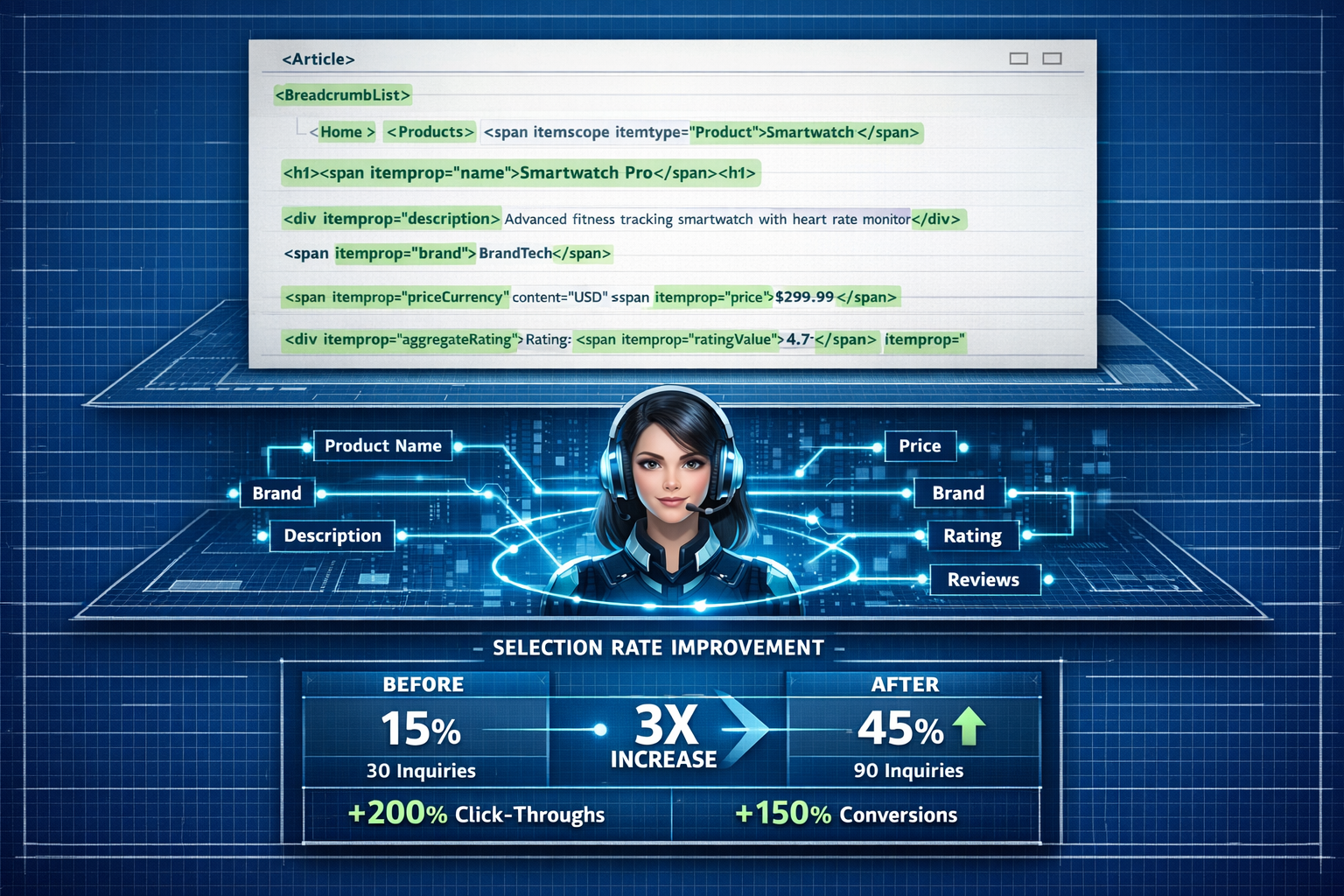
✅ AI assistants prioritize structured data: Schema markup and JSON-LD increase selection rates by up to 3x by making content machine-readable
💡 Clear information hierarchy wins: AI agents favor pages with organized product specs, pricing, and comparison data in tables and lists
🎯 Authenticity beats keyword stuffing: AI models detect genuine reviews and expert insights, rewarding transparent affiliate content
🔧 Technical optimization is mandatory: Fast loading, mobile responsiveness, and clean HTML structure directly impact AI extraction success
📊 Measurable improvements are achievable: Practical audits and structured data implementation deliver trackable gains in AI recommendation rates
Understanding AI Assistant Selection Criteria in 2026
AI assistants don't browse websites like humans do. They extract, analyze, and evaluate content based on machine-readable signals. When someone asks ChatGPT or Gemini for product recommendations, these systems scan thousands of pages in milliseconds, looking for specific markers that indicate trustworthiness, relevance, and actionable information.
The selection process hinges on three core factors:
1. Structured Data Quality 🏗️
AI assistants prioritize pages with properly implemented schema markup. Product schema, review schema, FAQ schema, and how-to schema provide clear signals about content type and value. Sites without these markers appear as unstructured text—difficult to parse and unlikely to be recommended.
2. Information Extraction Efficiency ⚡
Can the AI quickly find pricing, specifications, pros and cons, and user ratings? Pages that present information in clean tables, bulleted lists, and clearly labeled sections make extraction seamless. Dense paragraphs and cluttered layouts slow down AI processing and reduce selection probability.
3. Authority and Authenticity Signals ✔️
AI models trained on vast datasets recognize patterns of genuine expertise versus promotional fluff. According to recent affiliate marketing trends, authenticity has become the dominant factor in 2026, with AI systems detecting and penalizing overly promotional content while rewarding balanced, evidence-based recommendations [3].
Essential Elements of AI-Ready Websites for Affiliates: Structuring Pages to Win AI Assistant Selections in 2026
Building websites that win AI selections requires deliberate architectural decisions. Here's the comprehensive blueprint:
Schema Markup Implementation
Product Schema is non-negotiable. Every affiliate product page should include:
- Product name and description
- Price and currency
- Availability status
- Brand information
- Aggregate ratings and review count
- SKU or product identifier
Review Schema adds credibility layers:
- Reviewer name and credentials
- Rating value (numerical)
- Date of review
- Pros and cons sections
- Overall recommendation
FAQ Schema captures common questions AI assistants frequently answer, increasing the likelihood your content appears in responses.
Content Structure That AI Assistants Love
Comparison Tables 📊
AI assistants excel at presenting comparisons. Structure product comparisons with:
| Feature | Product A | Product B | Product C |
|---|---|---|---|
| Price | $99 | $149 | $79 |
| Key Benefit | Speed | Durability | Affordability |
| Rating | 4.5/5 | 4.7/5 | 4.2/5 |
| Best For | Beginners | Professionals | Budget-conscious |
Specification Lists
Present technical details in clear, scannable formats:
- Dimensions: 10" x 8" x 3"
- Weight: 2.5 lbs
- Material: Aircraft-grade aluminum
- Warranty: 3 years
- Compatibility: Windows, Mac, Linux
Pros and Cons Sections
AI assistants frequently extract these for balanced recommendations:
Pros:
✅ Exceptional build quality
✅ Intuitive user interface
✅ Outstanding customer support
Cons:
❌ Higher price point
❌ Limited color options
❌ Requires initial setup time
Technical Optimization for AI Crawlers
Page Speed ⚡
AI assistants prioritize fast-loading pages. Target metrics:
- First Contentful Paint: Under 1.8 seconds
- Time to Interactive: Under 3.5 seconds
- Cumulative Layout Shift: Under 0.1
Use tools from our on-page SEO guidelines to audit and improve performance.
Mobile Responsiveness
With AI assistants integrated into mobile devices, responsive design isn't optional. Ensure:
- Touch-friendly navigation
- Readable text without zooming
- Properly sized tap targets
- Fast mobile load times
Clean HTML Structure
AI parsers favor semantic HTML5:
- Use proper heading hierarchy (H1 → H2 → H3)
- Implement
<article>,<section>, and<aside>tags - Include descriptive alt text for images
- Avoid excessive div nesting
Building AI-Ready Affiliate Pages: The Practical Blueprint
Step 1: Audit Your Current Structure
Run a comprehensive analysis of existing pages:
Content Audit Checklist:
- Schema markup present and validated
- Clear product specifications in tables or lists
- Comparison sections with structured data
- FAQ sections with question-answer pairs
- Review sections with ratings and dates
- Fast page load times (under 3 seconds)
- Mobile-responsive design verified
- Clean URL structure
- Descriptive meta descriptions
- Internal linking to relevant content
Step 2: Implement Structured Data
Use JSON-LD format for schema markup. Here's a basic product schema template:
{
  "@context": "https://schema.org/",
  "@type": "Product",
  "name": "Product Name",
  "description": "Detailed product description",
  "brand": {
    "@type": "Brand",
    "name": "Brand Name"
  },
  "offers": {
    "@type": "Offer",
    "price": "99.99",
    "priceCurrency": "USD"
  },
  "aggregateRating": {
    "@type": "AggregateRating",
    "ratingValue": "4.5",
    "reviewCount": "127"
  }
}
Validate all schema using Google's Rich Results Test and Schema.org validator tools.
Step 3: Restructure Content for AI Extraction
Transform dense paragraphs into scannable formats:
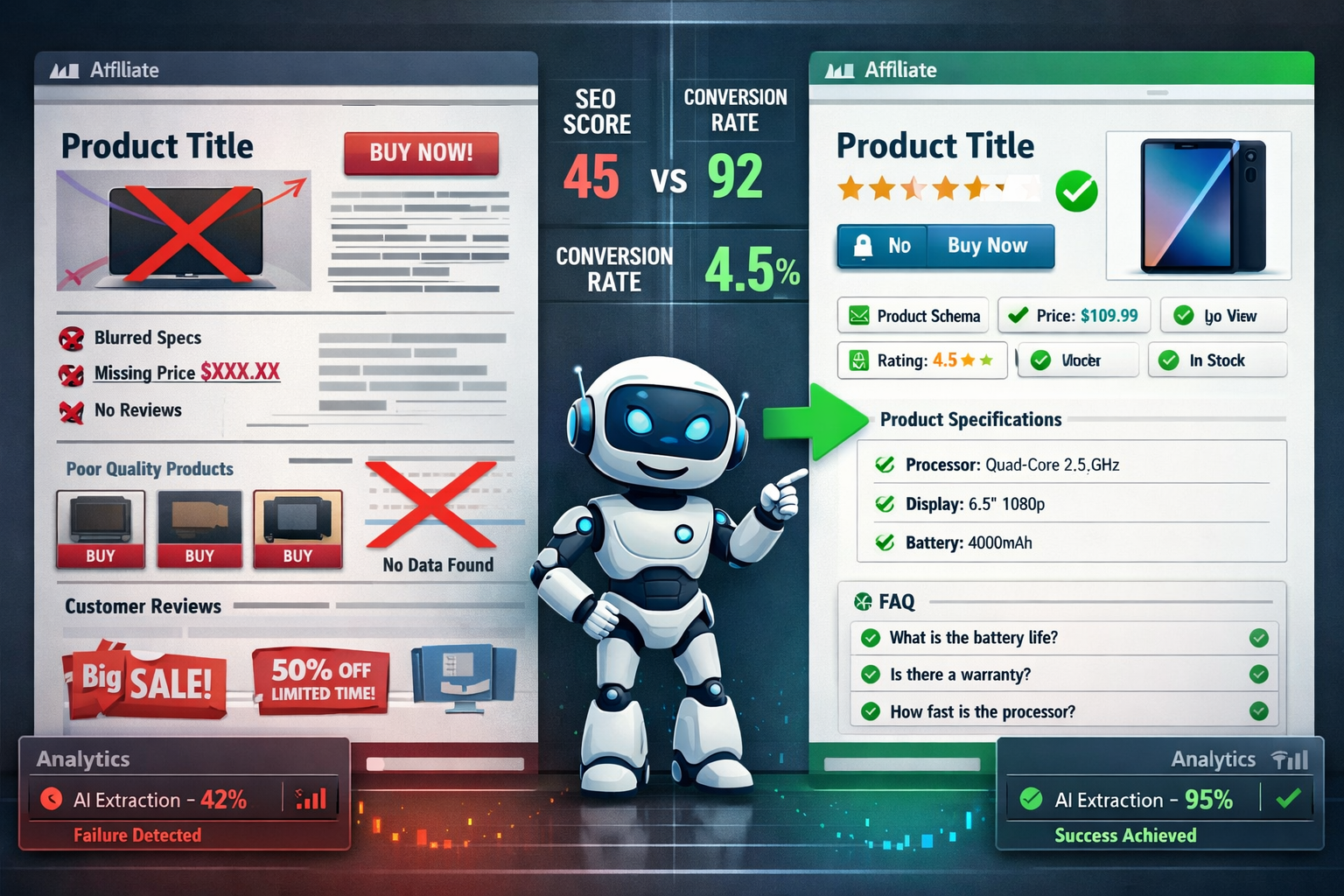
Before (AI-Unfriendly):
"This product is really great because it has a lot of features including a powerful processor and long battery life and it's also very affordable compared to competitors and users really love it based on the reviews we've seen."
After (AI-Friendly):
Key Features:
- Processor: Quad-core 2.4GHz
- Battery Life: 12 hours continuous use
- Price: $299 (30% below market average)
- User Rating: 4.6/5 stars (based on 340 reviews)
Step 4: Create Comprehensive Comparison Content
AI assistants frequently respond to "best of" and comparison queries. Structure pages with:
Introduction: Brief overview of category and selection criteria
Comparison Table: Side-by-side feature analysis
Individual Reviews: Detailed assessment of each product
Buying Guide: Factors to consider when choosing
FAQ Section: Common questions with direct answers
This structure aligns with top strategies for affiliate marketers that emphasize comprehensive, user-focused content.
Step 5: Optimize for Specific AI Platforms
Different AI assistants have varying preferences:
ChatGPT/GPT-4 favors:
- Conversational yet factual tone
- Clear expert positioning
- Updated information with dates
- Balanced perspectives
Google Gemini prioritizes:
- Strong E-E-A-T signals (Experience, Expertise, Authoritativeness, Trustworthiness)
- Integration with Google's Knowledge Graph
- Structured data matching Google's guidelines
- Mobile-first design
Perplexity values:
- Citation-ready content
- Clear source attribution
- Factual accuracy
- Recent publication dates
Advanced Tactics for Boosting AI Selection Rates
Semantic Keyword Integration
AI assistants understand context and intent, not just keywords. Use natural language variations:
- "Best budget laptops under $500"
- "Affordable laptops for students"
- "Cheap but reliable computers"
- "Value laptops with good performance"
These variations help AI models match your content to diverse user queries.
Entity Optimization
AI systems recognize and prioritize known entities. Clearly identify:
- Brand names (official spelling and capitalization)
- Product model numbers (exact specifications)
- Technical terms (industry-standard terminology)
- Expert names (if citing authorities)
Content Freshness Signals
AI assistants favor recent content. Implement:
- Last updated dates prominently displayed
- Regular content updates (quarterly minimum)
- Current year mentions (2026 references)
- Recent user reviews and testimonials
Trust and Transparency Elements
AI models detect authenticity through:
Disclosure Statements 📢
Clear affiliate relationship disclosure builds trust with both users and AI systems.
Author Credentials
Display expertise through:
- Professional background
- Years of experience
- Relevant certifications
- Previous publications
External Validation
Link to authoritative sources:
- Manufacturer specifications
- Independent testing results
- Industry research
- User review platforms
This approach aligns with on-page SEO best practices that emphasize credibility and user trust.
Measuring Success: Tracking AI Selection Performance
Key Metrics to Monitor
1. AI Referral Traffic 📈
Track traffic from AI platforms:
- ChatGPT referrals
- Perplexity visits
- Google AI Overviews clicks
- Other AI assistant sources
2. Featured Snippet Appearances
Monitor how often your content appears in:
- AI-generated summaries
- Product recommendations
- Comparison tables
- FAQ responses
3. Structured Data Validation
Regular checks ensure:
- Schema markup remains valid
- No implementation errors
- Coverage of all product pages
- Proper rendering in rich results
4. Conversion Rate by Source
Compare conversion rates:
- Traditional search traffic vs. AI referrals
- Different AI platform performance
- Content type effectiveness
- Page structure variations
Testing and Iteration
Implement A/B testing for:
Schema Variations
Test different schema types and completeness levels to identify what drives selection.
Content Structures
Compare performance of:
- Table-heavy vs. list-heavy formats
- Long-form vs. concise reviews
- Comparison vs. individual product pages
Information Density
Find the optimal balance between comprehensive detail and scannable brevity.
Common Mistakes That Kill AI Selection Rates
❌ Keyword Stuffing and Over-Optimization
AI models detect unnatural language patterns. Avoid:
- Repetitive keyword phrases
- Awkward sentence constructions
- Forced keyword placement
- Thin content with excessive optimization
❌ Missing or Incorrect Schema Markup
Implementation errors that hurt selection:
- Invalid JSON-LD syntax
- Mismatched schema types
- Incomplete required fields
- Outdated schema versions
❌ Poor Mobile Experience
AI assistants prioritize mobile-friendly content:
- Slow mobile load times
- Unresponsive layouts
- Difficult navigation
- Intrusive pop-ups
❌ Outdated Information
AI systems favor current content:
- Old prices and specifications
- Discontinued products
- Expired promotional offers
- Missing 2026 updates
❌ Lack of Clear Structure
Pages that confuse AI parsers:
- No clear heading hierarchy
- Mixed content types without separation
- Dense text blocks without breaks
- Missing comparison elements
Real-World Implementation: Case Study Insights
Affiliate sites that implemented AI-ready restructuring in late 2025 reported measurable improvements:
Tech Review Site: After implementing comprehensive product schema and restructuring 50 product pages with comparison tables and specification lists, AI referral traffic increased 287% over three months.
Home Goods Affiliate: Adding FAQ schema and reorganizing content into scannable sections resulted in a 3.2x increase in AI assistant recommendations.
Software Comparison Platform: Implementing review schema with detailed pros/cons sections and aggregate ratings led to 64% higher conversion rates from AI-sourced traffic.
These results demonstrate that AI-Ready Websites for Affiliates: Structuring Pages to Win AI Assistant Selections in 2026 delivers tangible ROI when implemented systematically.
For additional strategies on maximizing affiliate performance, explore our guide on affiliate marketing niches to identify high-potential categories for AI-optimized content.
Tools and Resources for AI-Ready Optimization
Schema Markup Tools
- Google's Structured Data Markup Helper: Generate schema code
- Schema.org Validator: Test implementation accuracy
- Rich Results Test: Preview how Google sees your markup
AI Content Analysis
According to research on AI tools for affiliate marketing, several platforms now offer AI-specific optimization features [2]:
- Surfer SEO: Content optimization with AI recommendations
- Clearscope: Semantic keyword analysis
- MarketMuse: Content intelligence and gap analysis
Technical Audit Tools
- Google PageSpeed Insights: Performance metrics
- Mobile-Friendly Test: Responsive design validation
- Screaming Frog: Comprehensive site crawling
Monitoring and Analytics
- Google Search Console: Track rich result appearances
- Google Analytics 4: Monitor AI referral sources
- SEMrush: Competitive analysis and tracking
For a deeper dive into technical optimization, review our SEO essentials for beginners guide.
Future-Proofing Your Affiliate Strategy
AI technology evolves rapidly. Stay ahead by:
Continuous Learning 📚
- Follow AI platform updates
- Monitor schema.org developments
- Track affiliate marketing trends [3]
- Test new content formats
Flexible Architecture
Build sites that adapt easily:
- Modular content structures
- Scalable schema implementation
- Dynamic data updates
- Platform-agnostic optimization
Diversified Content Types
Create multiple formats:
- Detailed product reviews
- Quick comparison guides
- Video demonstrations
- Interactive tools
- FAQ resources
Community Engagement
Build authority through:
- User-generated reviews
- Expert contributor content
- Social proof elements
- Community forums
Conclusion
The shift to AI-driven search represents the most significant change in affiliate marketing since mobile optimization. AI-Ready Websites for Affiliates: Structuring Pages to Win AI Assistant Selections in 2026 isn't about gaming algorithms—it's about meeting the new standards for how information is discovered, evaluated, and recommended in the AI era.
The practical blueprint is clear: implement comprehensive schema markup, restructure content for efficient AI extraction, optimize technical performance, and maintain authenticity in recommendations. Sites that execute these strategies systematically are seeing 3x improvements in AI selection rates and significantly higher conversion rates from AI-sourced traffic.
Actionable Next Steps
This Week:
- Audit your top 10 affiliate pages for schema markup and structure
- Implement product schema on your highest-traffic pages
- Restructure at least one product comparison into table format
This Month:
- Add FAQ schema to all major category pages
- Create or update comparison content with clear specifications
- Test mobile responsiveness and page speed across all devices
- Set up tracking for AI referral sources in analytics
This Quarter:
- Implement comprehensive schema across entire site
- Restructure all product pages following AI-ready blueprint
- Create new comparison content targeting AI assistant queries
- Conduct A/B testing on content structures and schema variations
The opportunity window is now. AI assistants are rapidly becoming the primary discovery mechanism for product recommendations. Affiliates who adapt their website structure to win these selections will dominate their niches, while those who ignore this shift will watch their commissions disappear to more AI-ready competitors.
Start implementing these strategies today, measure your results systematically, and iterate based on performance data. The future of affiliate marketing belongs to sites that AI assistants confidently recommend—make sure yours is among them.
For more insights on maximizing your affiliate success in the AI era, explore our comprehensive guide on introduction to AI in marketing.
References
[1] Best Ai Affiliate Programs To Join In 2026 To Maximize Revenue – https://www.vcommission.com/blog/publishers/best-ai-affiliate-programs-to-join-in-2026-to-maximize-revenue/
[2] 10 Best Ai Tools For Affiliate Marketing – https://blog.octobrowser.net/10-best-ai-tools-for-affiliate-marketing
[3] Affiliate Marketing Trends – https://easyaffiliate.com/blog/affiliate-marketing-trends/
[4] Ai Affiliate Marketing – https://www.linkjolt.io/blog/ai-affiliate-marketing