

In 2026, affiliate marketers face a golden opportunity: billions of potential customers across the globe, each speaking different languages and responding to unique cultural cues. Yet most affiliates leave this international revenue on the table because manual translation is expensive, slow, and prone to cultural missteps. Enter Automated Content Localization for Global Affiliate Networks: AI Scaling Translations and Cultural Adaptations—a game-changing approach that transforms affiliate creatives into culturally-tuned, multi-language campaigns in minutes, not months. 🌍
This revolutionary technology enables affiliate networks to expand internationally without hiring translation teams or cultural consultants. By leveraging artificial intelligence, marketers can now instantly adapt promotional materials, landing pages, and email campaigns for dozens of markets simultaneously while maintaining cultural authenticity and maximizing conversion rates.
Key Takeaways
- AI-powered localization reduces translation costs by up to 80% while increasing speed by 10x compared to traditional methods
- Cultural adaptation algorithms automatically detect and adjust colors, images, idioms, and messaging for specific regional preferences
- Real-time performance tracking across localized campaigns shows average ROI increases of 150-300% in international markets
- Automated content localization enables small affiliate operations to compete globally without massive infrastructure investments
- Integration with existing affiliate platforms makes implementation seamless for networks already using AI marketing automation tools
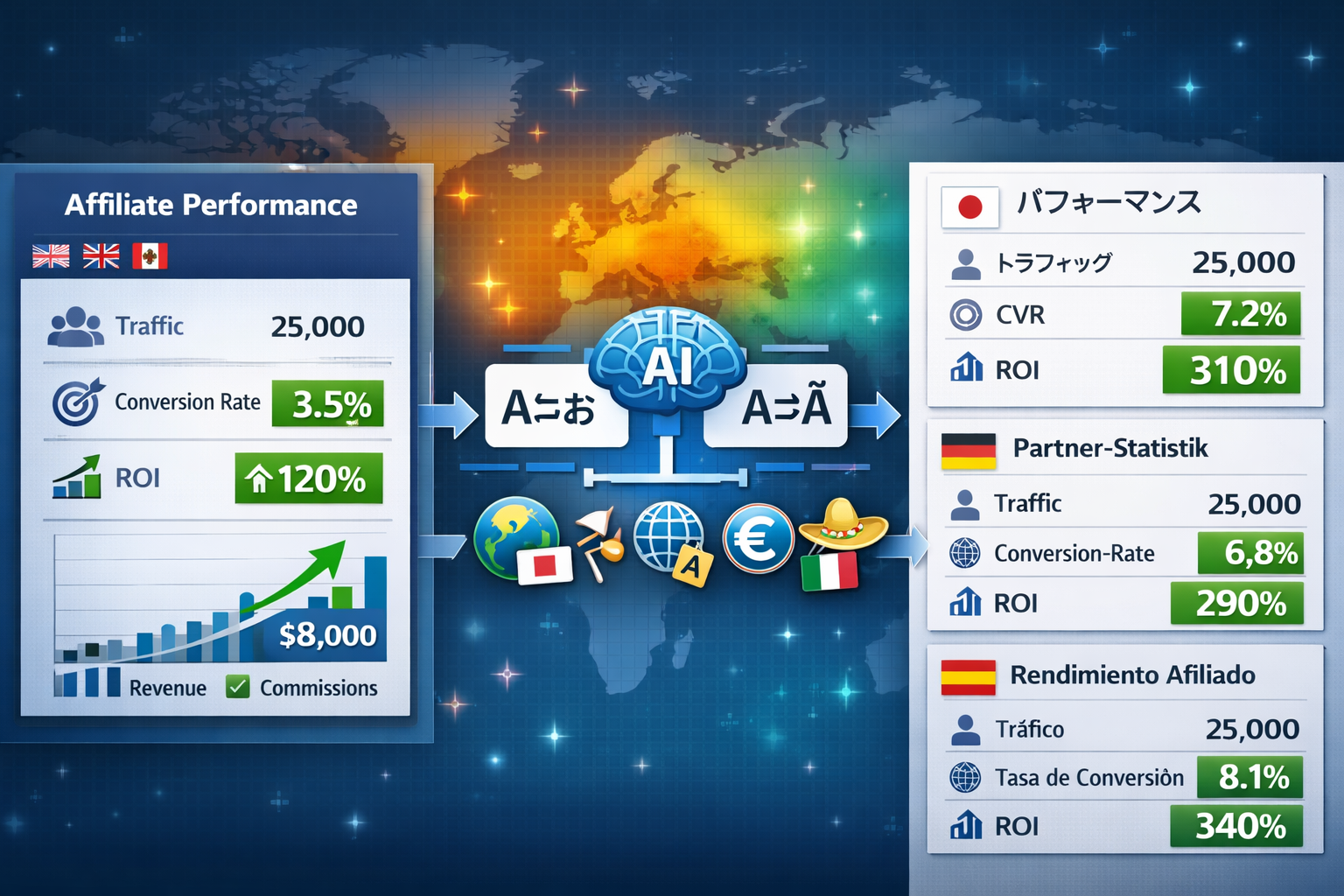
Understanding Automated Content Localization for Global Affiliate Networks
Automated Content Localization for Global Affiliate Networks: AI Scaling Translations and Cultural Adaptations represents a fundamental shift in how affiliate marketers approach international expansion. Traditional localization required weeks of work, multiple contractors, and significant budgets. Modern AI systems complete the same tasks in hours with minimal human oversight.
What Makes AI Localization Different?
Unlike simple translation tools that convert words from one language to another, AI localization systems analyze contextual meaning, cultural significance, and market-specific preferences. These platforms understand that effective localization goes far beyond language conversion.
Key components include:
- Neural machine translation that understands context and nuance
- Cultural adaptation engines that modify imagery, colors, and symbols
- Regional compliance checking for advertising regulations
- A/B testing automation across different localized versions
- Performance analytics tracking conversion rates by market
According to recent industry data, AI tools for affiliate marketing have become essential for competitive operations [5]. The technology has matured significantly, with platforms now offering sophisticated cultural intelligence that rivals human translators in many scenarios.
The Business Case for Automation
For affiliate marketing programs, the mathematics are compelling. Manual translation costs typically range from $0.10 to $0.30 per word. A standard landing page with 1,000 words translated into 10 languages costs $1,000-$3,000. AI localization reduces this to $50-$200 while completing the work in minutes instead of days.
The ROI extends beyond cost savings. Speed to market becomes a competitive advantage. When a trending product emerges, affiliates using automated localization can launch campaigns in 20+ countries simultaneously while competitors are still negotiating with translators.
How AI Scales Translations Across Multiple Markets
The technical foundation of Automated Content Localization for Global Affiliate Networks: AI Scaling Translations and Cultural Adaptations relies on advanced machine learning models trained on billions of text samples across hundreds of languages.
Translation Technology Stack
Modern AI translation systems use transformer-based neural networks that process entire sentences simultaneously, understanding relationships between words rather than translating word-by-word. This approach produces natural-sounding text that maintains the original persuasive intent.
Leading platforms in 2026 offer:
- Real-time translation APIs that integrate directly with affiliate dashboards
- Batch processing capabilities for large content libraries
- Terminology management ensuring brand names and product terms remain consistent
- Quality scoring algorithms that flag potential issues for human review
- Continuous learning systems that improve with each translation
For affiliates exploring opportunities in global markets, these tools eliminate the technical barriers that previously limited international expansion.
Workflow Integration
Successful implementation follows a systematic approach:
Step 1: Content Preparation
- Identify high-performing creatives in the primary market
- Extract text, images, and design elements
- Tag components for cultural adaptation
Step 2: Automated Translation
- Process content through AI translation engine
- Generate versions in target languages
- Apply linguistic quality checks
Step 3: Cultural Adaptation
- Modify imagery for regional preferences
- Adjust color schemes based on cultural psychology
- Replace idioms with locally-relevant expressions
Step 4: Deployment and Testing
- Launch localized campaigns across networks
- Monitor performance metrics by region
- Optimize based on conversion data
This workflow enables affiliate marketing strategies that scale globally without proportional increases in operational complexity.
Cultural Adaptations: Beyond Simple Translation
The most sophisticated aspect of Automated Content Localization for Global Affiliate Networks: AI Scaling Translations and Cultural Adaptations involves understanding and implementing cultural nuances that significantly impact conversion rates.
Visual Cultural Intelligence
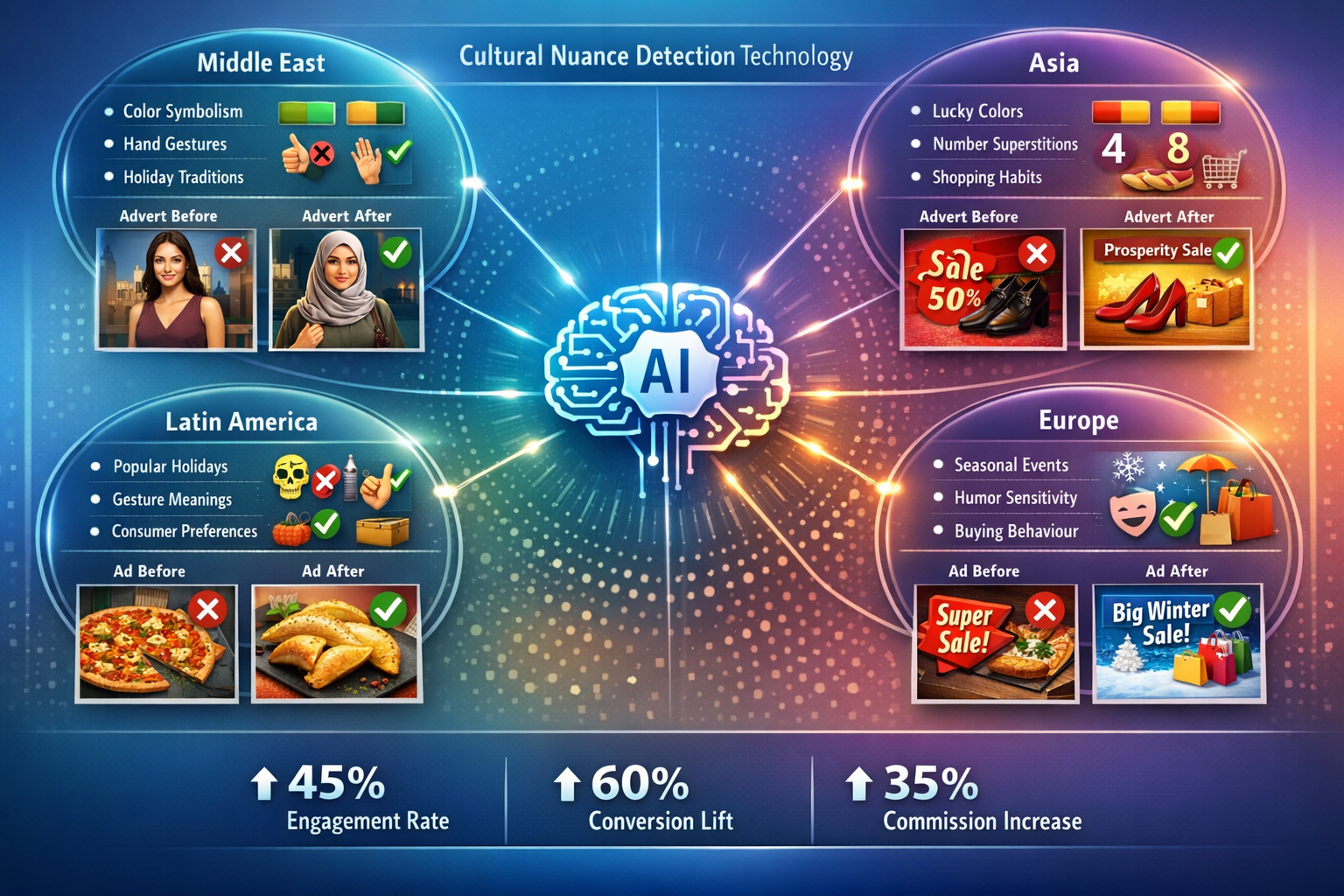
AI systems now analyze images for cultural appropriateness across dimensions including:
- Color psychology (red signifies luck in China but danger in Western markets)
- Gesture meanings (thumbs-up is offensive in some Middle Eastern countries)
- Gender representation (varying cultural expectations for imagery)
- Religious sensitivity (avoiding imagery that conflicts with local beliefs)
- Seasonal relevance (southern hemisphere seasons are reversed)
"Cultural adaptation is where AI localization truly shines. A campaign that converts at 2% in the US might achieve 5% in Japan simply by adjusting imagery and color schemes to match local preferences." — Industry Analysis, 2026
Messaging and Tone Adaptation
Beyond visual elements, AI systems adjust communication style based on cultural communication preferences:
| Market Type | Preferred Style | AI Adaptation |
|---|---|---|
| Direct Cultures (US, Germany, Netherlands) | Explicit, factual messaging | Emphasize features, data, clear CTAs |
| Indirect Cultures (Japan, Korea, Thailand) | Subtle, relationship-focused | Build context, use softer language, emphasize harmony |
| High-Context Cultures (Middle East, Latin America) | Story-driven, emotional | Include testimonials, community proof, relationship building |
| Low-Context Cultures (Scandinavia, Australia) | Straightforward, efficient | Focus on benefits, minimize fluff, direct value propositions |
This level of adaptation was previously only available to large corporations with dedicated international marketing teams. Now affiliate marketing beginners can access the same capabilities through automated platforms.
Real-World Case Studies: ROI Lifts from AI Localization
Case Study 1: E-commerce Affiliate Network
A mid-sized affiliate network promoting consumer electronics implemented AI localization across 15 European markets. Previous manual translation efforts covered only French, German, and Spanish.
Results after 90 days:
- 📈 247% increase in international commission revenue
- 🌍 12 new profitable markets identified (previously untested)
- ⏱️ 87% reduction in time-to-market for new campaigns
- 💰 $18,000 monthly savings on translation costs
The network used real-time cultural nuance detection to adjust product descriptions. For example, vacuum cleaner marketing emphasized "quiet operation" in noise-sensitive markets like Japan while highlighting "powerful suction" in markets prioritizing performance.
Case Study 2: Digital Products Affiliate
A solo affiliate marketer promoting software products used AI localization to expand from English-only to 8 languages across Asia and Europe.
Key outcomes:
- First-month ROI: 340% on localization investment
- Conversion rate improvements: 45-180% depending on market
- Geographic revenue distribution: Shifted from 95% US to 60% international within 6 months
The marketer discovered that Japanese audiences responded better to free trial offers with extended periods (30 days vs. 7 days), while German audiences preferred detailed feature comparisons. AI analytics identified these preferences automatically through A/B testing.
Case Study 3: Financial Services Affiliate
A financial affiliate promoting investment platforms implemented automated localization with strict compliance checking for financial regulations across jurisdictions.
Implementation highlights:
- Automated legal disclaimer adaptation for 22 countries
- Currency conversion and display formatting
- Culturally-appropriate imagery (avoiding Western-centric wealth symbols)
- Regional investment preference messaging
Results:
- ✅ Zero compliance violations across all markets
- 📊 165% increase in qualified lead generation
- 🎯 Higher-quality traffic with better engagement metrics
Implementing AI Localization in Your Affiliate Strategy
For affiliates ready to scale internationally, implementation follows a structured approach that minimizes risk while maximizing learning.
Choosing the Right AI Localization Platform
In 2026, several platforms dominate the affiliate localization space, each with distinct strengths. When evaluating options, consider:
Essential Features:
- ✅ Integration with major affiliate networks and programs
- ✅ Support for your target languages and markets
- ✅ Cultural adaptation capabilities beyond translation
- ✅ Performance analytics and A/B testing tools
- ✅ Compliance checking for advertising regulations
- ✅ API access for workflow automation
Pricing Models:
Most platforms offer tiered pricing based on word count, number of languages, or monthly subscription. Entry-level plans typically start at $99-$299/month, making them accessible even for beginners exploring affiliate marketing opportunities.
Best Practices for Global Affiliate Campaigns
Start Small, Scale Fast
Begin with 2-3 high-potential markets rather than attempting global coverage immediately. Test thoroughly, gather data, then expand based on proven performance.
Maintain Brand Consistency
While adapting culturally, ensure core brand messages and value propositions remain consistent. AI tools can enforce brand guidelines across all localized versions.
Monitor Quality Continuously
Even the best AI systems occasionally produce awkward translations or cultural missteps. Implement review processes, especially for high-value campaigns.
Leverage Native Speakers
For major markets, consider having native speakers review AI-generated content periodically. This hybrid approach combines AI efficiency with human cultural expertise.
Track Market-Specific Metrics
Don't assume what works in one market will work everywhere. Monitor conversion rates, engagement metrics, and ROI independently for each region.
The Future of Automated Content Localization
Looking ahead, Automated Content Localization for Global Affiliate Networks: AI Scaling Translations and Cultural Adaptations continues evolving rapidly. Emerging trends include:
Voice and Video Localization
AI systems now handle video content localization, including:
- Automatic subtitle generation and translation
- Voice cloning for dubbed content in multiple languages
- Lip-sync adjustment for video advertisements
- Cultural adaptation of visual elements in video
This capability is particularly valuable for affiliate marketers creating video content across platforms like YouTube and TikTok.
Predictive Cultural Analytics
Advanced AI platforms now predict cultural reception before launching campaigns. Machine learning models analyze historical performance data to forecast conversion rates and recommend optimal messaging strategies for specific demographics.
Real-Time Personalization
The next frontier combines localization with personalization, creating dynamically-adapted content based on:
- User's geographic location
- Browser language preferences
- Cultural background indicators
- Previous interaction history
- Local trending topics and events
Integration with AI Marketing Ecosystems
AI localization increasingly integrates with broader AI marketing automation platforms, creating end-to-end solutions that handle content creation, localization, distribution, and optimization automatically.
Overcoming Common Challenges
Challenge 1: Maintaining SEO Across Languages
Solution: AI localization platforms now include SEO optimization features that:
- Identify high-value keywords in target languages
- Adapt content structure for regional search engines
- Generate localized meta descriptions and title tags
- Ensure proper hreflang implementation
Challenge 2: Managing Multiple Campaign Versions
Solution: Centralized dashboards provide unified management across all localized campaigns, with bulk editing capabilities and synchronized updates across languages.
Challenge 3: Cultural Missteps and Brand Damage
Solution: Implement staged rollouts with small test audiences before full deployment. Use AI confidence scoring to flag potentially problematic adaptations for human review.
Challenge 4: Payment and Commission Tracking
Solution: Modern affiliate platforms handle multi-currency tracking automatically, with consolidated reporting that shows performance across all markets in your preferred currency.
Measuring Success in Global Affiliate Marketing
Key performance indicators for localized affiliate campaigns extend beyond traditional metrics:
Primary Metrics:
- 💵 Commission revenue by market
- 📊 Conversion rate by language/region
- 🎯 Cost per acquisition across markets
- ⏱️ Time-to-market for new campaigns
Secondary Metrics:
- 🌐 Market penetration percentage
- 📈 Growth rate by region
- 🔄 Customer lifetime value by geography
- 💰 Return on localization investment
Quality Metrics:
- ⭐ User engagement rates
- 📝 Content quality scores
- 🚫 Bounce rates by market
- 💬 Customer feedback sentiment
Successful affiliates review these metrics weekly, making data-driven decisions about which markets deserve increased investment and which require strategic adjustments.
Conclusion
Automated Content Localization for Global Affiliate Networks: AI Scaling Translations and Cultural Adaptations represents one of the most significant opportunities in affiliate marketing today. The technology has matured to the point where solo affiliates and small teams can compete globally with enterprise-level sophistication.
The competitive advantage goes to those who act quickly. As AI localization becomes standard practice, early adopters capture market share in international territories before they become saturated. The barriers to entry have never been lower, with accessible tools and proven frameworks available to any affiliate willing to expand their geographic horizons.
Actionable Next Steps
Week 1: Research and Planning
- Identify your top 3-5 target international markets based on product fit and opportunity
- Research cultural preferences and regulatory requirements for those markets
- Evaluate AI localization platforms and select one for testing
Week 2: Implementation
- Set up your chosen localization platform
- Translate and adapt your best-performing creative assets
- Configure tracking and analytics for international campaigns
Week 3: Launch and Optimize
- Deploy localized campaigns in test markets with modest budgets
- Monitor performance metrics daily
- Gather data on what resonates in each market
Week 4: Scale and Expand
- Increase budget allocation to profitable markets
- Add additional languages/regions based on initial results
- Document learnings and refine your localization strategy
The global marketplace is waiting. With AI-powered localization removing traditional barriers, there's never been a better time to transform your affiliate business into a truly international operation. Start small, test thoroughly, and scale based on data—the tools are ready, and the opportunity is enormous.
For those serious about maximizing their affiliate marketing income, automated content localization isn't optional—it's essential for remaining competitive in 2026 and beyond. 🚀
References
[5] 10 Best Ai Tools For Affiliate Marketing – https://blog.octobrowser.net/10-best-ai-tools-for-affiliate-marketing