

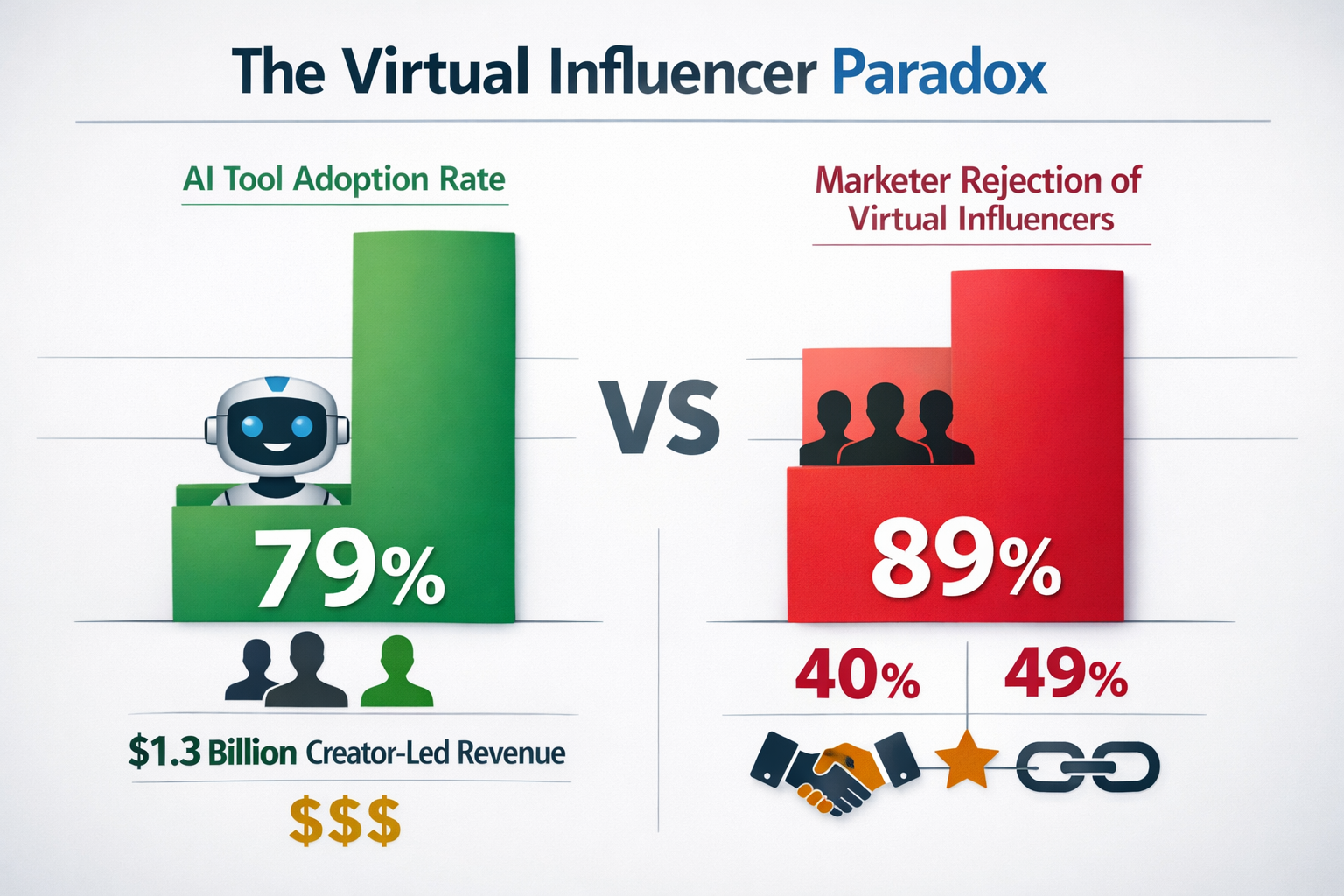
The intersection of artificial intelligence and creator economies has sparked one of the most fascinating paradoxes in digital marketing. While Creator Economies Meet AI: Scaling Affiliate Partnerships with Virtual Influencers in 2026 represents a promising frontier, the reality reveals a surprising disconnect between technological capability and market acceptance. Despite nearly 79% of affiliate marketers adopting AI tools for content creation, a staggering 89% explicitly refuse to work with virtual influencers or AI-generated creator clones[1]. This tension between innovation and authenticity defines the current landscape of affiliate marketing partnerships.
Key Takeaways
✅ Virtual influencers face widespread rejection: 89% of marketers won't partner with AI-generated influencers despite high AI tool adoption[1]
✅ Creator-led partnerships dominate revenue: Human influencer affiliates generated $1.3 billion by 2026, proving authentic partnerships drive results[3]
✅ AI tools enhance human creators: 79.3% of affiliate marketers use AI for content optimization while maintaining human authenticity[2]
✅ Mobile-first strategies are essential: 50% of affiliate traffic comes from mobile devices, requiring optimized partnership approaches[5]
✅ Customer loyalty through affiliates: Affiliate-referred customers show 21% higher repeat purchase rates than other channels[6]
Understanding the Current State of Creator Economies Meet AI: Scaling Affiliate Partnerships with Virtual Influencers in 2026
The creator economy has reached unprecedented scale in 2026, with the influencer marketing industry exceeding $40 billion[4]. This massive growth reflects the power of authentic human connection in driving purchasing decisions. Meanwhile, the global affiliate marketing sector has expanded to substantial valuations, demonstrating consistent growth trajectories that support innovative partnership models.
The AI Adoption Paradox 🤖
The data reveals a fascinating contradiction. Nearly 79.3% of affiliate marketers have embraced AI-driven content creation for campaign optimization and personalization[2]. These tools help creators:
- Generate content ideas faster and more efficiently
- Optimize posting schedules based on audience behavior
- Personalize messaging for different audience segments
- Analyze performance metrics with greater accuracy
- Scale content production without sacrificing quality
However, this AI adoption focuses exclusively on tools that enhance human creators rather than replace them. The overwhelming rejection of virtual influencers—with 89% of marketers stating they won't work with AI-generated personalities[1]—demonstrates that authenticity remains paramount in affiliate marketing partnerships.
Why Human Creators Still Dominate
The preference for human creators stems from proven performance metrics. User-generated content (UGC) from real people proves 85% more influential than brand-produced photos or videos[5]. This authenticity translates directly into:
- 10% higher conversion rates compared to traditional advertising
- 90% increased engagement with audience communities
- Stronger brand trust through genuine recommendations
- Long-term customer relationships built on credibility
Real influencers like beauty creator Huda Kattan and fitness creator Kayla Itsines have achieved remarkable sales increases through affiliate partnerships on platforms like Instagram Shops[5], establishing successful blueprints that virtual influencers have yet to replicate.
The Financial Landscape: Revenue and Growth Projections
Creator-driven affiliate partnerships have generated $1.3 billion in affiliate revenue by 2026[3], demonstrating the substantial financial impact of influencer-led campaigns. This revenue stream represents just one component of the broader affiliate marketing ecosystem, which continues expanding across multiple industries.
Industry Distribution and Opportunities
The affiliate marketing landscape shows clear sector dominance:
| Industry Sector | Revenue Share | Key Opportunities |
|---|---|---|
| Retail | 44% | Product reviews, unboxing, style guides |
| Telecom | 25% | Service comparisons, plan recommendations |
| Travel & Leisure | 16% | Destination guides, booking partnerships |
| Other Sectors | 16% | Diverse niche opportunities |
This distribution highlights where affiliate marketing opportunities currently thrive, with retail partnerships offering the most substantial revenue potential for creator collaborations.
Platform-Specific Performance 📱
Different platforms deliver varying results for affiliate partnerships:
Instagram remains the powerhouse for visual product promotion, with 93% of advertisers actively partnering with influencers[5]. The platform's shopping features enable seamless conversion paths from content to purchase.
TikTok has emerged as a major player, with over 29% of affiliate marketers using the platform as a sales driver[5]. With 1.5 billion active users and at least 40% aged 16-24, TikTok offers access to high-value demographics particularly receptive to creator recommendations.
Mobile optimization has become critical, as approximately 50% of affiliate-referred traffic originates from mobile devices[5]. This shift requires creators and brands to prioritize mobile-responsive content and streamlined checkout experiences.
Strategic Approaches to Creator Economies Meet AI: Scaling Affiliate Partnerships with Virtual Influencers in 2026
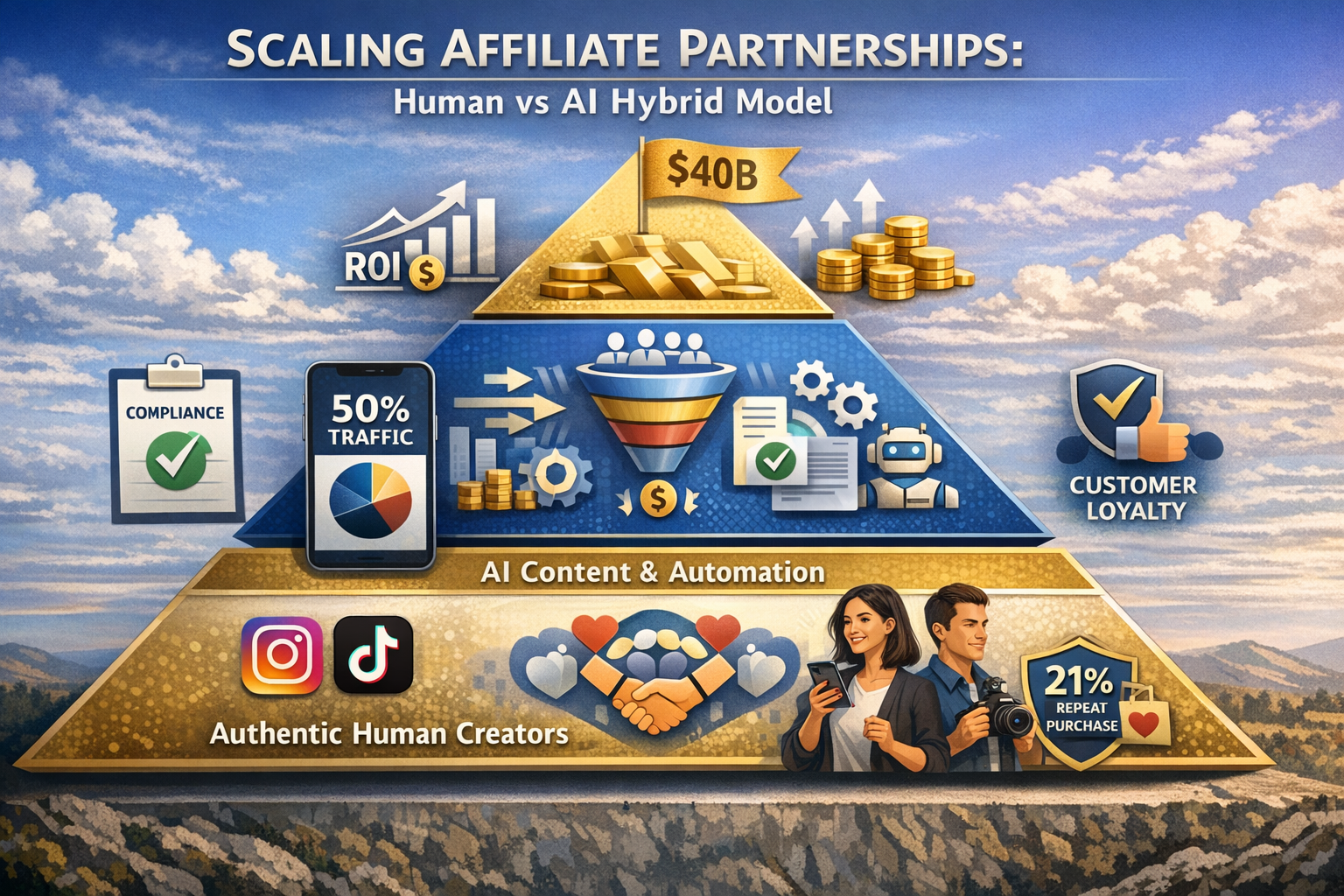
While virtual influencers face market resistance, smart marketers are developing hybrid strategies that combine AI efficiency with human authenticity. This balanced approach represents the most viable path forward for scaling affiliate partnerships effectively.
The Hybrid Model: AI-Enhanced Human Creators 💡
The winning strategy involves using AI to amplify human creator capabilities:
Content Creation Support: AI tools help creators generate more content without compromising authenticity. Tools analyze trending topics, suggest content angles, and even draft initial scripts that creators personalize with their unique voice.
Performance Optimization: Machine learning algorithms identify optimal posting times, content formats, and messaging approaches based on historical performance data. This enables creators to maximize reach and engagement systematically.
Audience Analysis: AI-powered analytics provide deeper insights into audience demographics, preferences, and behavior patterns, allowing creators to tailor content more effectively to their communities.
Administrative Automation: AI handles routine tasks like tracking affiliate links, managing disclosure requirements, and generating performance reports, freeing creators to focus on content and community building.
Compliance and Transparency Best Practices ⚖️
As affiliate partnerships scale, maintaining regulatory compliance becomes increasingly important:
- Clear disclosure requirements: All affiliate relationships must be transparently disclosed according to FTC guidelines
- Authentic recommendations: Creators should only promote products they genuinely use or believe in
- Performance tracking: Implement robust systems to monitor conversion rates, customer feedback, and partnership ROI
- Contract clarity: Establish clear terms regarding content ownership, exclusivity, and compensation structures
Understanding what is affiliate marketing fundamentals helps ensure partnerships remain compliant and effective.
ROI Benchmarks and Performance Metrics 📊
Successful affiliate partnerships in 2026 demonstrate measurable results:
Conversion Performance: Top-performing creator partnerships achieve conversion rates 2-3x higher than traditional digital advertising, with some niche creators seeing even greater multiples.
Customer Lifetime Value: Customers acquired through affiliate partnerships show 21% higher repeat purchase rates[6], making them more valuable over time compared to other acquisition channels.
Brand Awareness Impact: 83% of marketers use affiliate marketing specifically to increase brand awareness[5], recognizing that creator partnerships deliver both immediate sales and long-term brand building.
Cost Efficiency: Performance-based affiliate compensation models ensure marketing spend directly correlates with results, providing better ROI predictability than traditional advertising approaches.
For those wondering can you make money with affiliate marketing, these benchmarks demonstrate substantial earning potential for both creators and brands.
Emerging Trends and Future Outlook
The landscape of Creator Economies Meet AI: Scaling Affiliate Partnerships with Virtual Influencers in 2026 continues evolving rapidly, with several key trends shaping the future:
Micro and Nano-Influencer Growth 🌱
Brands increasingly recognize that smaller, highly engaged creator communities often outperform mega-influencers in conversion rates and authenticity. These partnerships offer:
- Higher engagement rates (often 5-10x larger accounts)
- More targeted audience alignment with specific product categories
- Greater cost efficiency for testing and scaling campaigns
- Stronger perceived authenticity and trust with followers
AI-Powered Matchmaking Platforms
Technology platforms are emerging that use AI to match brands with ideal creator partners based on:
- Audience demographic overlap
- Content style and brand alignment
- Historical performance metrics
- Engagement quality indicators
- Niche expertise and authority
These platforms streamline partnership formation while maintaining the human element that drives results.
Video-First Content Strategies 🎥
Short-form video content dominates creator strategies, with platforms like TikTok, Instagram Reels, and YouTube Shorts driving affiliate conversions. Successful creators focus on:
- Authentic product demonstrations in natural settings
- Educational content that solves specific problems
- Entertainment value that encourages sharing and virality
- Clear calls-to-action integrated naturally into content
Cross-Platform Integration
Leading creators develop multi-platform presence to maximize reach and diversify revenue streams. This approach involves:
- Repurposing core content across multiple platforms
- Tailoring messaging to each platform's unique culture
- Building email lists to own audience relationships
- Creating exclusive content tiers for different engagement levels
Practical Implementation: Getting Started with Scaled Affiliate Partnerships
For brands and creators ready to implement these strategies, here's a practical roadmap:
For Brands Seeking Creator Partners 🤝
Step 1: Define Partnership Goals – Establish clear objectives (awareness, conversions, customer acquisition) and success metrics before approaching creators.
Step 2: Identify Aligned Creators – Research creators whose audience demographics, values, and content style match your brand positioning.
Step 3: Develop Compelling Offers – Create competitive commission structures, provide quality marketing materials, and offer exclusive promotions for creator audiences.
Step 4: Build Long-Term Relationships – Focus on ongoing partnerships rather than one-off campaigns to build authentic advocacy and better results over time.
Step 5: Measure and Optimize – Track performance metrics consistently, share insights with creator partners, and refine approaches based on data.
For Creators Scaling Affiliate Revenue 💰
Step 1: Choose Aligned Products – Only promote products you genuinely use or believe in to maintain audience trust and credibility.
Step 2: Leverage AI Tools Strategically – Use content creation and analytics tools to enhance productivity while maintaining your authentic voice.
Step 3: Diversify Product Portfolio – Partner with multiple brands across complementary categories to maximize revenue without overwhelming your audience.
Step 4: Optimize Conversion Paths – Make affiliate links easily accessible, use clear calls-to-action, and create dedicated landing pages when appropriate.
Step 5: Build Community Trust – Prioritize long-term audience relationships over short-term commission potential through transparent, valuable recommendations.
Exploring affiliate marketing products to sell can help identify profitable partnership opportunities aligned with your audience.
Conclusion: The Future of Creator-AI Collaboration in Affiliate Marketing
The data conclusively demonstrates that Creator Economies Meet AI: Scaling Affiliate Partnerships with Virtual Influencers in 2026 represents a nuanced evolution rather than a wholesale replacement of human creators with AI-generated alternatives. While virtual influencers face near-universal rejection from marketers, AI tools that enhance human creator capabilities have achieved widespread adoption and proven results.
The winning formula combines authentic human connection with AI-powered efficiency. Creators who leverage AI for content optimization, audience analysis, and administrative tasks while maintaining genuine relationships with their communities will dominate affiliate revenue generation. Brands that invest in long-term partnerships with aligned human creators, supported by data-driven optimization tools, will achieve superior ROI compared to those chasing technological novelty alone.
Actionable Next Steps 🚀
For Marketers: Audit your current affiliate partnerships, identify high-performing creator relationships, and invest in AI tools that enhance rather than replace human connection. Focus on building authentic, long-term collaborations with creators whose audiences align with your target customers.
For Creators: Evaluate AI content creation and optimization tools that can increase your productivity without compromising authenticity. Develop a strategic approach to affiliate partnerships that prioritizes audience value and trust over short-term commission potential.
For Both: Stay informed about evolving platform features, regulatory requirements, and performance benchmarks. The affiliate marketing landscape continues evolving rapidly, and sustained success requires ongoing adaptation and learning.
The $1.3 billion in creator-led affiliate revenue and the $40 billion influencer marketing industry demonstrate that authentic human connection remains irreplaceable in driving purchasing decisions. By strategically integrating AI tools to enhance human capabilities rather than replace them, marketers and creators can scale affiliate partnerships effectively while maintaining the authenticity that audiences demand.
References
[1] Ai In Influencer Marketing How Brands Creators Are Scaling 2026 Partnerships – https://www.aspire.io/blog/ai-in-influencer-marketing-how-brands-creators-are-scaling-2026-partnerships
[2] affiliatestatistics.marketing – https://affiliatestatistics.marketing
[3] Affiliate Marketing Statistics – https://www.hostinger.com/tutorials/affiliate-marketing-statistics
[4] Influencer Marketing Stats – https://thunderbit.com/blog/influencer-marketing-stats
[5] Top Affiliate Marketing Statistics – https://www.postaffiliatepro.com/blog/top-affiliate-marketing-statistics/
[6] Affiliate Marketing Statistics – https://www.fintelconnect.com/blog/affiliate-marketing-statistics/