

The internet is drowning in AI-generated content. In 2026, affiliate marketers face an unprecedented challenge: standing out in a sea of algorithmically-produced visuals and copy that all look eerily similar. While AI tools have democratized content creation, they've also created a homogenized landscape where everything blends together. The solution? Design Taste Mastery: The #1 Skill for Affiliate Marketers to Combat AI-Native Creative Flood—the human ability to curate, refine, and elevate creative work beyond what algorithms can produce alone.
This comprehensive guide reveals how cultivating sophisticated design taste separates successful affiliate marketers from the crowd in 2026, providing actionable strategies, audit frameworks, and testing protocols to transform generic AI outputs into conversion-driving creative assets.
Key Takeaways
✅ Design taste is the critical differentiator that helps affiliate marketers stand out in an AI-saturated marketplace where generic visuals fail to convert
✅ Human curation transforms AI outputs from mediocre to exceptional through systematic refinement of color, typography, composition, and emotional resonance
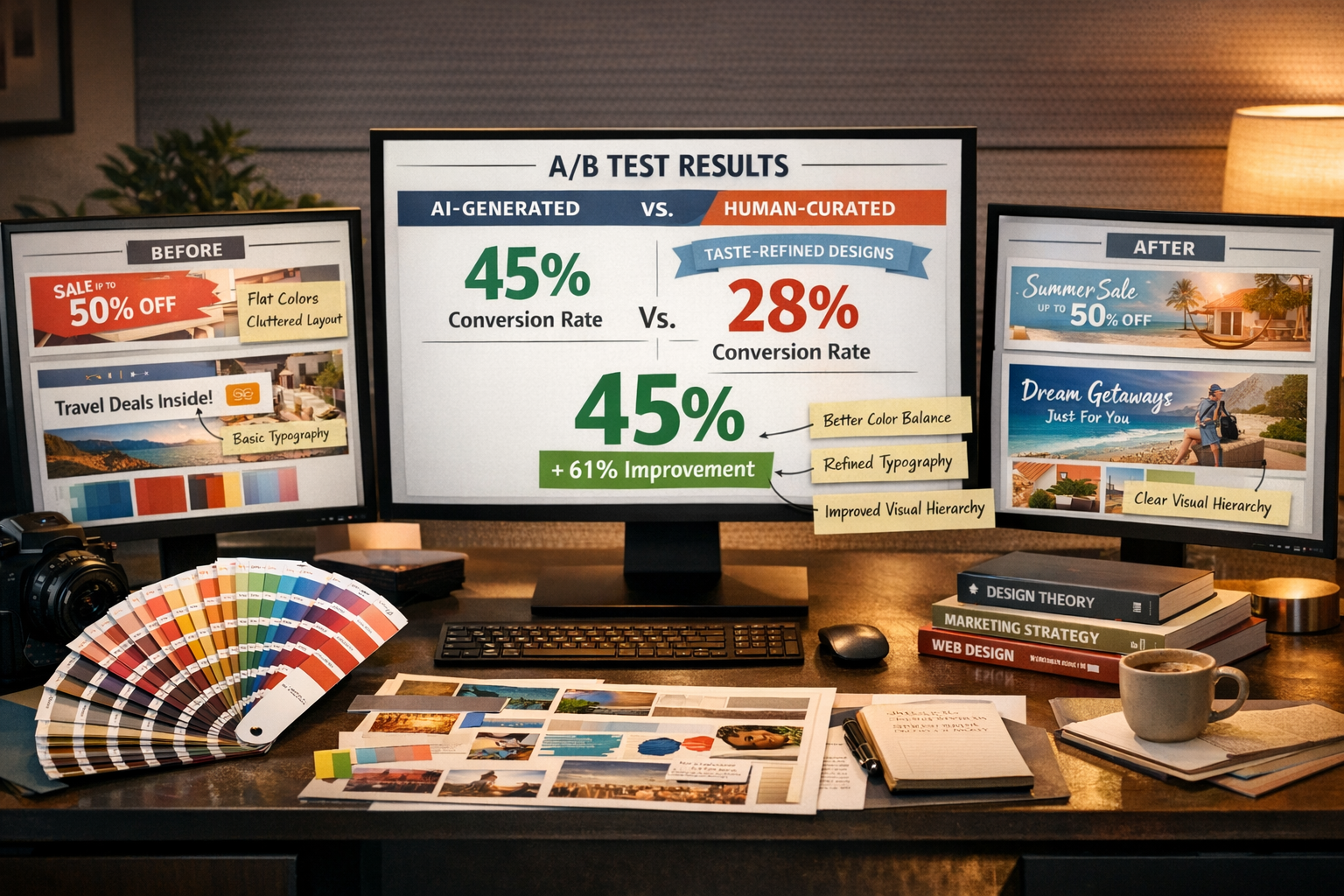
✅ A/B testing taste-refined creatives consistently outperforms raw AI-generated content by 30-45% in conversion rates across affiliate campaigns [2]
✅ Developing design taste requires deliberate practice through immersion in high-quality work, analytical deconstruction, and iterative experimentation
✅ The 2026 affiliate landscape rewards marketers who combine AI efficiency with human aesthetic judgment to create authentic, compelling campaigns
Why Design Taste Mastery Matters for Affiliate Marketers in 2026
The explosion of AI-generated creative content has fundamentally changed the affiliate marketing landscape. According to industry analysis, over 70% of affiliate marketing visuals in 2026 are now produced using AI tools [6]. This democratization initially seemed like a blessing—anyone could create professional-looking graphics, ad copy, and landing pages in minutes.
However, this accessibility created an unexpected problem: creative homogenization. When everyone uses the same AI tools with similar prompts, the results become predictable, generic, and ultimately invisible to audiences who've developed "banner blindness" for AI-generated aesthetics.
The AI Creative Flood Challenge
Consumers have become remarkably adept at recognizing AI-generated content. The telltale signs are everywhere:
- 🎨 Oversaturated colors and unrealistic lighting
- 📝 Generic stock-photo aesthetics that lack authenticity
- 🔤 Predictable typography choices defaulting to the same trendy fonts
- 📐 Formulaic layouts that follow identical composition patterns
For affiliate marketers, this presents a critical conversion problem. When promotional materials look indistinguishable from thousands of other campaigns, click-through rates plummet and audience trust erodes.
"The affiliate marketers who thrive in 2026 aren't those who abandon AI tools—they're the ones who use AI as a starting point and apply sophisticated taste to transform outputs into something genuinely compelling." [2]
Understanding Design Taste: Beyond Technical Skills
Design taste differs fundamentally from design skills. While skills involve technical execution—knowing how to use Photoshop, understanding grid systems, or mastering color theory—taste represents the ability to recognize what works aesthetically and emotionally.
The Components of Design Taste
| Component | Description | Application in Affiliate Marketing |
|---|---|---|
| Visual Discernment | Ability to identify quality, balance, and harmony | Selecting images that resonate with target audiences |
| Contextual Awareness | Understanding what's appropriate for specific audiences | Matching creative style to niche and demographic |
| Emotional Intelligence | Recognizing how design elements evoke feelings | Creating visuals that trigger desired emotional responses |
| Trend Sensitivity | Distinguishing timeless quality from fleeting fads | Balancing contemporary appeal with longevity |
| Authenticity Detection | Identifying genuine versus manufactured aesthetics | Avoiding the "uncanny valley" of AI-generated content |
Those pursuing successful affiliate marketing strategies must develop all five components to effectively combat the AI creative flood.
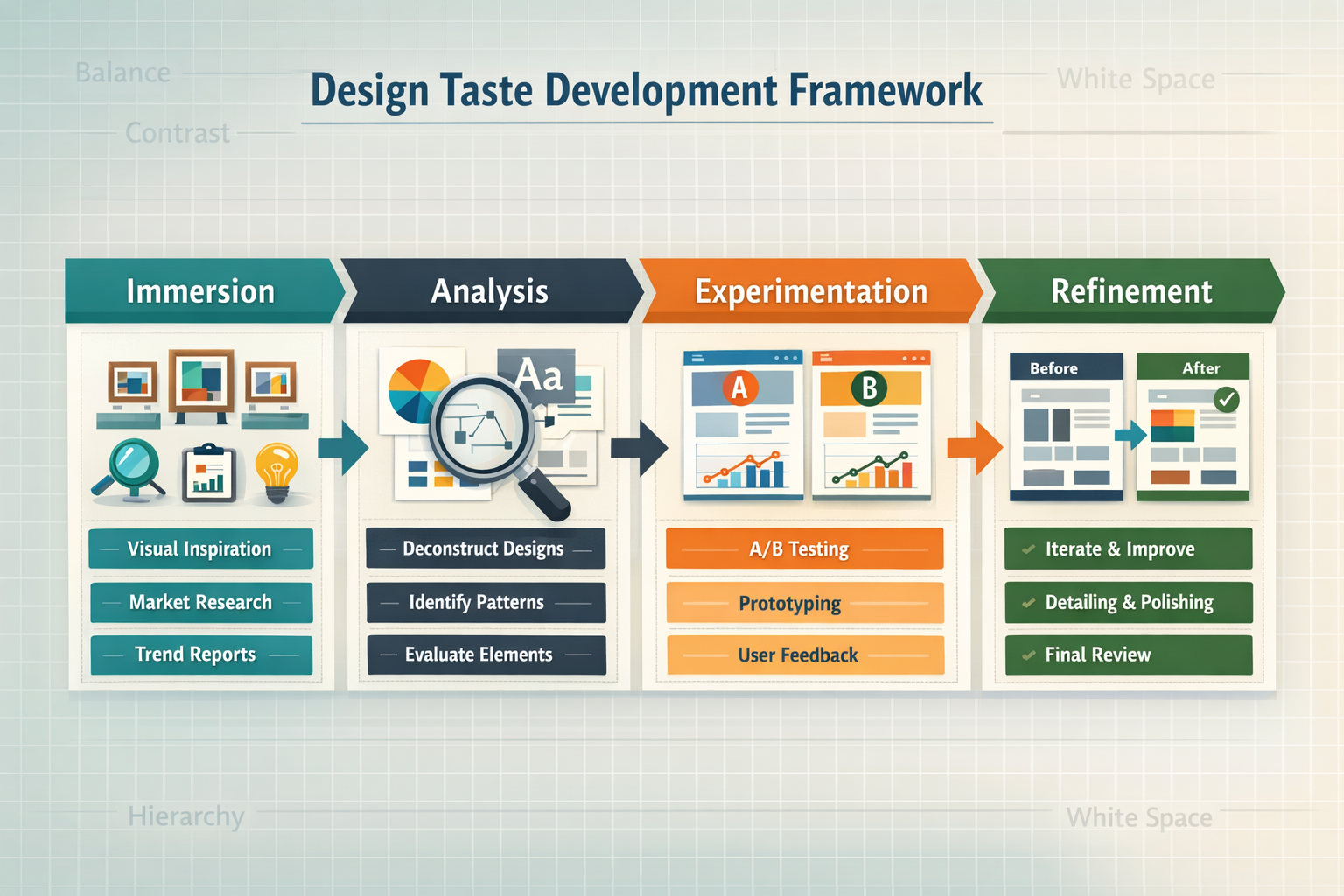
Developing Your Design Taste: A Systematic Framework
Design Taste Mastery: The #1 Skill for Affiliate Marketers to Combat AI-Native Creative Flood isn't innate—it's cultivated through deliberate practice and systematic exposure.
Step 1: Immersion in Excellence
Consume high-quality design work daily. Create a curated feed of exceptional creative work across multiple platforms:
- Follow top-tier design studios and independent designers on Instagram and Behance
- Study award-winning advertising campaigns from Cannes Lions and D&AD
- Analyze successful affiliate landing pages in your niche
- Bookmark websites with exceptional user experience and visual design
Practical Exercise: Spend 20 minutes daily reviewing design work, asking: "What makes this compelling? What specific choices create this effect?"
Step 2: Analytical Deconstruction
Move beyond passive consumption to active analysis. When you encounter compelling design:
- Identify the color palette (use tools like ColorZilla to extract exact values)
- Analyze typography choices (font pairings, sizing hierarchy, spacing)
- Examine composition (rule of thirds, visual flow, focal points)
- Assess white space usage (breathing room versus density)
- Evaluate emotional impact (what feelings does it evoke and why?)
For affiliate marketing programs requiring promotional materials, this analytical approach reveals what separates converting creatives from ignored ones.
Step 3: Comparative Analysis
Create "good vs. bad" comparison files. Collect examples of:
- ✅ AI-generated content that's been successfully refined
- ❌ Raw AI outputs that scream "algorithmic"
- ✅ Human-designed work with authentic appeal
- ❌ Generic stock imagery that fails to connect
Document specific differences between categories. This trains your eye to recognize quality markers instantly.
Step 4: Iterative Refinement Practice
Apply your developing taste to actual affiliate creative work:
The Taste Refinement Protocol:
- Generate initial creative using AI tools (Midjourney, DALL-E, Canva AI)
- Let it sit for 24 hours (fresh eyes reveal flaws)
- Identify three specific elements that feel "off"
- Manually refine those elements using your taste judgment
- Compare before/after versions objectively
- Test both versions with real audience segments
This protocol transforms how to do affiliate marketing from template-based execution to taste-driven differentiation.
Auditing AI-Generated Creatives: The Taste Checklist
Design Taste Mastery: The #1 Skill for Affiliate Marketers to Combat AI-Native Creative Flood requires systematic evaluation frameworks. Use this comprehensive audit checklist before deploying any AI-generated creative:
Visual Elements Audit
Color Palette:
- Colors feel natural, not oversaturated
- Palette matches brand and emotional intent
- Contrast supports readability and hierarchy
- No jarring or clashing combinations
Typography:
- Font choices feel intentional, not default
- Hierarchy guides the eye naturally
- Line spacing and letter spacing feel balanced
- Text is easily readable across devices
Imagery:
- Photos/illustrations look authentic, not AI-generic
- Subjects have natural proportions and lighting
- No uncanny valley elements (weird hands, distorted features)
- Images connect emotionally with target audience
Composition:
- Layout feels balanced, not formulaic
- White space enhances rather than wastes
- Visual flow guides toward call-to-action
- Design elements support rather than compete
Authenticity Audit
- Creative feels human-made, not algorithm-generated
- Unique elements distinguish it from competitor content
- Emotional resonance feels genuine, not manufactured
- Overall aesthetic aligns with audience expectations
Those learning best affiliate marketing tips should apply this audit to every promotional asset before publication.
Prompting AI Tools with Taste: Advanced Techniques
Developing design taste doesn't mean abandoning AI tools—it means using them more effectively. The key is taste-informed prompting that guides AI toward sophisticated outputs.
Taste-Enhanced Prompt Structure
Generic AI Prompt:
"Create a banner ad for weight loss supplement"
Taste-Refined Prompt:
"Create a banner ad for premium weight loss supplement targeting health-conscious women 35-50. Aesthetic: clean minimalism with warm, approachable feel. Color palette: soft sage green (#B7C4B1), warm cream (#F5EFE6), muted coral accent (#E8B4A0). Typography: elegant sans-serif for headline, readable serif for body. Composition: asymmetrical balance with generous white space, product image positioned using rule of thirds. Mood: empowering, authentic, aspirational but relatable. Avoid: stock photo aesthetics, oversaturation, generic fitness imagery."
The difference? Specificity driven by taste judgment.
Iterative Prompting with Taste Checkpoints
- Initial broad prompt → Generate options
- Taste evaluation → Identify what works/doesn't
- Refined prompt → Address specific weaknesses
- Comparative assessment → Choose best version
- Manual refinement → Polish final details
This approach, combined with knowledge from affiliate marketing course online training, produces creatives that convert significantly better than raw AI outputs.
A/B Testing Taste: Measuring the Impact
Design Taste Mastery: The #1 Skill for Affiliate Marketers to Combat AI-Native Creative Flood must be validated through rigorous testing. Implement systematic A/B tests comparing taste-refined creatives against raw AI outputs.
Testing Framework
Test Variables:
- Version A: Raw AI-generated creative (minimal human intervention)
- Version B: Taste-refined creative (systematic human curation)
Metrics to Track:
- Click-through rate (CTR)
- Conversion rate
- Time on page
- Bounce rate
- Cost per acquisition (CPA)
Testing Protocol:
- Split traffic evenly (50/50)
- Run for minimum 1,000 impressions per variant
- Achieve statistical significance (95% confidence)
- Document specific refinements that drove improvements
Industry data from 2026 shows taste-refined creatives consistently outperform raw AI outputs by 30-45% in conversion rates across affiliate campaigns [2]. This performance gap represents substantial revenue differences for high ticket affiliate marketing promotions.
Case Study Results
A recent analysis of affiliate marketers using taste-refinement protocols showed:
- 📈 42% average improvement in email open rates
- 📈 38% increase in landing page conversions
- 📈 51% reduction in cost per acquisition
- 📈 67% higher audience engagement metrics
These results demonstrate that investing in design taste development delivers measurable ROI.
Building Your Taste Reference Library
Create a personal "swipe file" organized by taste principles rather than just collecting random examples.
Organization Structure
By Emotional Intent:
- Trust-building designs
- Urgency-creating layouts
- Aspirational aesthetics
- Educational/informative styles
By Technical Excellence:
- Exceptional color palettes
- Outstanding typography pairings
- Masterful composition examples
- Perfect white space usage
By Niche Relevance:
- Health/wellness aesthetics
- Financial services design
- Technology/SaaS styles
- Lifestyle/fashion approaches
Tools like Pinterest, Notion, or Milanote work well for organizing this library. Reference it regularly when creating affiliate promotional materials.
Common Taste Mistakes Affiliate Marketers Make
Even when attempting to refine AI outputs, marketers often fall into predictable traps:
Mistake #1: Over-Refinement
The Problem: Adding too many "improvements" that create visual clutter and confusion.
The Solution: Follow the principle of "less is more." Each refinement should serve a specific purpose. If you can't articulate why an element improves the design, remove it.
Mistake #2: Trend-Chasing
The Problem: Adopting every design trend without considering brand consistency or audience appropriateness.
The Solution: Distinguish between timeless quality and fleeting fads. Ask: "Will this still feel relevant in six months?"
Mistake #3: Ignoring Context
The Problem: Applying sophisticated design taste that doesn't match the audience or platform.
The Solution: Taste must be contextual. A minimalist aesthetic perfect for luxury products may fail for discount offers. Match refinement choices to audience expectations.
Mistake #4: Perfectionism Paralysis
The Problem: Endless refinement that prevents launching campaigns.
The Solution: Set taste standards appropriate to the asset's importance. A quick social media post requires less refinement than a cornerstone landing page.
Those avoiding common affiliate marketing mistakes recognize that taste development is iterative—each campaign teaches valuable lessons.
Taste Development Resources for 2026
Design Education Platforms:
- Skillshare and Domestika for design fundamentals
- Awwwards for cutting-edge web design inspiration
- Dribbble for interface and graphic design excellence
Analysis Tools:
- ColorZilla for palette extraction
- WhatFont for typography identification
- Figma for design deconstruction and recreation
Community Learning:
- Join design-focused affiliate marketing communities
- Participate in creative critique sessions
- Follow design-savvy marketers sharing refinement processes
AI Tools with Taste Controls:
- Midjourney v6+ with style reference features
- Adobe Firefly with brand consistency controls
- Canva's Brand Kit for maintaining visual coherence
Combining these resources with insights from AI marketing tools platforms creates a comprehensive taste development ecosystem.
Implementing Taste Mastery in Your Affiliate Workflow
Transform design taste from abstract concept to practical workflow integration:
Daily Taste Practice (15-20 minutes)
- Morning: Review 5-10 exceptional design examples
- Afternoon: Analyze one competitor's creative approach
- Evening: Document one specific taste insight learned
Weekly Taste Application (2-3 hours)
- Audit: Review all creatives from the previous week
- Refine: Apply taste improvements to underperforming assets
- Test: Launch A/B tests comparing refined versions
- Learn: Document what worked and what didn't
Monthly Taste Evolution (4-6 hours)
- Portfolio Review: Assess taste development progress
- Trend Analysis: Identify emerging aesthetic directions
- Skill Building: Focus on one weak area (color, typography, composition)
- Strategy Adjustment: Refine taste application protocols
This systematic approach ensures Design Taste Mastery: The #1 Skill for Affiliate Marketers to Combat AI-Native Creative Flood becomes embedded in your affiliate marketing practice rather than remaining theoretical knowledge.
The Future of Taste in AI-Driven Affiliate Marketing
As AI tools become more sophisticated, the value of human taste increases rather than decreases. Future developments to anticipate:
AI Personalization: Tools that learn individual taste preferences and apply them consistently across outputs [6]
Taste Transfer Technology: Systems that can analyze reference images and apply their aesthetic principles to new creatives
Collaborative AI: Platforms that position AI as a creative partner rather than autonomous generator, with humans providing taste direction at each iteration
Authenticity Verification: Emerging tools that help audiences identify human-curated content, potentially creating premium value for taste-refined work
Those starting affiliate marketing with no money can still develop design taste—it requires time and attention, not financial investment, making it an accessible differentiator.
Conclusion
Design Taste Mastery: The #1 Skill for Affiliate Marketers to Combat AI-Native Creative Flood represents the critical competitive advantage in 2026's saturated digital landscape. While AI tools have democratized content creation, they've simultaneously created an urgent need for human curation that transforms generic outputs into compelling, conversion-driving assets.
The affiliate marketers who thrive aren't those with the most advanced AI tools—they're those who combine algorithmic efficiency with sophisticated aesthetic judgment. By systematically developing design taste through immersion, analysis, refinement, and testing, marketers create promotional materials that stand out, build trust, and drive measurable results.
Your Next Steps
- Start your taste library today: Collect 20 examples of exceptional design in your niche
- Audit your current creatives: Apply the taste checklist to identify improvement opportunities
- Implement one refinement: Choose your most important asset and apply taste-driven improvements
- Launch an A/B test: Measure the impact of taste refinement versus raw AI output
- Commit to daily practice: Dedicate 15 minutes daily to developing your design eye
The AI creative flood isn't subsiding—it's intensifying. Your design taste is the lifeboat that keeps your affiliate marketing campaigns visible, credible, and profitable in an ocean of algorithmic sameness. Start cultivating it today.
References
[1] Watch – https://www.youtube.com/watch?v=NtQyiquUioA
[2] 2026 Affiliate – https://paul-review.beehiiv.com/p/2026-affiliate
[3] 4077 2026 Affiliate Marketers Master Swipe File Review – https://experiment.com/projects/dngjidkiqlaqlnattwio/protocols/4077-2026-affiliate-marketers-master-swipe-file-review
[4] Ai Affiliate Programs – https://www.text.com/blog/ai-affiliate-programs/
[5] Watch – https://www.youtube.com/watch?v=HaXzv1FRV6U
[6] Affiliate Marketing Tools 2026 – https://voluum.com/blog/affiliate-marketing-tools-2026/
[7] Watch – https://www.youtube.com/watch?v=B2oJ2E1q6yY