

Imagine waking up to discover your affiliate campaign violated regulations you didn't even know existed. The AI tool you trusted made autonomous decisions about targeting vulnerable populations, and now your brand faces enforcement action. Welcome to 2026, where ethical liability in AI marketing has become the silent partner in every automated campaign—and brands (and affiliates) inherit risk without asking for it.
As artificial intelligence systems make increasingly autonomous decisions in marketing campaigns, a troubling reality has emerged: brands and affiliates are legally responsible for AI actions they didn't explicitly authorize. From algorithmic targeting that violates new regulations to unexplainable neural network decisions, the liability chain extends far beyond what most marketers realize.
Key Takeaways
- 🚨 Regulatory enforcement is here: The EU AI Act classifies certain advertising applications as "high-risk" systems requiring strict oversight, with enforcement beginning in 2026
- ⚖️ Liability flows downstream: Brands are responsible for affiliate and vendor AI compliance, creating inherited risk throughout the marketing chain
- 🔍 Explainability is mandatory: New "right to explanation" requirements expose brands to liability when AI systems make unexplainable targeting decisions
- 📋 Documentation is non-negotiable: Formal AI governance frameworks with regular audits are now required to avoid regulatory penalties
- 💡 Transparency builds trust: Early adopters of radical transparency approaches report higher engagement and better customer relationships while reducing legal exposure
Understanding Ethical Liability in AI Marketing
What Makes AI Marketing Liability Different?
Traditional marketing liability was straightforward: brands controlled their messages and were responsible for their claims. AI marketing has fundamentally changed this equation. Today's machine learning systems make thousands of micro-decisions per second—choosing audiences, adjusting messaging, and optimizing delivery—often without human oversight.
The problem? You're legally responsible for decisions you didn't make and may not even understand.
According to recent regulatory guidance, using public AI tools for client work without human-in-the-loop verification is now classified as a clear ethical violation, transferring liability to both brands and their agency partners.[2]
The Invisible Risk Chain
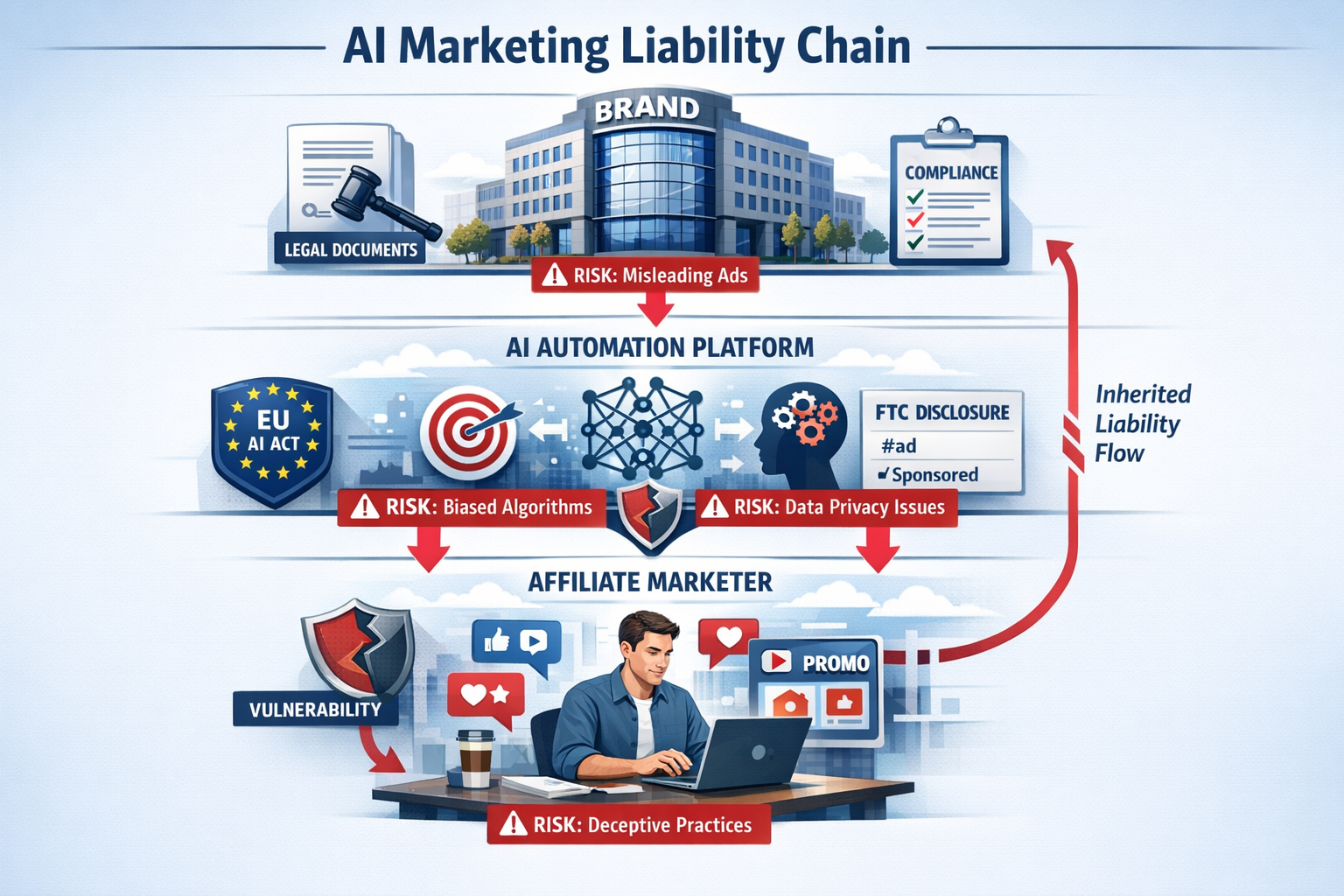
Here's how liability flows through modern AI marketing:
- Brand authorizes marketing campaign
- Marketing platform deploys AI targeting algorithms
- AI system makes autonomous decisions about audience selection
- Affiliate partners amplify campaigns using their own AI tools
- Regulatory violation occurs at any point in the chain
- Brand faces enforcement action for the entire chain
This cascade effect means affiliate marketers must understand that they're not just promoting products—they're inheriting a complex web of compliance obligations.
Major Regulatory Frameworks Creating Liability in 2026
The EU AI Act: High-Risk Classification
The European Union's AI Act represents the most comprehensive AI regulation globally, and it's set to be enforced in early 2026. The Act classifies certain advertising applications as "high-risk" systems requiring strict oversight, including:[1]
- 🎯 AI that targets vulnerable populations (children, elderly, people with disabilities)
- 🧠 Systems using subliminal techniques to influence behavior
- 🔄 Algorithms that create filter bubbles or manipulate decision-making
Brands deploying such systems without compliance face enforcement action—regardless of whether they understood the technical details of how their AI tools operated.
FTC Disclosure Requirements in the United States
The U.S. Federal Trade Commission has issued guidelines requiring disclosure when AI makes material decisions about ad targeting. Critically, the enforcement burden falls on brands rather than ad platforms.[1]
This creates a challenging situation: brands must somehow verify and disclose AI decision-making processes that even the platform providers may not fully understand.
California's AI Transparency Act
California mandates that consumers be informed when they're interacting with AI-generated content. However, enforcement has been inconsistent, creating dangerous ambiguity about liability distribution.[1]
For affiliates operating in multiple jurisdictions, this patchwork of regulations creates compliance nightmares. What's permissible in one state may violate regulations in another.
Algorithmic Accountability Mandates
Across major jurisdictions, regulations now require companies to explain how their AI systems make targeting and content decisions. This "right to explanation" has proven technically challenging, as many neural networks operate as black boxes even to their creators.[1]
When you can't explain why your AI targeted a specific demographic or chose particular messaging, you're exposed to liability for unexplainable decisions.
Why Brands and Affiliates Inherit Risk Without Asking for It
The Vendor Liability Chain
Here's the uncomfortable truth: marketers are now required to ensure that all partners and vendors uphold the same AI governance and privacy standards as internal teams.[3]
This creates contractual and regulatory liability for brands when affiliates fail to comply. If you're promoting products through affiliate marketing programs, your compliance failures become the brand's liability—and vice versa.
| Stakeholder | Traditional Liability | AI Marketing Liability |
|---|---|---|
| Brand | Direct marketing claims | All AI decisions in chain |
| Marketing Platform | Service delivery | Algorithm transparency |
| Affiliate | Promotional content | AI tool compliance |
| Consumer | Product expectations | Data usage, targeting ethics |
Professional Responsibility Violations
Using AI tools without proper verification isn't just risky—it's now an ethical violation. The standard has shifted from "did you intend harm?" to "did you implement proper governance?"[2]
For affiliates just starting out, this means you can't simply plug into AI marketing tools and hope for the best. You need documented processes, regular audits, and clear escalation paths.
The AI Influencer Credibility Crisis
A Northeastern University study revealed that consumers trust human influencers far more than AI-generated ones—especially in industries where safety, ethics, and responsibility are key. When brands use AI avatars or synthetic testimonials, audiences view them as less credible and more manipulative.[3]
The World Federation of Advertisers reports that top global brands are reevaluating their use of AI influencers due to ethical concerns, regulatory risks, and diminishing consumer trust.[3]
The takeaway? Using AI-generated content without disclosure doesn't just create legal risk—it damages brand credibility and customer relationships.
Mandatory AI Governance Frameworks for 2026
Documentation Requirements
Brands must now formally document all decisions related to:[3]
- ✅ Algorithmic model selection and rationale
- ✅ Training datasets and data sources
- ✅ Output analysis and quality control measures
- ✅ Human oversight protocols
- ✅ Bias detection and mitigation strategies
Failure to maintain documented governance exposes organizations to regulatory penalties and litigation.
Ongoing Algorithmic Audit Obligations
In 2026, a code of conduct for marketing automation must include:[3]
- Regular algorithmic audits to detect bias and errors
- Risk assessments for each AI deployment
- Escalation paths for responding to errors or consumer complaints
- Continuous monitoring of AI system performance
Failure to conduct these audits creates significant liability exposure. For those exploring AI marketing strategies, building audit processes from day one is essential.
Human-in-the-Loop Requirements
The era of "set it and forget it" AI marketing is over. Regulations now require meaningful human oversight at critical decision points:
- 👤 Review of targeting parameters before campaign launch
- 👤 Monitoring of AI-generated content for compliance
- 👤 Investigation of anomalous results or consumer complaints
- 👤 Regular review of algorithmic performance metrics
Practical Steps to Mitigate Ethical Liability in AI Marketing
For Brands
1. Implement Formal AI Governance
Create documented frameworks covering model selection, data usage, and oversight protocols. This isn't optional—it's regulatory compliance.
2. Conduct Vendor Due Diligence
Before partnering with affiliates or marketing platforms, verify their AI governance practices. Include compliance requirements in contracts.
3. Establish Transparency Dashboards
Studies show that transparent advertising can be equally or more effective than opaque targeting. Early adopters of "radical transparency" approaches—providing users with detailed dashboards showing data categorization and ad rationale—report higher engagement and better long-term customer relationships.[1]
4. Build Audit Capabilities
Develop internal or contracted capabilities to conduct regular algorithmic audits, bias detection, and risk assessments.
For Affiliates
1. Understand Your Compliance Obligations
Don't assume the brand handles all compliance. As an affiliate, you're part of the liability chain. Research applicable regulations in your jurisdictions.
2. Document Your AI Tool Usage
Keep records of which AI tools you use, how you use them, and what oversight you provide. This documentation protects you if questions arise.
3. Implement Human Review
Never publish AI-generated content without human review. This applies to ad copy, social media posts, email campaigns, and any consumer-facing material.
4. Disclose AI Usage
When using AI-generated content or AI-powered targeting, provide clear disclosure. This meets regulatory requirements and builds consumer trust.
5. Choose Partners Carefully
Work with brands and platforms that demonstrate strong AI governance. Their compliance protects you. Learn more about selecting legitimate affiliate opportunities.
For Marketing Platforms
1. Provide Explainability Tools
Give users the ability to understand and explain AI decisions. This meets regulatory requirements and builds trust.
2. Build Compliance Features
Integrate disclosure tools, audit trails, and governance workflows directly into your platform.
3. Educate Users
Provide training and resources about AI compliance obligations. Your users' compliance protects your platform.
The Strategic Advantage of Compliance
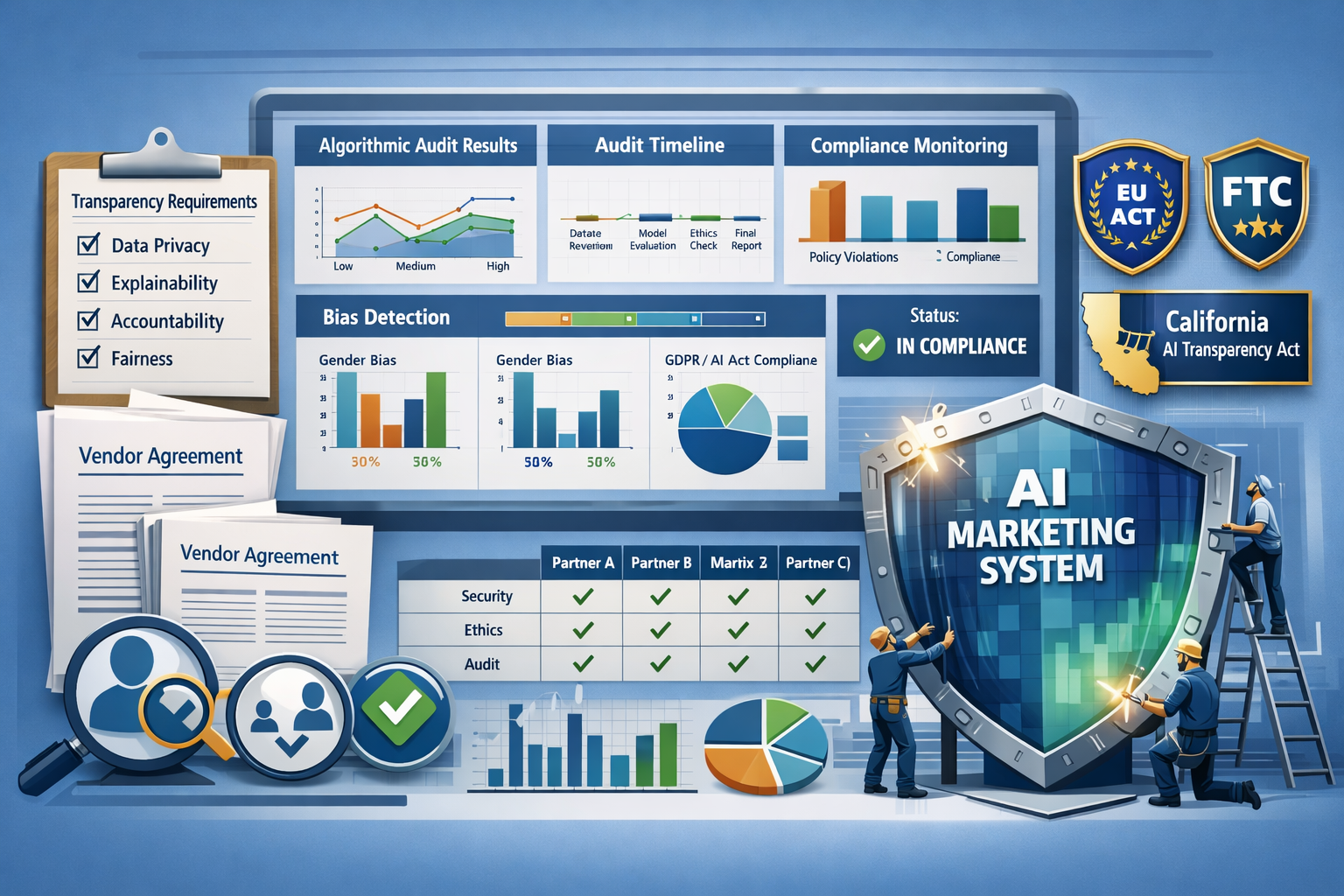
Here's the silver lining: regulatory compliance and ethical AI marketing is no longer just a legal necessity—it's a strategic advantage.[3]
Companies that embrace compliance early can:
- 🎯 Introduce innovative AI tools with minimal legal exposure
- 🎯 Prevent costly litigation and regulatory penalties
- 🎯 Build stronger customer relationships through transparency
- 🎯 Future-proof their organizations against sudden regulatory changes
- 🎯 Differentiate themselves from competitors cutting corners
For affiliates looking to maximize their earnings potential, positioning yourself as a compliance-focused partner makes you more valuable to brands navigating this complex landscape.
Real-World Scenarios: When Inherited Risk Becomes Reality
Scenario 1: The Affiliate Who Didn't Know
An affiliate marketer uses an AI content generation tool to create product reviews. The AI, trained on biased data, consistently generates content that subtly discourages certain demographic groups from purchasing. The brand faces discrimination complaints and regulatory scrutiny—and the affiliate's contract makes them jointly liable.
The lesson: You're responsible for bias in your AI tools, even if you didn't create the bias.
Scenario 2: The Platform's Black Box
A brand uses a major advertising platform's AI targeting. The algorithm targets elderly consumers with aggressive tactics that regulators deem manipulative. When asked to explain the targeting logic, neither the brand nor the platform can provide a clear explanation. Both face penalties under algorithmic accountability mandates.
The lesson: "I didn't know how it worked" is not a defense.
Scenario 3: The Undisclosed AI Influencer
An affiliate creates an AI-generated spokesperson to promote products on social media. The virtual influencer gains traction, but consumers eventually discover it's AI-generated. The backlash damages both the affiliate's reputation and the brand's, and both face FTC disclosure violations.
The lesson: Transparency isn't optional—it's required and beneficial.
Building a Culture of Ethical AI Marketing
Moving beyond mere compliance, successful brands and affiliates in 2026 are building cultures of ethical AI use:
- 🌟 Prioritize consumer benefit over algorithmic optimization
- 🌟 Default to transparency rather than opacity
- 🌟 Invest in education for all team members using AI tools
- 🌟 Create feedback loops to catch and correct issues quickly
- 🌟 View compliance as competitive advantage rather than burden
Those exploring data and analytics for AI marketing should integrate ethical considerations from the start, not as an afterthought.
Conclusion
Ethical liability in AI marketing: why brands (and affiliates) inherit risk without asking for it isn't a theoretical concern—it's the reality of marketing in 2026. As AI systems make increasingly autonomous decisions, the liability chain extends throughout the entire marketing ecosystem, from brands to platforms to individual affiliates.
The regulatory landscape has fundamentally shifted. The EU AI Act, FTC disclosure requirements, California's AI Transparency Act, and algorithmic accountability mandates create a complex web of obligations that brands and affiliates must navigate. Failure to comply brings enforcement action, litigation, and reputational damage.
But compliance isn't just about avoiding penalties—it's about building sustainable, trustworthy marketing practices that create long-term value. Brands and affiliates who embrace transparency, implement robust governance frameworks, and prioritize ethical AI use will find themselves with competitive advantages in an increasingly regulated marketplace.
Next Steps: Take Action Today
For Brands:
- Audit your current AI marketing tools and document their governance
- Review affiliate and vendor contracts for AI compliance requirements
- Implement algorithmic audit schedules for all AI systems
- Create transparency dashboards for consumer trust
For Affiliates:
- Document all AI tools you currently use in your marketing
- Implement human review processes for all AI-generated content
- Research disclosure requirements in your operating jurisdictions
- Partner with brands demonstrating strong AI governance
For Everyone:
5. Stay informed about evolving regulations and best practices
6. Invest in education about AI ethics and compliance
7. Build relationships with legal and compliance experts
8. View ethical AI as opportunity, not obstacle
The era of invisible AI decisions is over. In 2026, every stakeholder in the marketing chain must understand, document, and take responsibility for the AI systems they deploy. Those who act proactively will thrive; those who wait will inherit risks they can't afford.
Start building your AI governance framework today. Your future self—and your legal team—will thank you.