

The digital marketing landscape has shifted dramatically. With third-party cookies now extinct and privacy regulations tightening across global markets, affiliate marketers face a critical challenge in 2026: how to deliver personalized experiences without traditional tracking mechanisms. The answer lies in Hyper-Personalization Without Cookies: Affiliate Strategies Using AI Intent Signals for 2026 Compliance—a revolutionary approach that leverages artificial intelligence to detect behavioral patterns and predict user intent without compromising privacy.
This transformation isn't just about compliance; it's about unlocking unprecedented conversion opportunities. Affiliates who master AI-driven intent signals are achieving 34% revenue increases without additional traffic[1], proving that privacy-safe personalization can actually outperform cookie-based targeting.
Key Takeaways
- AI intent signals detect behavioral micro-patterns that predict conversions with 23% higher accuracy than traditional cookie tracking
- First-party behavioral data combined with machine learning enables individual-level personalization while maintaining full privacy compliance
- Predictive analytics forecast demand 3-4 months ahead, allowing affiliates to create targeted content before market spikes occur
- Automation handles 70% of routine campaign tasks by 2026, freeing marketers to focus on strategic optimization[1]
- Multi-threading detection increases deal velocity by 40% when AI identifies multiple decision-makers researching simultaneously[3]
Understanding AI Intent Signals in the Post-Cookie Era
What Are Intent Signals? 🎯
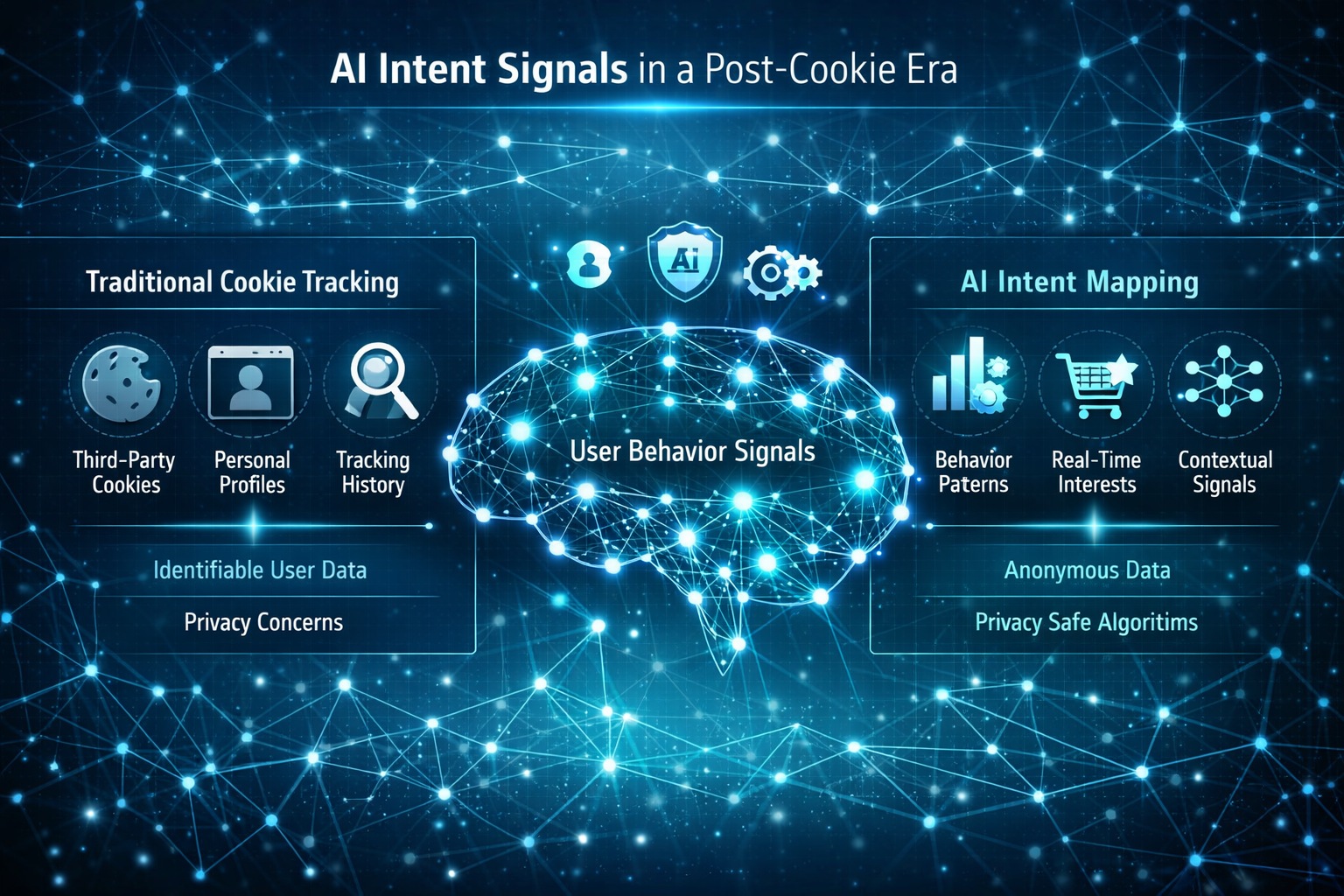
Intent signals represent behavioral indicators that reveal user interest, research stage, and purchase readiness without relying on cross-site tracking. Unlike cookies that follow users across the web, intent signals analyze first-party interactions on your own properties—website visits, content consumption patterns, engagement duration, and interaction sequences.
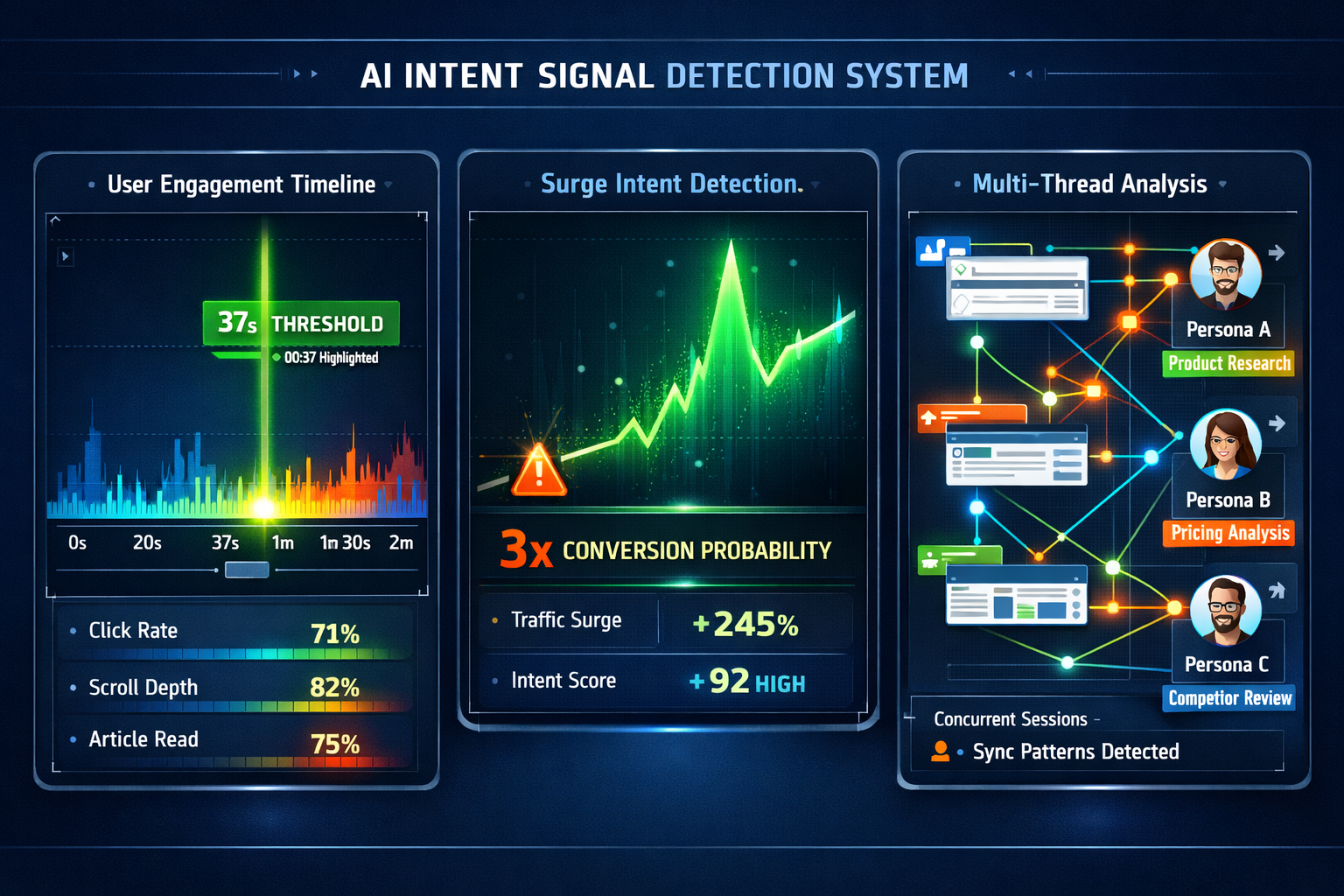
The sophistication of AI-powered intent detection has reached remarkable precision. Machine learning models now identify that users who spend exactly 37 seconds on a specific page type are 23% more likely to convert when shown targeted calls-to-action[1]. This level of behavioral micro-pattern recognition was impossible with traditional cookie-based analytics.
Types of Intent Signals Affiliates Can Leverage
Behavioral Intent Signals:
- Page visit frequency and recency
- Content consumption depth (scroll depth, time on page)
- Search query patterns on your site
- Email engagement metrics (opens, clicks, timing)
- Download and resource access behavior
Contextual Intent Signals:
- Topic clustering from content viewed
- Product category exploration patterns
- Price point research behavior
- Comparison shopping indicators
- Feature-specific content consumption
Predictive Intent Signals:
- Surge intent detection: Sudden increases in research activity indicating users are 3x more likely to enter active evaluation within 60 days[3]
- Seasonal pattern matching against historical conversion data
- Cross-device behavior correlation
- Engagement threshold achievement
For those just starting their journey, understanding the fundamentals of successful affiliate marketing provides essential context for implementing these advanced strategies.
How Hyper-Personalization Without Cookies Works Using AI
The Privacy-First Data Collection Framework
The foundation of cookie-free personalization starts with robust first-party data collection. This means capturing behavioral information directly from users who interact with your owned properties—your website, email list, mobile app, or community platform.
Key components include:
| Data Source | Signal Type | Privacy Status |
|---|---|---|
| Website analytics | Behavioral patterns | ✅ First-party |
| Email engagement | Interest indicators | ✅ First-party |
| Form submissions | Explicit preferences | ✅ Consent-based |
| On-site search | Intent keywords | ✅ First-party |
| Content interactions | Topic affinity | ✅ First-party |
| Account activity | Usage patterns | ✅ First-party |
The critical difference? All data collection happens within your controlled environment with transparent user consent, eliminating privacy concerns while providing richer behavioral insights than cookies ever could.
AI Processing: From Raw Data to Actionable Intent
Once first-party data flows into your system, AI algorithms transform raw interactions into predictive intent models. Modern platforms ingest and process trillions of buyer signals daily[3], identifying patterns invisible to human analysis.
The AI processing pipeline includes:
- Pattern Recognition: Machine learning identifies behavioral sequences that correlate with conversion events
- Sentiment Analysis: Natural language processing extracts 5-10 specific pain points from user-generated content, reviews, and feedback[2]
- Predictive Modeling: Algorithms forecast which users are entering active buying cycles
- Micro-Segmentation: AI creates dynamic audience clusters based on real-time behavior, not static demographics
- Personalization Engine: Systems automatically generate unique content variations for individual users[1]
This approach enables automated email replies based on intent and urgency detection, creating responsive communication without manual intervention.
Individual-Level Personalization at Scale
The most powerful aspect of AI-driven personalization is its ability to create unique experiences for each visitor—not just broad audience segments. AI agents now generate slightly different product recommendations, messaging angles, and content layouts based on each person's predicted preferences and behavior profile[1].
Example workflow:
- Visitor arrives from organic search for "best project management software for remote teams"
- AI analyzes previous site visits (returning visitor, viewed pricing pages twice)
- System detects surge intent (research activity increased 300% this week)
- Personalization engine serves case study featuring remote team success story
- Call-to-action emphasizes free trial with team collaboration features
- Follow-up email sequence tailored to remote work pain points identified through sentiment analysis
This level of precision increases conversion rates without increasing traffic—the efficiency gain that drove one e-commerce affiliate to achieve 34% revenue growth[1].
Implementing AI Intent Signals: Tools and Platforms for 2026 Compliance
Essential AI Intent Detection Tools
For Affiliate Marketers:
6Sense – Enterprise-level intent platform that processes massive signal volumes across millions of webpages to detect emerging intent before obvious buying signals appear[3]. Best for high-ticket B2B affiliate programs.
Demandbase – Combines account-based marketing with intent data, identifying when multiple personas from the same account simultaneously research solutions (multi-threading), which increases deal velocity by 40%[3]. Ideal for SaaS and enterprise affiliates.
Clearbit Reveal – Identifies anonymous website visitors using IP intelligence and behavioral tracking, enabling personalized experiences for first-time visitors without cookies.
Mutiny – AI-powered website personalization platform that creates dynamic content variations based on visitor attributes and behavior patterns, perfect for conversion optimization.
Optimizely – Experimentation platform with AI-driven personalization that tests and deploys winning variations automatically.
For marketers exploring broader automation strategies, AI marketing tools and platforms provide comprehensive options across the marketing stack.
Building Your First-Party Data Infrastructure
Step 1: Implement Comprehensive Analytics
Deploy privacy-compliant analytics that capture behavioral signals:
- Google Analytics 4 (GA4) with enhanced measurement
- Plausible or Fathom for privacy-first analytics
- Heap or Mixpanel for event-based tracking
- Custom data layer implementation for precise signal capture
Step 2: Create Engagement Touchpoints
Design interaction opportunities that reveal intent:
- Interactive quizzes that segment by need
- Resource libraries with gated content
- Email preference centers
- On-site search functionality
- Comparison tools and calculators
Step 3: Integrate AI Processing Layer
Connect data sources to AI platforms:
- Customer Data Platform (CDP) for unified profiles
- Machine learning models for pattern recognition
- Predictive analytics for demand forecasting
- Sentiment analysis for content optimization
Step 4: Deploy Personalization Engine
Activate insights across touchpoints:
- Dynamic website content based on behavior
- Personalized email sequences triggered by intent signals
- Customized product recommendations
- Targeted retargeting campaigns using first-party data
Those new to affiliate marketing can start with beginner-friendly affiliate programs while building their technical infrastructure.
Advanced Strategies: Maximizing Conversions with AI Intent Signals
Predictive Content Creation and Demand Forecasting
One of the most powerful applications of AI intent signals is predictive demand identification. Advanced tools now forecast demand 3-4 months before peak demand through predictive analytics[2], allowing affiliate marketers to create content and build authority before competitors recognize emerging trends.
Implementation approach:
- Historical pattern analysis: AI examines 2-3 years of search, social, and engagement data
- Seasonal modeling: Algorithms identify recurring demand patterns with timing precision
- Trend detection: Machine learning spots early signals of emerging topics
- Content calendar automation: Systems generate recommended publishing schedules
- Resource allocation: AI prioritizes high-probability opportunities
This enables affiliates to rank for competitive terms before search volume spikes, capturing early-stage researchers who become customers months later.
Multi-Channel Intent Orchestration
Modern buyers research across multiple channels before purchasing. AI-powered orchestration ensures contextually relevant experiences across all touchpoints without manual intervention for each personalization decision[3].
Orchestration framework:
Detection Phase:
- Website behavior indicates product interest
- Email engagement reveals specific pain points
- Search patterns show comparison shopping
Activation Phase:
- Programmatic ads display relevant case studies
- Website content dynamically adjusts to visitor profile
- Chatbot conversations reference previous interactions
- Email sequences deliver personalized recommendations
- Retargeting shows products aligned with browsing history
Optimization Phase:
- AI continuously tests messaging variations
- Machine learning identifies optimal channel mix
- Predictive models adjust budget allocation
- Conversion attribution reveals highest-value touchpoints
Buying Committee Detection for High-Ticket Affiliates
For affiliates promoting B2B or high-ticket products, buying committee activation represents a critical signal. When AI detects multiple personas from the same organization researching simultaneously, it indicates active evaluation with 40% faster deal velocity[3].
Detection indicators:
- Multiple IP addresses from same company domain
- Different job titles viewing complementary content
- Coordinated research timing across decision-maker roles
- Cross-functional content consumption patterns
Response strategy:
- Trigger account-based nurture sequences
- Provide role-specific content for each persona
- Offer collaborative evaluation resources
- Prioritize sales-assisted conversion paths
- Adjust commission optimization for higher-value conversions
Affiliates can learn more about avoiding common affiliate marketing mistakes while implementing these sophisticated strategies.
Privacy Compliance and Ethical Considerations
Maintaining 2026 Regulatory Compliance
Key regulations affecting affiliate personalization:
- GDPR (Europe): Requires explicit consent for data processing, right to erasure, data portability
- CCPA/CPRA (California): Mandates opt-out mechanisms, data disclosure, deletion rights
- Privacy Sandbox (Chrome): Replaces cookies with privacy-preserving APIs
- ePrivacy Directive: Governs electronic communications and tracking
Compliance checklist:
✅ Transparent data collection notices
✅ Explicit consent mechanisms for personalization
✅ Easy opt-out and preference management
✅ Data minimization (collect only necessary signals)
✅ Secure data storage and processing
✅ Regular privacy audits and documentation
✅ Third-party vendor compliance verification
Building Trust Through Transparency
The most successful affiliates in 2026 treat privacy as a competitive advantage, not a compliance burden. Transparent data practices build trust that increases conversion rates and customer lifetime value.
Trust-building practices:
- Clear privacy policies in plain language
- Visible value exchange for data sharing
- User control over personalization settings
- Honest communication about AI usage
- Ethical boundaries on personalization depth
- Regular privacy updates and education
Measuring Success: Metrics That Matter in Cookie-Free Personalization
Key Performance Indicators for AI-Driven Campaigns
Traditional metrics remain important, but AI intent-based strategies require additional measurement frameworks:
Intent Signal Metrics:
- Intent signal capture rate (% of visitors generating usable signals)
- Signal-to-conversion correlation strength
- Predictive model accuracy (forecast vs. actual conversions)
- Intent stage progression velocity
Personalization Performance:
- Personalized vs. generic content conversion rates
- Individual variation performance distribution
- Automation efficiency (manual hours saved)
- Revenue per visitor (RPV) improvement
Privacy and Compliance:
- Consent opt-in rates
- Data collection transparency scores
- Privacy complaint frequency
- Compliance audit results
Business Impact:
- Revenue growth without traffic increase (efficiency gain)
- Customer acquisition cost (CAC) reduction
- Customer lifetime value (CLV) improvement
- Return on AI investment (ROAI)
The 34% revenue increase without traffic growth achieved by AI-powered affiliates[1] demonstrates that efficiency gains often exceed volume-based growth strategies.
Future-Proofing Your Affiliate Strategy
Adapting to the Search Volume Decline
The predicted 25% decline in search engine volume by 2026 due to AI chatbots[4] has materialized, requiring affiliates to diversify beyond traditional SEO strategies.
Emerging channels for intent-based discovery:
- AI assistant optimization: Positioning content for ChatGPT, Claude, and Gemini responses
- Voice search personalization: Optimizing for conversational queries
- Visual search integration: Leveraging image-based intent signals
- Platform-native discovery: TikTok, Instagram, and YouTube recommendation algorithms
- Community-based intent: Reddit, Discord, and niche forums
Continuous Learning and Adaptation
AI models improve through continuous learning. The most successful affiliates treat personalization as an evolving system, not a one-time implementation.
Optimization cycle:
- Weekly: Review intent signal performance and adjust thresholds
- Monthly: Analyze personalization variation winners and losers
- Quarterly: Audit privacy compliance and update consent mechanisms
- Annually: Evaluate AI platform performance and explore new tools
For those building comprehensive affiliate businesses, exploring diverse affiliate marketing programs ensures revenue stability across channels.
Conclusion
Hyper-Personalization Without Cookies: Affiliate Strategies Using AI Intent Signals for 2026 Compliance represents more than a technical adaptation—it's a fundamental evolution in how affiliates create value for audiences and merchants. By leveraging first-party behavioral data, AI-powered intent detection, and privacy-safe personalization, marketers can achieve higher conversion rates, better user experiences, and full regulatory compliance simultaneously.
The data proves the opportunity: 70% automation of routine tasks[1], 3-4 month demand forecasting[2], 40% faster deal velocity through multi-threading detection[3], and 34% revenue increases without traffic growth[1]. These aren't theoretical benefits—they're measurable outcomes from affiliates who've embraced AI intent signals.
Your Next Steps 🚀
- Audit your current data collection: Identify gaps in first-party signal capture
- Choose an AI intent platform: Start with tools matching your niche and budget
- Implement basic personalization: Test dynamic content variations on high-traffic pages
- Measure and optimize: Track intent-to-conversion correlation and refine models
- Scale gradually: Expand personalization across channels as you validate results
- Stay compliant: Regular privacy audits and transparent communication
The cookie-free future isn't a limitation—it's an opportunity for affiliates who embrace AI-powered personalization to deliver superior experiences while respecting user privacy. Those who master intent signals today will dominate affiliate marketing tomorrow.
Start building your privacy-first personalization system now, and position yourself at the forefront of affiliate marketing's most significant transformation in a decade.
References
[1] The Future Of Affiliate Marketing Ai Agents As Affiliates – https://www.jasminedirectory.com/blog/the-future-of-affiliate-marketing-ai-agents-as-affiliates/
[2] How To Build An Ai Powered Affiliate Content System In 2026 From Strategy To Scalable Growth – https://vivatbetaffiliates.com/how-to-build-an-ai-powered-affiliate-content-system-in-2026-from-strategy-to-scalable-growth/
[3] Tools – https://www.demandbase.com/faq/intent-based-marketing/tools/
[4] Ai Predictions Marketing – https://blog.hubspot.com/marketing/ai-predictions-marketing
SEO Meta Title: Cookie-Free Personalization: AI Intent Signals for Affiliates