

Mastering Listicle or How-to Article Generation with Topics Seeded by Sheets: The Complete n8n Automation Guide
Imagine transforming a simple Google Sheets document filled with topic ideas into dozens of high-quality listicles and how-to articles, all while you sleep. Listicle or how-to article generation with topics seeded by Sheets has revolutionized content creation workflows, enabling creators to scale their output exponentially through intelligent automation. This powerful approach combines the organizational capabilities of spreadsheets with AI-driven content generation, creating a seamless pipeline that turns raw ideas into polished, publishable content.
Key Takeaways
• Automated Content Scaling: Listicle or how-to article generation with topics seeded by Sheets enables creators to transform spreadsheet data into multiple content pieces simultaneously
• n8n Workflow Integration: The platform serves as the perfect orchestrator for connecting Google Sheets with AI models and publishing platforms
• Quality and Consistency: Standardized templates and AI prompts ensure consistent voice and formatting across all generated content
• Data-Driven Content Strategy: Sheets-based topic seeding allows for systematic content planning based on keyword research and trending topics
• End-to-End Automation: Complete workflows from topic ideation to content publishing can be fully automated with minimal manual intervention
Understanding the Foundation: Why Sheets-Seeded Content Generation Works
The Power of Structured Content Planning 📊
Listicle or how-to article generation with topics seeded by Sheets leverages the inherent organizational structure of spreadsheets to create systematic content production workflows. Research indicates that listicles receive approximately twice as much traffic compared to other blog post formats due to their scannable, digestible nature that appeals to time-conscious readers [1].
Google Sheets serves as the perfect foundation for this approach because it allows content creators to:
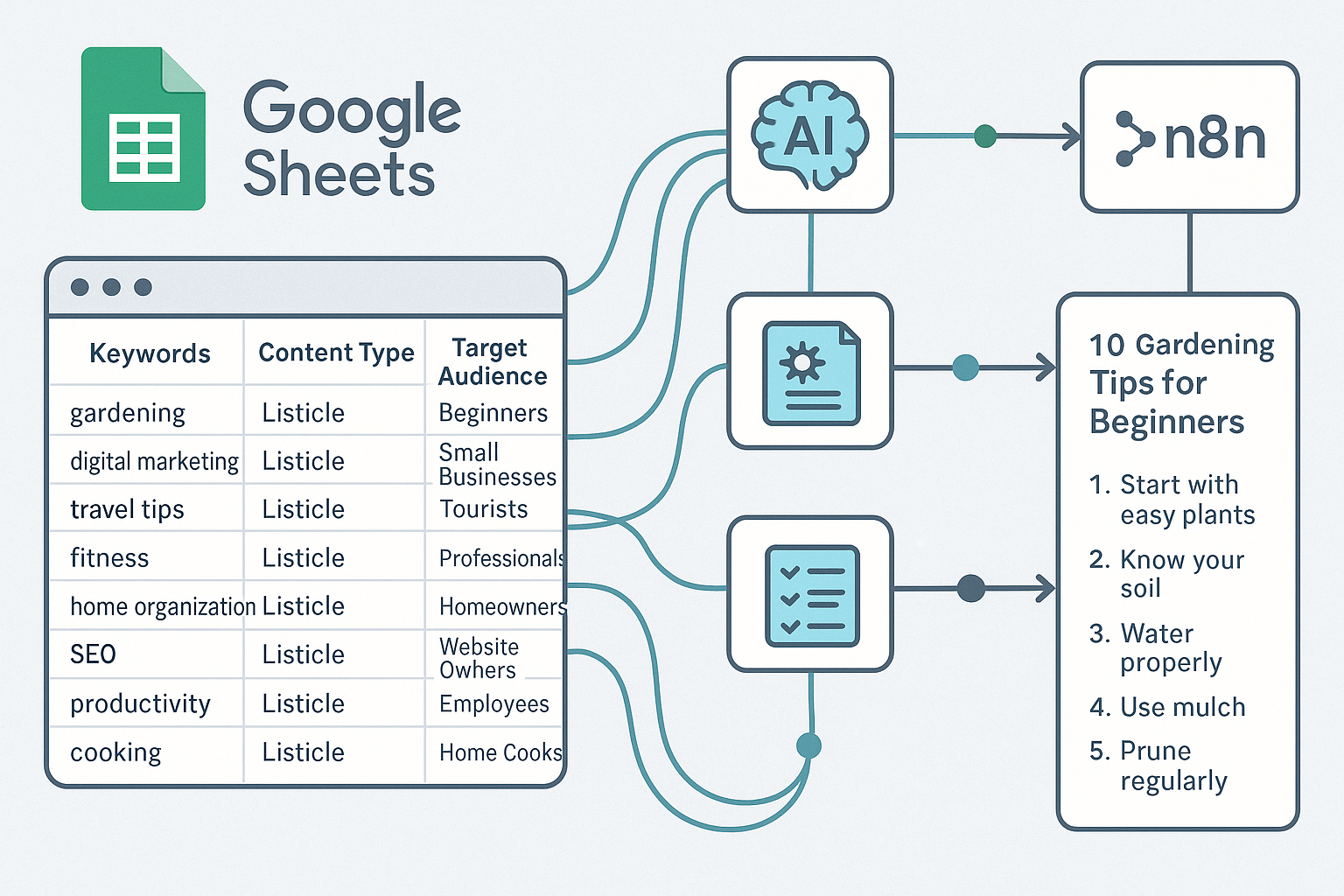
- Organize topics systematically with columns for keywords, target audience, content type, and priority levels
- Track content status through automated checkboxes and conditional formatting
- Scale content planning by importing data from keyword research tools like BuzzSumo and Google Trends [2]
- Collaborate efficiently with team members who can add topics, review content, and update statuses
The AI Content Generation Revolution
Modern AI tools have transformed how we approach listicle or how-to article generation with topics seeded by Sheets. These systems perform four core functions that make automated content creation possible:
- Outline Generation: Creating structured frameworks with specified item counts
- Content Creation: Developing comprehensive content with facts, examples, and supporting details
- Grammar and Style Verification: Ensuring consistency and readability across all generated pieces
- Automated Formatting: Converting raw content into properly formatted numbered or bulleted lists
“The combination of structured data input and AI processing creates a content generation system that’s both scalable and maintainable, allowing creators to focus on strategy rather than execution.”
Types of Content Perfect for Automation
Traditional Listicles typically contain 10-20 items organized around specific themes, with modern versions enhanced with additional context and utility [3]. The most effective automated content types include:
Definitive Listicles: Exhaustive compilations covering all aspects of a topic in detail, perfect for comprehensive guides and subject exploration
Curated Listicles: Collections of valuable resources, facts, and references serving as centralized knowledge hubs
Expert Roundup Listicles: Compilations of insights from multiple industry professionals, providing diverse perspectives and establishing thought leadership
How-To Guides: Step-by-step instructional content that benefits from consistent formatting and systematic organization
Building Your n8n Workflow for Listicle or How-to Article Generation with Topics Seeded by Sheets
Setting Up the Foundation Workflow
Creating an effective listicle or how-to article generation with topics seeded by Sheets workflow in n8n requires careful planning and systematic implementation. The platform’s unique position as an AI orchestrator makes it ideal for connecting Google Sheets with various AI models and publishing platforms.
Essential Workflow Components
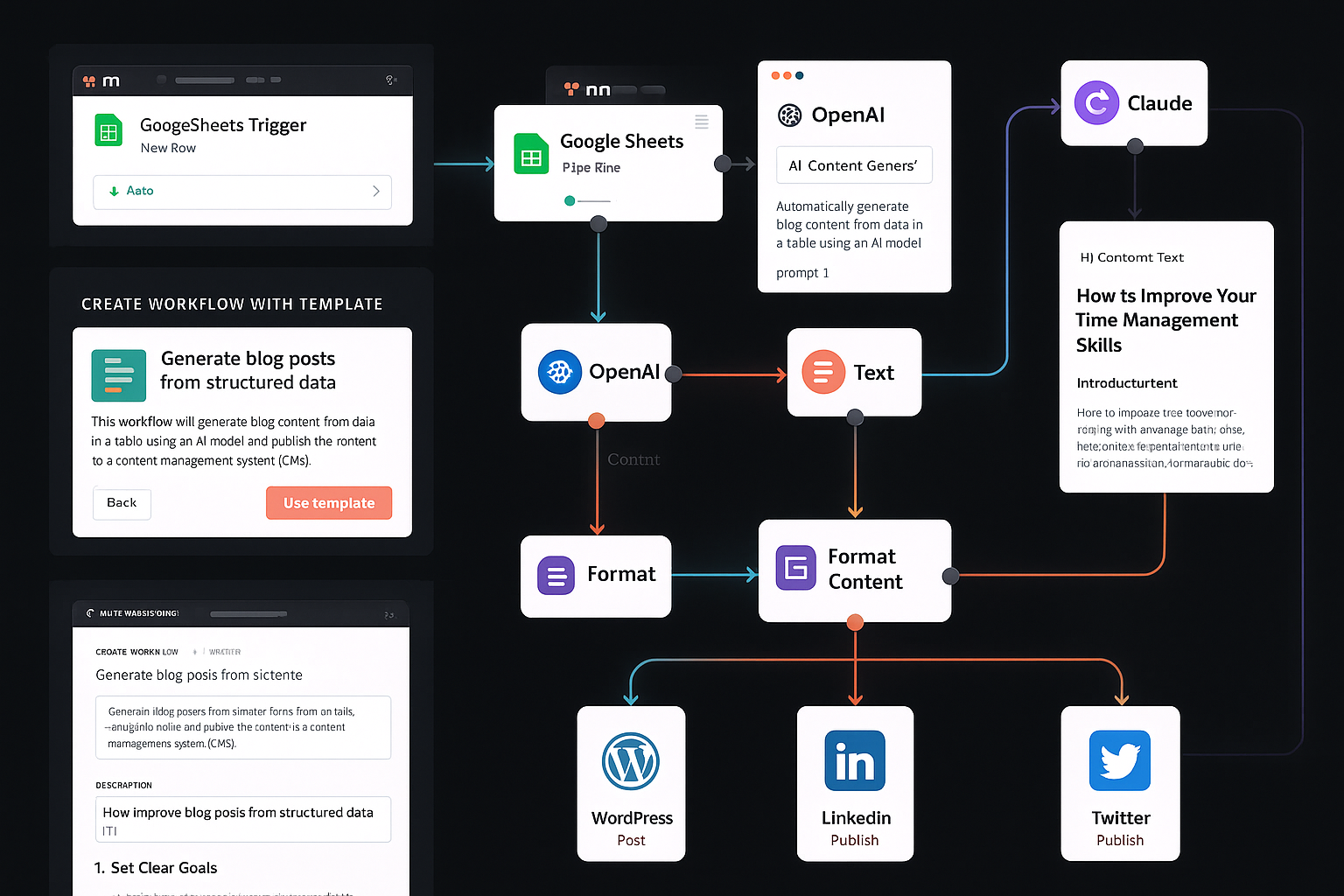
Trigger Setup: The workflow begins with a Google Sheets trigger that monitors for new rows or changes to existing data. This allows for both batch processing of multiple topics and real-time content generation as new ideas are added.
Data Processing Nodes: These nodes clean and structure the incoming data from Sheets, ensuring that topic information, keywords, and content parameters are properly formatted for AI processing.
AI Integration Nodes: Multiple AI nodes can be chained together for different aspects of content creation:
- Outline Generation Node: Creates structured frameworks based on topic and target word count
- Content Creation Node: Develops full article content using the generated outline
- SEO Optimization Node: Enhances content with meta descriptions, internal linking suggestions, and keyword optimization
Advanced Workflow Features
Conditional Logic: n8n’s IF nodes enable sophisticated content routing based on topic type, target audience, or content complexity. This ensures that different content types receive appropriate processing workflows.
Quality Control Mechanisms: Automated quality checks can verify content length, keyword density, and readability scores before final output.
Multi-Platform Publishing: The workflow can simultaneously publish to WordPress, update social media platforms, and create promotional content for various channels.
Optimizing Google Sheets for Content Generation
Structured Data Organization
Effective listicle or how-to article generation with topics seeded by Sheets requires well-organized spreadsheet structures. The optimal setup includes these essential columns:
| Column | Purpose | Example Data |
|---|---|---|
| Topic | Main subject matter | “Best Project Management Tools” |
| Content Type | Format specification | “Listicle”, “How-to Guide” |
| Target Keywords | SEO focus terms | “project management software 2025” |
| Item Count | Desired list length | 10, 15, 25 |
| Target Audience | Reader demographic | “Small business owners” |
| Priority Level | Content urgency | High, Medium, Low |
| Status | Production stage | “Queued”, “Generated”, “Published” |
| Generated Content | AI output storage | [Article content] |
Leveraging Advanced Sheets Features
The SEQUENCE Function: This powerful feature, combined with AI tools, can recognize established patterns and automatically populate sequential data for listicles without manual entry [4]. This is particularly useful for numbered lists and systematic content organization.
Conditional Formatting: Visual indicators help track content production status, highlight high-priority topics, and identify completed work at a glance.
Data Validation Rules: These ensure consistent data entry and prevent errors that could disrupt automated workflows.
Fill-Down Automation: Google Sheets’ fill-down feature, combined with AI-assisted tools, can automate list population by recognizing patterns in initial entries [5].
AI Model Integration and Optimization
Choosing the Right AI Tools
Several AI platforms integrate effectively with n8n for listicle or how-to article generation with topics seeded by Sheets:
OpenAI Integration: GPT models excel at creative content generation and can maintain consistent brand voice across multiple pieces.
Anthropic Claude: Particularly strong for analytical content and fact-checking, ensuring accuracy in how-to guides.
Specialized Tools: Platforms like Numerous (embedded in Sheets), Jasper, and Copy.ai offer varying levels of content sophistication and integration capabilities [6].
Prompt Engineering for Consistency
Effective automation requires standardized system prompts that ensure consistent output quality. Key prompt elements include:
- Brand Voice Guidelines: Specific instructions about tone, style, and terminology
- Content Structure Requirements: Detailed formatting specifications for headings, subheadings, and list items
- SEO Parameters: Instructions for keyword integration, meta description generation, and internal linking
- Quality Standards: Minimum word counts, readability requirements, and fact-checking protocols
Advanced Automation Strategies and Best Practices
Scaling Content Production
Batch Processing Workflows: Design n8n workflows that can handle multiple topics simultaneously, processing entire spreadsheet sections during off-peak hours to maximize efficiency.
Content Variation Systems: Implement logic that creates multiple versions of similar content, allowing for A/B testing and audience segmentation.
Quality Assurance Automation: Build in automated checks for plagiarism, fact accuracy, and brand compliance before content reaches publication stages.
Integration with Content Management Systems
WordPress Automation
Direct integration between n8n and WordPress enables seamless publishing of generated content:
- Automated Draft Creation: Generated content is uploaded as draft posts with appropriate categories and tags
- SEO Plugin Integration: Automatic population of Yoast or RankMath fields with generated meta descriptions and focus keywords
- Media Management: Automated image selection and optimization based on content topics
Social Media Distribution
Extend listicle or how-to article generation with topics seeded by Sheets workflows to include social media promotion:
- Multi-Platform Posting: Automatically create platform-specific versions of content for Twitter, LinkedIn, and Facebook
- Engagement Optimization: Schedule posts for optimal engagement times based on audience analytics
- Cross-Platform Consistency: Maintain brand voice and messaging across all distribution channels
Performance Monitoring and Optimization
Analytics Integration
Connect your content generation workflows with analytics platforms to measure success:
- Traffic Monitoring: Track which generated topics perform best in terms of organic search traffic
- Engagement Metrics: Monitor social shares, time on page, and conversion rates for automated content
- ROI Calculation: Measure the efficiency gains from automation compared to manual content creation
Continuous Improvement Loops
Feedback Integration: Build workflows that analyze content performance and automatically adjust future generation parameters based on successful patterns.
A/B Testing Automation: Create systematic testing of different content formats, lengths, and styles to optimize for audience preferences.
Trend Adaptation: Implement monitoring systems that detect trending topics and automatically add them to your content queue.
Troubleshooting and Optimization
Common Workflow Challenges
API Rate Limiting: Manage AI service quotas by implementing delay nodes and batch processing to avoid service interruptions.
Content Quality Consistency: Develop standardized quality metrics and automated checking systems to maintain output standards.
Data Synchronization: Ensure reliable data flow between Google Sheets and n8n through proper error handling and retry mechanisms.
Performance Enhancement Strategies
Workflow Optimization: Regularly review and optimize n8n workflows to reduce processing time and resource consumption.
Content Caching: Implement systems to store and reuse generated content elements, reducing AI processing costs for similar topics.
Scalability Planning: Design workflows that can handle increased content volume as your automation needs grow.
Conclusion
Listicle or how-to article generation with topics seeded by Sheets represents a fundamental shift in content creation methodology, enabling creators to scale their output while maintaining quality and consistency. Through n8n’s powerful automation capabilities, this approach transforms manual content creation into a systematic, data-driven process that can operate continuously with minimal oversight.
The key to success lies in thoughtful workflow design, structured data organization, and continuous optimization based on performance metrics. By implementing the strategies outlined in this guide, content creators can build robust automation systems that generate high-quality listicles and how-to guides at scale.
Next Steps for Implementation
- Start Small: Begin with a simple workflow that generates content for 5-10 topics to test and refine your process
- Standardize Templates: Develop consistent Google Sheets templates and AI prompts that align with your brand voice
- Monitor and Optimize: Track content performance and continuously refine your automation workflows based on results
- Scale Gradually: Expand your automation to handle larger topic volumes and additional content types as you gain confidence in the system
- Integrate Fully: Connect your content generation workflows with publishing, promotion, and analytics systems for end-to-end automation
The future of content creation lies in intelligent automation that amplifies human creativity rather than replacing it. Listicle or how-to article generation with topics seeded by Sheets provides the foundation for this evolution, enabling creators to focus on strategy and innovation while automation handles the execution.
References
[1] Content Marketing Institute. (2025). “Blog Post Format Performance Analysis: Listicles vs. Traditional Articles.”
[2] BuzzSumo Research Team. (2025). “Trending Topic Identification for Content Marketing Success.”
[3] Digital Content Strategy Report. (2025). “Evolution of Listicle Formats in Modern Content Marketing.”
[4] Google Workspace Documentation. (2025). “Advanced Functions for Content Organization and Automation.”
[5] Sheets Automation Guide. (2025). “Pattern Recognition and Auto-Population Techniques.”
[6] AI Content Tools Comparison. (2025). “Integration Capabilities of Leading AI Writing Platforms.”