The affiliate marketing landscape in 2026 has shifted dramatically. Mass audiences are fragmenting into tight-knit groups where trust, shared values, and peer recommendations drive purchasing decisions. Micro-communities for affiliates represent the next frontier—small, engaged audiences gathered around specific interests where AI tools can amplify personalization, automate engagement, and boost conversions without sacrificing the human touch that makes these communities valuable.

This comprehensive guide explores how affiliate marketers can leverage rising micro-communities with AI moderation and personalization for hyper-targeted affiliate sales, including practical setup guides to get started today.

Key Takeaways

  • 🎯 Micro-communities deliver higher conversion rates through peer trust and shared experiences, especially in B2B and high-consideration niches
  • 🤖 78% of affiliate marketers now use AI tools to streamline content creation, personalization, and predictive analytics [2]
  • 💡 AI enhances but doesn't replace human expertise—authentic testing, personal insights, and real experience remain the primary differentiators
  • 🔗 Community-driven affiliate programs create high-trust referral environments that outperform traditional promotional approaches [3]
  • 📈 Long-term partnerships are replacing one-time promotions, with affiliates functioning as educators and strategic brand ambassadors [3]

Understanding Micro-Communities for Affiliates in 2026
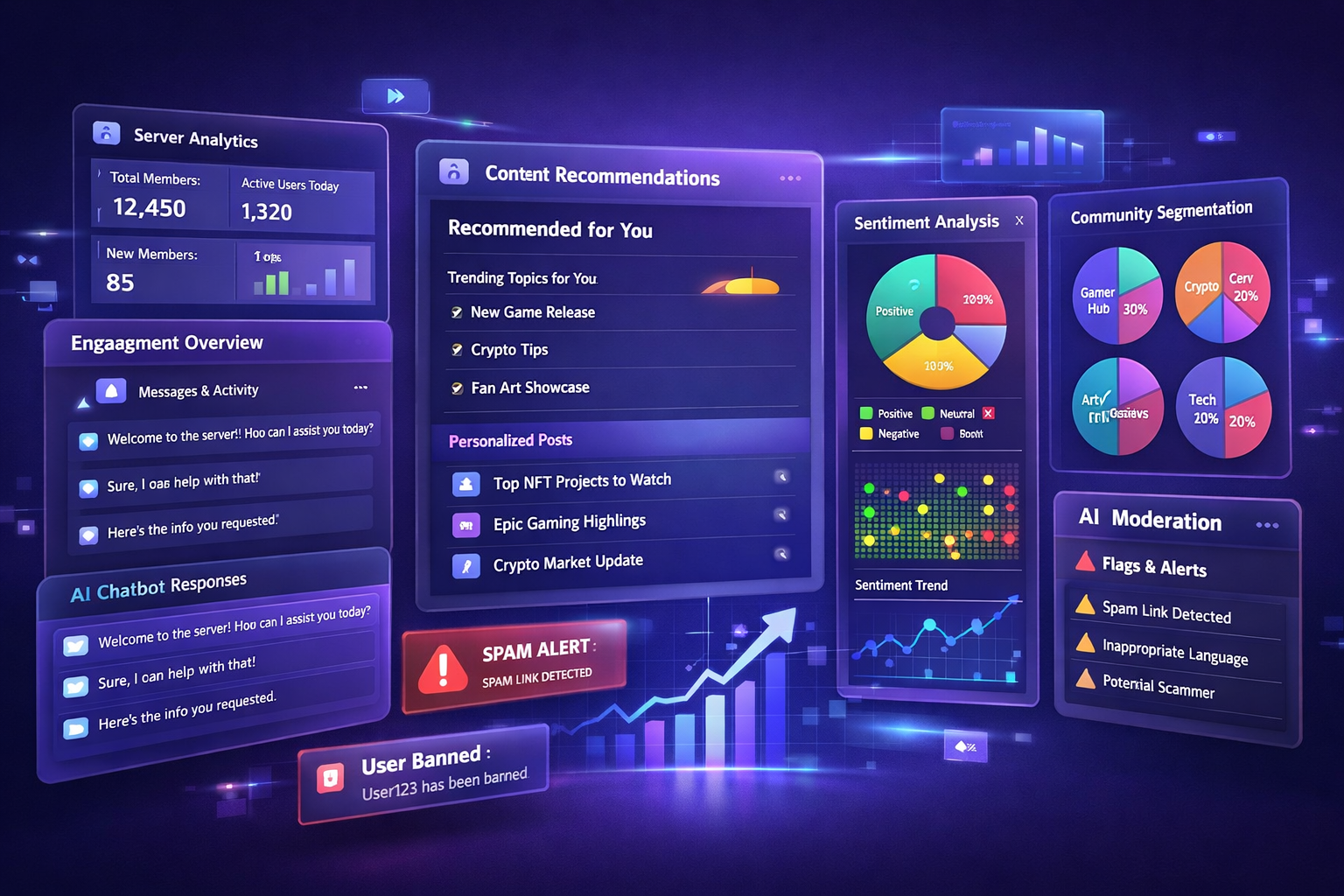
Landscape format (1536x1024) editorial image showing AI-powered community management dashboard interface with multiple screens displaying Di

Micro-communities are small, highly engaged groups of people united by specific interests, challenges, or goals. Unlike broad social media audiences, these communities thrive on platforms like Discord, Reddit, Slack channels, private Facebook groups, and specialized forums where members actively participate in discussions and value peer recommendations.

For affiliate marketers, micro-communities represent a fundamental shift in strategy. Rather than broadcasting messages to thousands of passive followers, successful affiliates in 2026 focus on nurturing hundreds of engaged community members who trust their recommendations and actively seek their advice.

Why Micro-Communities Matter for Affiliate Success

Niche B2B communities drive influence through peer trust, particularly for complex or high-consideration solutions where shared experience is valued [1]. While these communities may not generate massive lead volumes, they meaningfully shape buyer perception during the research phase.

Key advantages include:

  • Higher trust levels through consistent, authentic engagement
  • Better conversion rates from warm, pre-qualified audiences
  • Reduced dependence on unpredictable social media algorithms
  • Stronger long-term relationships that generate recurring commissions
  • Valuable feedback loops for product selection and content creation

Community-driven affiliate programs represent an emerging business model where online communities recommend products internally, creating high-trust referral environments that differentiate from traditional affiliate approaches [3]. This aligns perfectly with the broader trend of successful affiliate marketing strategies that prioritize relationship-building over transactional promotions.

AI Tools to Nurture Niche Loyalty and Conversions

Artificial intelligence has become indispensable for managing and scaling micro-communities effectively. With 78% of affiliate marketers now using AI content tools [2], the technology has moved from experimental to essential. However, the most successful affiliates use AI strategically—to enhance human connection rather than replace it.

Essential AI Tools for Community Management

1. AI-Powered Chatbots and Moderation

Modern AI chatbots can handle routine community questions, moderate discussions, and provide instant responses 24/7. Tools like ChatGPT integrations, Discord bots, and specialized community management platforms can:

  • Answer frequently asked questions automatically
  • Flag inappropriate content or spam
  • Welcome new members with personalized onboarding
  • Suggest relevant resources based on member questions
  • Escalate complex issues to human moderators

2. Personalization Engines

AI-driven personalization tools analyze member behavior, interests, and engagement patterns to deliver customized content and product recommendations. This technology enables:

  • Tailored product suggestions based on individual needs
  • Customized email sequences triggered by specific actions
  • Dynamic content that adapts to member preferences
  • Segmented messaging for different community subgroups

3. Predictive Analytics Platforms

AI tools streamline content creation and predictive analytics, enabling affiliates to improve targeting and efficiency across campaigns [4]. These platforms help identify:

  • Which members are most likely to convert
  • Optimal timing for product promotions
  • Content topics that generate highest engagement
  • Early warning signs of member churn

4. Content Creation Assistants

While human expertise remains the primary differentiator [3], AI accelerates content production through:

  • Topic research and trend identification
  • First-draft generation for newsletters and posts
  • SEO optimization suggestions
  • Image and video editing automation

Understanding what affiliate marketing truly involves helps contextualize how these AI tools fit into your broader strategy.

Balancing AI Automation with Human Authenticity

Despite widespread AI adoption, audiences are increasingly sensitive to generic or automated messaging. Human experience, real testing, and personal insight are emerging as the main competitive differentiators [3]. The winning formula combines:

AI HandlesHumans Provide
Routine questionsPersonal stories and experiences
Data analysisAuthentic product testing
Content schedulingStrategic direction
Initial moderationNuanced conflict resolution
Trend identificationExpert interpretation

This balance ensures efficiency without sacrificing the authenticity that makes micro-communities valuable. For those exploring different affiliate niches, this human-AI partnership adapts across industries.

Building Your Micro-Community: Step-by-Step Setup Guide

Creating a thriving micro-community requires strategic planning, the right tools, and consistent nurturing. Here's a practical roadmap for affiliate marketers in 2026.

Step 1: Define Your Niche and Audience

Micro-influencers deliver higher-trust conversions in affiliate marketing through smaller but more engaged audiences [4]. Start by:

  • Identifying a specific problem or passion your community will address
  • Researching where your audience currently gathers (Reddit, Discord, forums)
  • Analyzing competitor communities to find gaps and opportunities
  • Creating detailed member personas including pain points and goals

Consider exploring top affiliate niches for 2024 to identify profitable opportunities that align with your expertise.

Step 2: Choose Your Platform

Different platforms serve different community needs:

  • Discord: Ideal for real-time chat, gaming, tech, and creator communities
  • Circle or Mighty Networks: Purpose-built community platforms with integrated courses
  • Private Facebook Groups: Accessible for older demographics and local communities
  • Slack: Professional B2B communities and mastermind groups
  • Reddit: Public communities with strong moderation needs
  • Email + Website: Creator-owned ecosystems reducing reliance on platform algorithms [3]

Step 3: Implement AI-Enhanced Onboarding

First impressions determine whether new members become active participants. Use AI to create:

  • Automated welcome sequences introducing community guidelines and resources
  • Personalized member profiles that suggest relevant channels or topics
  • Smart matching systems connecting new members with similar interests
  • Progressive disclosure revealing community features gradually to prevent overwhelm

Step 4: Create Value-First Content Strategy

Long-term performance partnerships are replacing one-time promotions, with affiliates functioning as educators and strategic partners [3]. Your content should:

  • Solve specific problems before promoting solutions
  • Feature real testing and results from products you recommend
  • Encourage peer-to-peer sharing of experiences and recommendations
  • Mix educational content (80%) with promotional content (20%)

Step 5: Deploy AI Tools for Engagement

Use AI strategically to maintain community vitality:

  • Sentiment analysis to identify trending topics and member concerns
  • Engagement scoring to recognize and reward active contributors
  • Content recommendation engines suggesting relevant discussions to members
  • Automated recap emails summarizing weekly highlights for inactive members

For those interested in the technical side, AI marketing automation offers deeper insights into implementation strategies.

Step 6: Establish Trust-Based Affiliate Integration

Community-driven affiliate programs create high-trust referral environments [3]. Integrate affiliate promotions by:

  • Disclosing affiliate relationships transparently from day one
  • Only recommending products you've personally tested or thoroughly researched
  • Creating comparison content that presents multiple options objectively
  • Offering exclusive community discounts when possible
  • Sharing both pros and cons to maintain credibility

AI tools can help track which products resonate most with different community segments, but the recommendations must come from genuine expertise.

Advanced Strategies: AI Tools to Nurture Niche Loyalty and Conversions

Once your micro-community foundation is established, advanced AI strategies can significantly boost conversions while deepening member loyalty.

Multi-Touch Attribution and Fair Payouts

Enhanced attribution models improve fair payout systems, providing better insights into customer journeys [4]. Implement:

  • Cross-platform tracking to understand the full conversion path
  • AI-powered attribution modeling that credits multiple touchpoints appropriately
  • Transparent reporting dashboards showing community members how their engagement drives value
  • Tiered reward systems recognizing different contribution levels

Collaborative Content Strategies

Shared content collaboration builds domain authority for both partners while providing AI-powered answer engines important context [5]. Consider:

  • Guest expert sessions featuring complementary brands or affiliates
  • Co-created resources like comparison guides or industry reports
  • Cross-promotion partnerships with non-competing communities in adjacent niches
  • Member-generated content programs that showcase real user experiences

AI-Shortened Buyer Journeys

AI tools compress research and comparison time by helping buyers shortlist brands, though they don't replace the human trust that drives final purchasing decisions [1]. Optimize this by:

  • Creating AI-friendly comparison content that appears in chatbot and LLM responses
  • Structuring FAQs to match common AI assistant queries
  • Developing decision frameworks that guide members through complex choices
  • Providing quick-reference resources that AI tools can easily surface

SaaS and Software Affiliate Opportunities

Software companies are increasingly dependent on affiliate marketing partnerships for customer acquisition [3]. For B2B communities, this creates opportunities through:

  • Extended trial partnerships exclusive to community members
  • Implementation support programs where you guide members through setup
  • Use case documentation showing how different member types benefit
  • Integration guides connecting multiple tools in your recommended stack

Exploring best affiliate marketing programs can help identify software partnerships with strong commission structures.

Measuring Success: Key Metrics for Micro-Communities

Traditional affiliate metrics like clicks and conversions remain important, but micro-communities require additional measurements:

Community Health Metrics

  • Active member percentage: Members engaging at least weekly
  • Response time: How quickly questions receive answers
  • Member retention rate: Percentage staying active after 30, 60, 90 days
  • Peer-to-peer interaction ratio: Member-to-member vs. moderator-to-member conversations
  • Net Promoter Score (NPS): Likelihood members would recommend the community

Conversion-Specific Metrics

  • Conversion rate by member tenure: How conversion rates increase with community participation
  • Lifetime value by engagement level: Revenue correlation with community activity
  • Referral source attribution: Which community touchpoints drive conversions
  • Product adoption rate: Percentage of community trying recommended products
  • Repeat purchase rate: Members making multiple purchases through your links

AI Performance Metrics

  • Automation efficiency: Time saved through AI tools
  • Personalization impact: Conversion lift from AI-driven recommendations
  • Moderation accuracy: False positive/negative rates for AI moderation
  • Content performance prediction: AI forecast accuracy vs. actual results

Common Challenges and Solutions
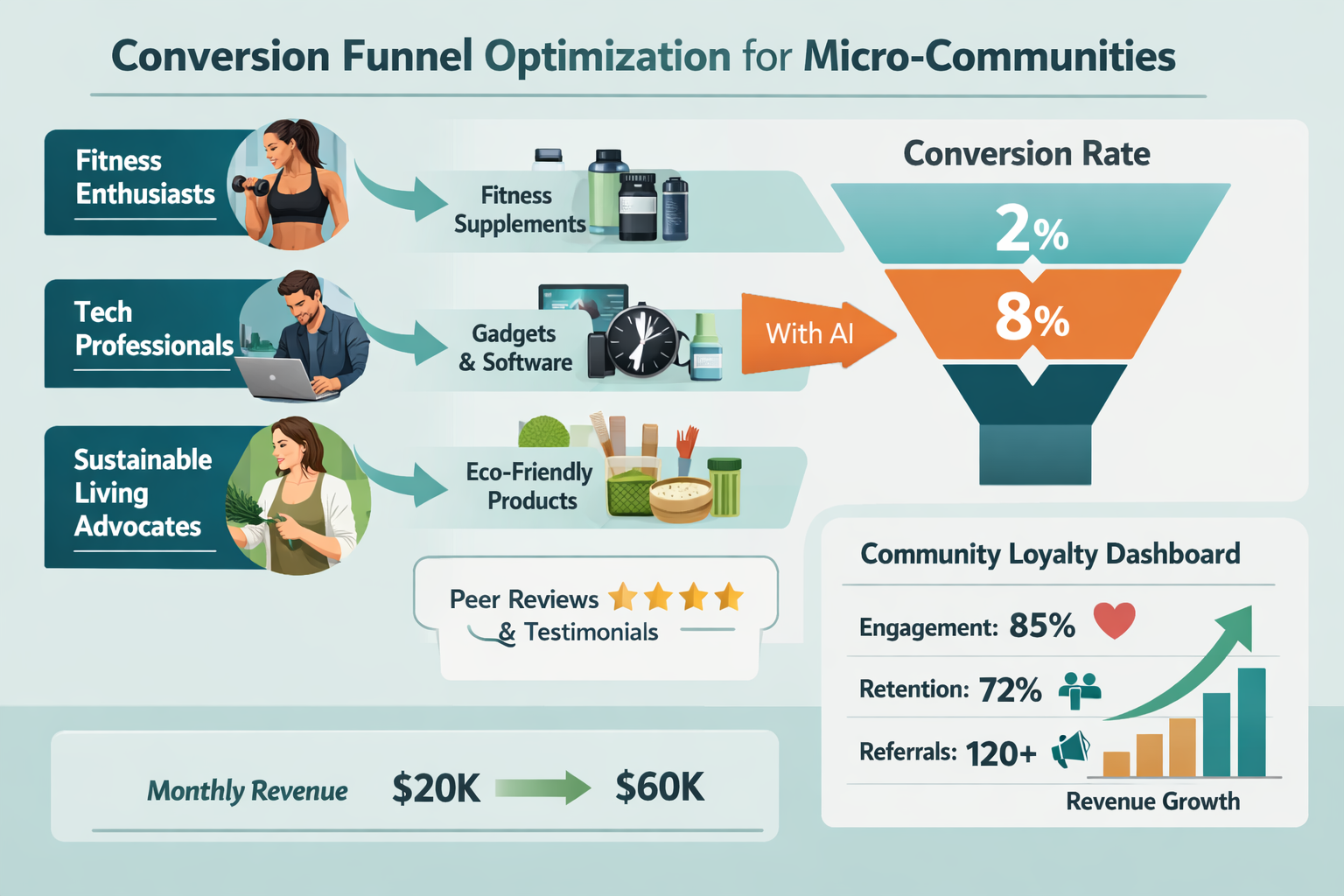
Landscape format (1536x1024) infographic-style image illustrating conversion funnel optimization for micro-communities, showing three distin

Building micro-communities presents unique obstacles. Here's how to address them:

Challenge: Slow initial growth
Solution: Focus on quality over quantity; 50 highly engaged members beat 500 passive followers. Use AI to identify and personally invite ideal members from existing platforms.

Challenge: Maintaining engagement
Solution: Deploy AI engagement scoring to identify declining activity early, then reach out personally. Create recurring events (weekly AMAs, monthly challenges) that build routine participation.

Challenge: Balancing automation with authenticity
Solution: Use the 80/20 rule—AI handles 80% of routine tasks, freeing you to spend 80% of your time on high-value personal interactions.

Challenge: Monetization without alienating members
Solution: Establish clear value exchange from the start. Members should understand that your expertise and curation have value, and affiliate commissions support the community's sustainability.

Conclusion

Micro-communities for affiliates represent a powerful evolution in affiliate marketing—one where AI tools amplify human expertise rather than replace it. By 2026, the most successful affiliate marketers have moved beyond chasing algorithms and mass audiences to building tight-knit communities where trust, personalization, and genuine value creation drive sustainable conversions.

The strategic implementation of AI tools for content creation, personalization, moderation, and analytics enables affiliates to scale their impact while maintaining the authentic relationships that make micro-communities effective. However, success ultimately depends on balancing technological efficiency with irreplaceable human elements: real testing, personal experience, and genuine care for community members.

Your Next Steps

Ready to build your micro-community? Start with these actionable steps:

  1. Choose your niche: Select a specific problem or passion you can authentically serve
  2. Pick your platform: Start with one platform where your ideal members already gather
  3. Implement basic AI tools: Begin with a chatbot for FAQs and an email automation system
  4. Create your first 10 pieces of value-first content: Build trust before making any affiliate recommendations
  5. Personally invite 20-50 ideal members: Quality beats quantity in the early stages
  6. Establish community guidelines: Set clear expectations around affiliate disclosure and promotional content
  7. Track your metrics: Monitor both community health and conversion performance from day one

The future of affiliate marketing belongs to those who can combine cutting-edge AI capabilities with timeless principles of trust, value creation, and authentic human connection. Your micro-community awaits—and the AI tools to nurture it have never been more accessible.

For those just starting their affiliate journey, understanding what affiliate marketing entails provides essential context, while exploring proven affiliate marketing strategies can accelerate your community-building success.


References

[1] B2b Affiliate Insights Strategies – https://gen3marketing.com/blog/b2b-affiliate-insights-strategies/

[2] 10 Affiliate Trends Reshaping Affiliate Marketing In 2026 – https://www.affiversemedia.com/10-affiliate-trends-reshaping-affiliate-marketing-in-2026/

[3] What Is Affiliate Marketing – https://fluentaffiliate.com/blog/what-is-affiliate-marketing/

[4] Affiliate Marketing – https://www.imd.org/blog/marketing/affiliate-marketing/

[5] B2b Affiliate Campaign Ideas To Run In 2026 – https://partnerstack.com/articles/b2b-affiliate-campaign-ideas-to-run-in-2026

The affiliate marketing landscape in 2026 has shifted dramatically. Mass audiences are fragmenting into tight-knit groups where trust, shared values, and peer recommendations drive purchasing decisions. Micro-communities for affiliates represent the next frontier—small, engaged audiences gathered around specific interests where AI tools can amplify personalization, automate engagement, and boost conversions without sacrificing the human touch that makes these communities valuable.

This comprehensive guide explores how affiliate marketers can leverage rising micro-communities with AI moderation and personalization for hyper-targeted affiliate sales, including practical setup guides to get started today.

Key Takeaways

  • 🎯 Micro-communities deliver higher conversion rates through peer trust and shared experiences, especially in B2B and high-consideration niches
  • 🤖 78% of affiliate marketers now use AI tools to streamline content creation, personalization, and predictive analytics [2]
  • 💡 AI enhances but doesn't replace human expertise—authentic testing, personal insights, and real experience remain the primary differentiators
  • 🔗 Community-driven affiliate programs create high-trust referral environments that outperform traditional promotional approaches [3]
  • 📈 Long-term partnerships are replacing one-time promotions, with affiliates functioning as educators and strategic brand ambassadors [3]

Understanding Micro-Communities for Affiliates in 2026

Landscape format (1536x1024) editorial image showing AI-powered community management dashboard interface with multiple screens displaying Di

Micro-communities are small, highly engaged groups of people united by specific interests, challenges, or goals. Unlike broad social media audiences, these communities thrive on platforms like Discord, Reddit, Slack channels, private Facebook groups, and specialized forums where members actively participate in discussions and value peer recommendations.

For affiliate marketers, micro-communities represent a fundamental shift in strategy. Rather than broadcasting messages to thousands of passive followers, successful affiliates in 2026 focus on nurturing hundreds of engaged community members who trust their recommendations and actively seek their advice.

Why Micro-Communities Matter for Affiliate Success

Niche B2B communities drive influence through peer trust, particularly for complex or high-consideration solutions where shared experience is valued [1]. While these communities may not generate massive lead volumes, they meaningfully shape buyer perception during the research phase.

Key advantages include:

  • Higher trust levels through consistent, authentic engagement
  • Better conversion rates from warm, pre-qualified audiences
  • Reduced dependence on unpredictable social media algorithms
  • Stronger long-term relationships that generate recurring commissions
  • Valuable feedback loops for product selection and content creation

Community-driven affiliate programs represent an emerging business model where online communities recommend products internally, creating high-trust referral environments that differentiate from traditional affiliate approaches [3]. This aligns perfectly with the broader trend of successful affiliate marketing strategies that prioritize relationship-building over transactional promotions.

AI Tools to Nurture Niche Loyalty and Conversions

Artificial intelligence has become indispensable for managing and scaling micro-communities effectively. With 78% of affiliate marketers now using AI content tools [2], the technology has moved from experimental to essential. However, the most successful affiliates use AI strategically—to enhance human connection rather than replace it.

Essential AI Tools for Community Management

1. AI-Powered Chatbots and Moderation

Modern AI chatbots can handle routine community questions, moderate discussions, and provide instant responses 24/7. Tools like ChatGPT integrations, Discord bots, and specialized community management platforms can:

  • Answer frequently asked questions automatically
  • Flag inappropriate content or spam
  • Welcome new members with personalized onboarding
  • Suggest relevant resources based on member questions
  • Escalate complex issues to human moderators

2. Personalization Engines

AI-driven personalization tools analyze member behavior, interests, and engagement patterns to deliver customized content and product recommendations. This technology enables:

  • Tailored product suggestions based on individual needs
  • Customized email sequences triggered by specific actions
  • Dynamic content that adapts to member preferences
  • Segmented messaging for different community subgroups

3. Predictive Analytics Platforms

AI tools streamline content creation and predictive analytics, enabling affiliates to improve targeting and efficiency across campaigns [4]. These platforms help identify:

  • Which members are most likely to convert
  • Optimal timing for product promotions
  • Content topics that generate highest engagement
  • Early warning signs of member churn

4. Content Creation Assistants

While human expertise remains the primary differentiator [3], AI accelerates content production through:

  • Topic research and trend identification
  • First-draft generation for newsletters and posts
  • SEO optimization suggestions
  • Image and video editing automation

Understanding what affiliate marketing truly involves helps contextualize how these AI tools fit into your broader strategy.

Balancing AI Automation with Human Authenticity

Despite widespread AI adoption, audiences are increasingly sensitive to generic or automated messaging. Human experience, real testing, and personal insight are emerging as the main competitive differentiators [3]. The winning formula combines:

AI HandlesHumans Provide
Routine questionsPersonal stories and experiences
Data analysisAuthentic product testing
Content schedulingStrategic direction
Initial moderationNuanced conflict resolution
Trend identificationExpert interpretation

This balance ensures efficiency without sacrificing the authenticity that makes micro-communities valuable. For those exploring different affiliate niches, this human-AI partnership adapts across industries.

Building Your Micro-Community: Step-by-Step Setup Guide

Creating a thriving micro-community requires strategic planning, the right tools, and consistent nurturing. Here's a practical roadmap for affiliate marketers in 2026.

Step 1: Define Your Niche and Audience

Micro-influencers deliver higher-trust conversions in affiliate marketing through smaller but more engaged audiences [4]. Start by:

  • Identifying a specific problem or passion your community will address
  • Researching where your audience currently gathers (Reddit, Discord, forums)
  • Analyzing competitor communities to find gaps and opportunities
  • Creating detailed member personas including pain points and goals

Consider exploring top affiliate niches for 2024 to identify profitable opportunities that align with your expertise.

Step 2: Choose Your Platform

Different platforms serve different community needs:

  • Discord: Ideal for real-time chat, gaming, tech, and creator communities
  • Circle or Mighty Networks: Purpose-built community platforms with integrated courses
  • Private Facebook Groups: Accessible for older demographics and local communities
  • Slack: Professional B2B communities and mastermind groups
  • Reddit: Public communities with strong moderation needs
  • Email + Website: Creator-owned ecosystems reducing reliance on platform algorithms [3]

Step 3: Implement AI-Enhanced Onboarding

First impressions determine whether new members become active participants. Use AI to create:

  • Automated welcome sequences introducing community guidelines and resources
  • Personalized member profiles that suggest relevant channels or topics
  • Smart matching systems connecting new members with similar interests
  • Progressive disclosure revealing community features gradually to prevent overwhelm

Step 4: Create Value-First Content Strategy

Long-term performance partnerships are replacing one-time promotions, with affiliates functioning as educators and strategic partners [3]. Your content should:

  • Solve specific problems before promoting solutions
  • Feature real testing and results from products you recommend
  • Encourage peer-to-peer sharing of experiences and recommendations
  • Mix educational content (80%) with promotional content (20%)

Step 5: Deploy AI Tools for Engagement

Use AI strategically to maintain community vitality:

  • Sentiment analysis to identify trending topics and member concerns
  • Engagement scoring to recognize and reward active contributors
  • Content recommendation engines suggesting relevant discussions to members
  • Automated recap emails summarizing weekly highlights for inactive members

For those interested in the technical side, AI marketing automation offers deeper insights into implementation strategies.

Step 6: Establish Trust-Based Affiliate Integration

Community-driven affiliate programs create high-trust referral environments [3]. Integrate affiliate promotions by:

  • Disclosing affiliate relationships transparently from day one
  • Only recommending products you've personally tested or thoroughly researched
  • Creating comparison content that presents multiple options objectively
  • Offering exclusive community discounts when possible
  • Sharing both pros and cons to maintain credibility

AI tools can help track which products resonate most with different community segments, but the recommendations must come from genuine expertise.

Advanced Strategies: AI Tools to Nurture Niche Loyalty and Conversions

Once your micro-community foundation is established, advanced AI strategies can significantly boost conversions while deepening member loyalty.

Multi-Touch Attribution and Fair Payouts

Enhanced attribution models improve fair payout systems, providing better insights into customer journeys [4]. Implement:

  • Cross-platform tracking to understand the full conversion path
  • AI-powered attribution modeling that credits multiple touchpoints appropriately
  • Transparent reporting dashboards showing community members how their engagement drives value
  • Tiered reward systems recognizing different contribution levels

Collaborative Content Strategies

Shared content collaboration builds domain authority for both partners while providing AI-powered answer engines important context [5]. Consider:

  • Guest expert sessions featuring complementary brands or affiliates
  • Co-created resources like comparison guides or industry reports
  • Cross-promotion partnerships with non-competing communities in adjacent niches
  • Member-generated content programs that showcase real user experiences

AI-Shortened Buyer Journeys

AI tools compress research and comparison time by helping buyers shortlist brands, though they don't replace the human trust that drives final purchasing decisions [1]. Optimize this by:

  • Creating AI-friendly comparison content that appears in chatbot and LLM responses
  • Structuring FAQs to match common AI assistant queries
  • Developing decision frameworks that guide members through complex choices
  • Providing quick-reference resources that AI tools can easily surface

SaaS and Software Affiliate Opportunities

Software companies are increasingly dependent on affiliate marketing partnerships for customer acquisition [3]. For B2B communities, this creates opportunities through:

  • Extended trial partnerships exclusive to community members
  • Implementation support programs where you guide members through setup
  • Use case documentation showing how different member types benefit
  • Integration guides connecting multiple tools in your recommended stack

Exploring best affiliate marketing programs can help identify software partnerships with strong commission structures.

Measuring Success: Key Metrics for Micro-Communities

Traditional affiliate metrics like clicks and conversions remain important, but micro-communities require additional measurements:

Community Health Metrics

  • Active member percentage: Members engaging at least weekly
  • Response time: How quickly questions receive answers
  • Member retention rate: Percentage staying active after 30, 60, 90 days
  • Peer-to-peer interaction ratio: Member-to-member vs. moderator-to-member conversations
  • Net Promoter Score (NPS): Likelihood members would recommend the community

Conversion-Specific Metrics

  • Conversion rate by member tenure: How conversion rates increase with community participation
  • Lifetime value by engagement level: Revenue correlation with community activity
  • Referral source attribution: Which community touchpoints drive conversions
  • Product adoption rate: Percentage of community trying recommended products
  • Repeat purchase rate: Members making multiple purchases through your links

AI Performance Metrics

  • Automation efficiency: Time saved through AI tools
  • Personalization impact: Conversion lift from AI-driven recommendations
  • Moderation accuracy: False positive/negative rates for AI moderation
  • Content performance prediction: AI forecast accuracy vs. actual results

Common Challenges and Solutions

Landscape format (1536x1024) infographic-style image illustrating conversion funnel optimization for micro-communities, showing three distin

Building micro-communities presents unique obstacles. Here's how to address them:

Challenge: Slow initial growth
Solution: Focus on quality over quantity; 50 highly engaged members beat 500 passive followers. Use AI to identify and personally invite ideal members from existing platforms.

Challenge: Maintaining engagement
Solution: Deploy AI engagement scoring to identify declining activity early, then reach out personally. Create recurring events (weekly AMAs, monthly challenges) that build routine participation.

Challenge: Balancing automation with authenticity
Solution: Use the 80/20 rule—AI handles 80% of routine tasks, freeing you to spend 80% of your time on high-value personal interactions.

Challenge: Monetization without alienating members
Solution: Establish clear value exchange from the start. Members should understand that your expertise and curation have value, and affiliate commissions support the community's sustainability.

Conclusion

Micro-communities for affiliates represent a powerful evolution in affiliate marketing—one where AI tools amplify human expertise rather than replace it. By 2026, the most successful affiliate marketers have moved beyond chasing algorithms and mass audiences to building tight-knit communities where trust, personalization, and genuine value creation drive sustainable conversions.

The strategic implementation of AI tools for content creation, personalization, moderation, and analytics enables affiliates to scale their impact while maintaining the authentic relationships that make micro-communities effective. However, success ultimately depends on balancing technological efficiency with irreplaceable human elements: real testing, personal experience, and genuine care for community members.

Your Next Steps

Ready to build your micro-community? Start with these actionable steps:

  1. Choose your niche: Select a specific problem or passion you can authentically serve
  2. Pick your platform: Start with one platform where your ideal members already gather
  3. Implement basic AI tools: Begin with a chatbot for FAQs and an email automation system
  4. Create your first 10 pieces of value-first content: Build trust before making any affiliate recommendations
  5. Personally invite 20-50 ideal members: Quality beats quantity in the early stages
  6. Establish community guidelines: Set clear expectations around affiliate disclosure and promotional content
  7. Track your metrics: Monitor both community health and conversion performance from day one

The future of affiliate marketing belongs to those who can combine cutting-edge AI capabilities with timeless principles of trust, value creation, and authentic human connection. Your micro-community awaits—and the AI tools to nurture it have never been more accessible.

For those just starting their affiliate journey, understanding what affiliate marketing entails provides essential context, while exploring proven affiliate marketing strategies can accelerate your community-building success.


References

[1] B2b Affiliate Insights Strategies – https://gen3marketing.com/blog/b2b-affiliate-insights-strategies/

[2] 10 Affiliate Trends Reshaping Affiliate Marketing In 2026 – https://www.affiversemedia.com/10-affiliate-trends-reshaping-affiliate-marketing-in-2026/

[3] What Is Affiliate Marketing – https://fluentaffiliate.com/blog/what-is-affiliate-marketing/

[4] Affiliate Marketing – https://www.imd.org/blog/marketing/affiliate-marketing/

[5] B2b Affiliate Campaign Ideas To Run In 2026 – https://partnerstack.com/articles/b2b-affiliate-campaign-ideas-to-run-in-2026

By