

The affiliate marketing landscape is undergoing a dramatic transformation in 2026. Gone are the days when broad audiences and generic promotions could drive consistent conversions. Today's savvy consumers crave authentic connections, personalized recommendations, and genuine expertise. Enter micro-communities—intimate groups of highly engaged members united by specific interests—paired with AI-powered tools that scale personalization without sacrificing authenticity. This powerful combination represents the future of affiliate marketing strategies that actually convert.
Key Takeaways
✅ Micro-communities deliver higher conversion rates through trust-based relationships and authentic product recommendations rather than traditional affiliate tactics
🤖 79% of affiliates now use AI tools to personalize content, automate engagement, and scale community management while maintaining authentic connections [2]
📱 62% of affiliate traffic comes from mobile devices, making mobile-optimized community platforms essential for success [2]
💡 AI-enhanced attribution models provide better tracking and fair commission distribution across multi-touch customer journeys [3]
🎯 Human expertise combined with AI efficiency creates the competitive advantage that audiences value most in 2026 [1]
Understanding Micro-Communities in Affiliate Marketing
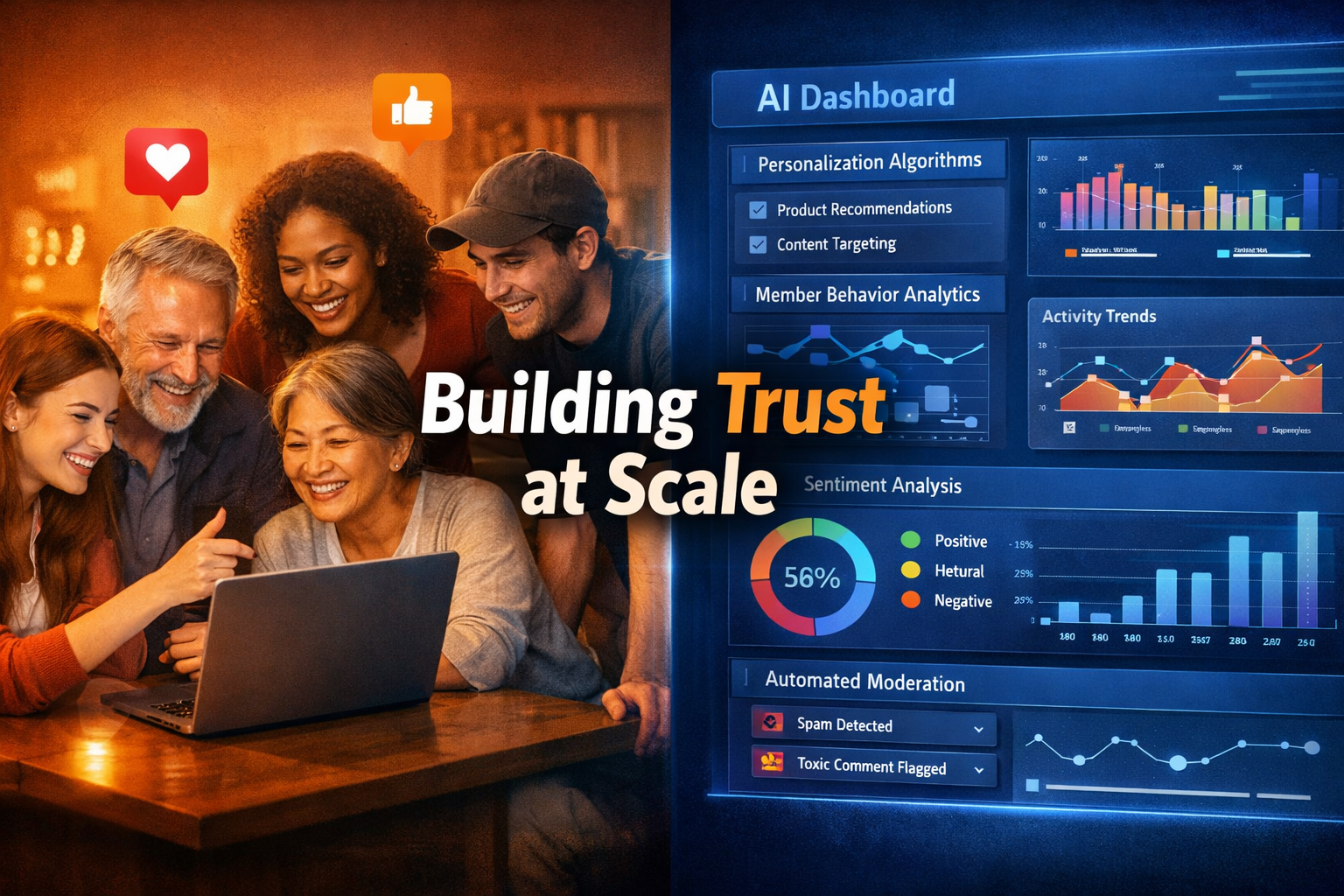
Micro-communities are small, focused groups of individuals who share specific interests, challenges, or goals. Unlike massive social media audiences, these intimate gatherings typically range from 50 to 5,000 highly engaged members who actively participate in discussions, share experiences, and trust recommendations from community leaders.
Why Micro-Communities Outperform Traditional Affiliate Channels
Community-driven affiliate programs have emerged as a distinct model where online communities recommend products internally, creating high-trust referral environments that prioritize authentic recommendations over traditional affiliate tactics [1]. This shift reflects changing consumer behavior—people increasingly seek advice from peers and trusted community members rather than influencers with millions of followers.
Key advantages include:
- 🎯 Higher engagement rates compared to broad social media channels
- 💪 Stronger trust relationships between affiliates and community members
- 🔄 Better retention through ongoing conversations and support
- 📊 More qualified leads who already align with your niche
- 💰 Improved conversion rates from warm, pre-educated audiences
Micro-influencers with smaller audiences and strong trust relationships deliver consistent conversions and are increasingly partnered with brands for more authentic and effective affiliate marketing campaigns [1][3]. For those exploring affiliate marketing opportunities, building a micro-community offers a sustainable competitive advantage.
AI Tools to Build and Nurture Micro-Communities for Affiliates
Artificial intelligence has democratized community management, allowing individual affiliates to deliver personalized experiences previously only possible with large teams. The integration of AI tools enables affiliates to scale their operations while maintaining the authentic, personal touch that micro-communities demand.
Essential AI-Powered Tools for Community Management
| Tool Category | Purpose | Popular Options |
|---|---|---|
| AI Chatbots | 24/7 member support, FAQ automation | Chatfuel, ManyChat, Drift |
| Content Personalization | Tailored recommendations based on behavior | Claude, GPT-4, Jasper |
| Sentiment Analysis | Monitor community mood and engagement | Brandwatch, Sprout Social |
| Automated Moderation | Filter spam, enforce guidelines | AutoMod, Perspective API |
| Predictive Analytics | Identify conversion opportunities | Google Analytics 4, Mixpanel |
| Email Automation | Nurture sequences, segmentation | ActiveCampaign, ConvertKit |
Setting Up AI-Enhanced Community Platforms
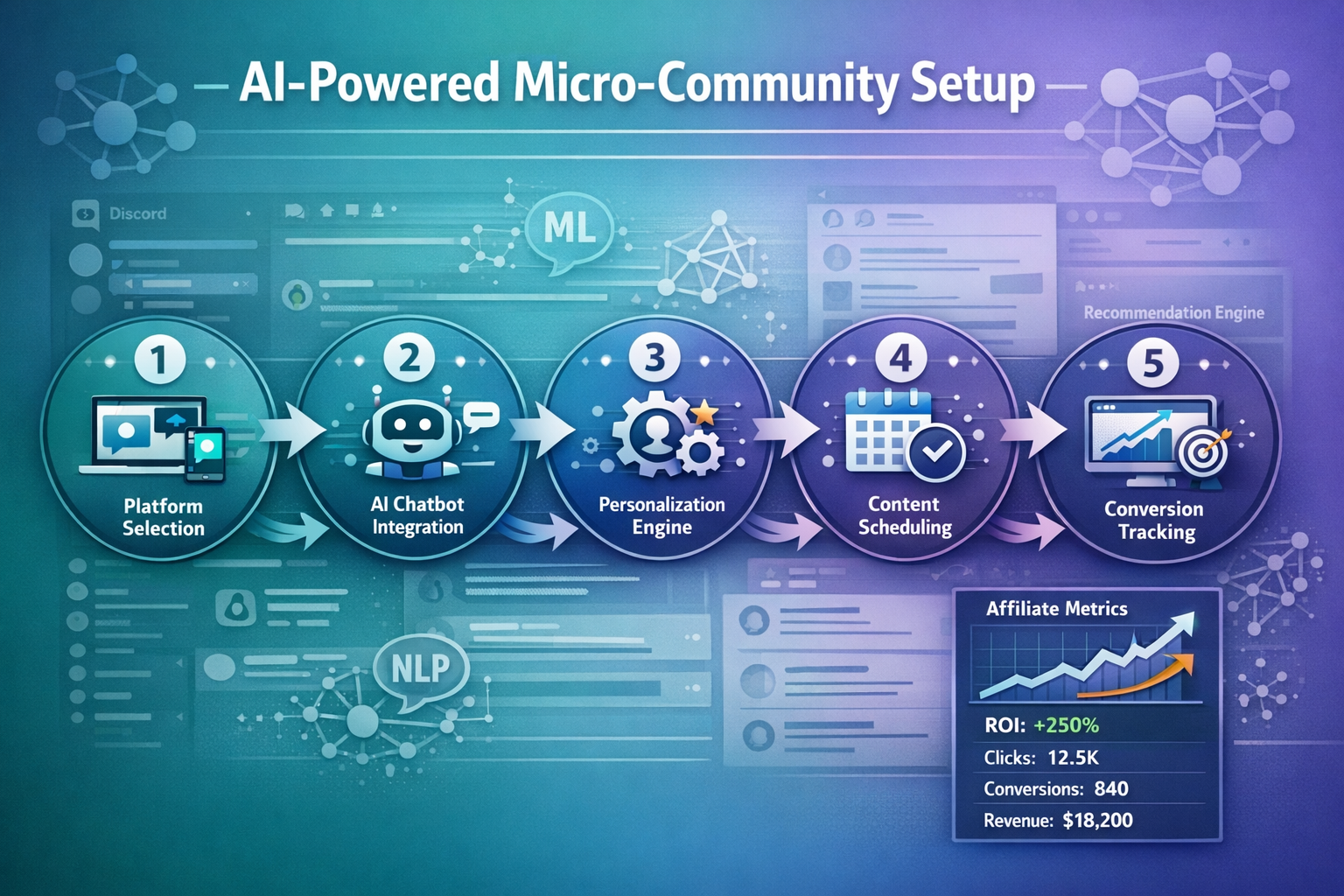
Step 1: Choose Your Platform Foundation
Select a platform that supports your niche and technical requirements. Popular options include:
- Discord for gaming, tech, and creator communities
- Slack or Circle for professional networks
- Facebook Groups for broader accessibility
- Mighty Networks for all-in-one community solutions
Step 2: Integrate AI Chatbots for Member Engagement
AI chatbots can handle routine questions, welcome new members, and provide instant product information. Tools like Chatfuel and ManyChat integrate with most platforms and can be trained on your specific affiliate products and community guidelines [4].
Step 3: Implement Personalization Engines
Use AI to analyze member behavior, interests, and engagement patterns. This data powers personalized product recommendations that feel authentic rather than pushy. The key is balancing automation with human expertise—audiences have become sensitive to generic or automated messaging and value authentic personal insights [1].
Step 4: Deploy Automated Content Scheduling
AI tools can optimize posting times, suggest content topics based on trending discussions, and even generate initial drafts that you refine with your personal expertise. Remember: 79% of affiliates actively utilize AI-driven content creation tools to scale content production and personalize recommendations [2].
Step 5: Set Up Conversion Tracking and Attribution
AI-driven analytics and better attribution models are being incorporated into affiliate networks to provide improved tracking, multi-touch attribution, and ensure affiliates receive fair payouts for their contributions [3]. Implement tools that track member journeys from community engagement through purchase.
Nurturing Niche Loyalty Through AI-Powered Personalization
Building a micro-community is just the beginning. The real magic happens when you consistently nurture relationships and provide value that keeps members engaged and loyal to your recommendations.
Personalization Strategies That Drive Conversions
1. Behavioral Segmentation
AI tools can automatically segment your community based on:
- Engagement frequency (daily active vs. occasional visitors)
- Product interests (based on discussions and reactions)
- Purchase readiness (browsing behavior and questions asked)
- Experience level (beginner, intermediate, advanced)
This segmentation allows you to deliver targeted content and product recommendations that resonate with each subgroup.
2. Conversational Commerce
With voice search technology capturing 20% of affiliate-related searches [2], conversational AI enables natural product discovery. Implement voice-optimized content and chatbots that can handle spoken queries about products, comparisons, and recommendations.
3. Predictive Product Matching
Advanced AI analyzes member discussions, questions, and pain points to predict which products will solve their specific problems. This proactive approach positions you as a helpful advisor rather than a pushy salesperson.
Mobile Optimization for Community Engagement
With 62% of affiliate traffic originating from mobile devices and 70% of conversions occurring on mobile and tablet platforms [2], mobile optimization is non-negotiable for community-based affiliate engagement. Ensure your community platform and all shared content render perfectly on smartphones.
Mobile-first best practices:
- ✅ Use mobile-responsive community platforms
- ✅ Create short-form video content for quick consumption
- ✅ Optimize images and load times
- ✅ Design thumb-friendly navigation
- ✅ Test checkout flows on multiple devices
Advanced AI Strategies for Micro-Communities for Affiliates
To maximize conversions while maintaining authenticity, implement these advanced strategies that leverage AI capabilities without sacrificing the human touch.
AI-Powered Content Creation at Scale
While AI can generate content quickly, the winning formula combines AI efficiency with human expertise. Use AI to:
- Generate first drafts of product reviews and comparisons
- Create multiple variations for A/B testing
- Optimize headlines for engagement
- Suggest content topics based on community discussions
- Repurpose content across formats (blog to video script)
Then add your personal experience, unique insights, and authentic voice to make the content genuinely valuable. This hybrid approach allows you to publish consistently while maintaining the quality your community expects. For detailed guidance, explore our best affiliate marketing tips.
Sentiment Analysis for Community Health
AI sentiment analysis tools monitor the emotional tone of community conversations, alerting you to:
- 😊 High-satisfaction moments (perfect for product recommendations)
- 😟 Frustration or confusion (opportunities to provide solutions)
- 🔥 Trending topics (content opportunities)
- ⚠️ Potential conflicts (moderation needs)
This real-time emotional intelligence helps you intervene at the right moments with the right message.
Blockchain for Transparency and Trust
Blockchain technology is being adopted by 10% of affiliate networks to enhance transparency, prevent fraud, and provide real-time verification of transactions and commissions [2]. While still emerging, blockchain-based affiliate tracking can increase community trust by providing verifiable proof of your affiliate relationships and commission structures.
Automated Email Nurture Sequences
AI-powered email automation tools segment your community members and deliver personalized nurture sequences based on their behavior and interests. This keeps your affiliate offers top-of-mind without requiring constant manual effort. Consider implementing automated email replies based on intent and urgency detection for maximum efficiency.
Building Sustainable Affiliate Relationships Through Communities
The most successful micro-community affiliates focus on long-term relationships rather than quick commissions. This approach aligns with the broader industry shift toward sustainable relationships between brands and creators with less focus on tactics and more emphasis on authentic community building and long-term trust [1].
Creating Value Beyond Affiliate Links
Educational content should form the foundation of your community:
- 📚 Tutorials and how-to guides
- 🎥 Live Q&A sessions and workshops
- 📊 Industry news and trend analysis
- 💬 Peer-to-peer problem-solving discussions
- 🏆 Member success stories and case studies
When you consistently deliver value, affiliate recommendations feel like natural extensions of your helpful expertise rather than sales pitches.
Transparency About Affiliate Relationships
Modern consumers appreciate honesty about affiliate relationships. Clearly disclose when you earn commissions, explain why you recommend specific products, and share both pros and cons. This transparency actually increases trust and conversions within micro-communities. Learn more about maintaining legitimacy through our guide on whether affiliate marketing is legitimate.
Community-Exclusive Benefits
Reward your most engaged community members with:
- 🎁 Exclusive discount codes
- 🔓 Early access to new product reviews
- 👥 Private mastermind groups
- 📱 Direct access to you for questions
- 🏅 Recognition and featured member spotlights
These perks strengthen loyalty and encourage word-of-mouth growth.
Measuring Success: KPIs for AI-Enhanced Micro-Communities
Track these essential metrics to optimize your micro-community affiliate strategy:
Engagement Metrics:
- Daily/monthly active users
- Average session duration
- Posts and comments per member
- Response rates to your content
Conversion Metrics:
- Click-through rates on affiliate links
- Conversion rate by product category
- Average order value from community referrals
- Customer lifetime value
Community Health Metrics:
- Member retention rate
- New member growth
- Sentiment scores
- Net Promoter Score (NPS)
AI Performance Metrics:
- Chatbot resolution rate
- Personalization engagement lift
- Automated content performance vs. manual content
- Time saved through automation
Use these insights to continuously refine your approach, doubling down on what works and adjusting what doesn't.
Conclusion
Micro-communities for affiliates represent the convergence of authentic relationship-building and AI-powered efficiency—a combination that delivers superior conversions while creating genuine value for members. By leveraging AI tools to personalize experiences, automate routine tasks, and scale your operations, you can nurture niche loyalty that translates into consistent affiliate revenue.
The key to success lies in maintaining the delicate balance between automation and authenticity. Use AI to handle repetitive tasks, analyze data, and deliver personalization at scale, but always infuse your unique expertise, genuine recommendations, and personal touch into the community experience.
Your Next Steps
- Choose your niche and identify where your target micro-community already gathers online
- Select a community platform that aligns with your audience's preferences and technical comfort
- Implement essential AI tools starting with chatbots and basic analytics
- Create a content calendar that balances educational value with strategic affiliate recommendations
- Engage consistently and let AI handle routine tasks while you focus on high-value interactions
- Track your metrics and optimize based on data-driven insights
The affiliate marketing landscape will continue evolving, but the fundamental human desire for trusted recommendations within supportive communities remains constant. By building your micro-community infrastructure now and enhancing it with AI capabilities, you position yourself at the forefront of this transformation.
Ready to start building your affiliate micro-community? Explore our comprehensive guide on affiliate marketing for beginners to lay the foundation for your success, or dive into affiliate marketing programs to find the right partnerships for your niche.
References
[1] What Is Affiliate Marketing – https://fluentaffiliate.com/blog/what-is-affiliate-marketing/
[2] Affiliate Marketing Industry Size 2025 – https://www.postaffiliatepro.com/blog/affiliate-marketing-industry-size-2025/
[3] Affiliate Marketing – https://www.imd.org/blog/marketing/affiliate-marketing/
[4] Ai Marketing Tools – https://www.marketermilk.com/blog/ai-marketing-tools