

{"cover":"Professional landscape format (1536x1024) hero image featuring bold text overlay 'Multi-Modal Content: Video, Audio & Images for AI Search 2026' in extra large 72pt white sans-serif font with dark gradient shadow, positioned in upper third. Background shows split-screen composition: left side displays video recording setup with ring light and smartphone on tripod, right side shows AI neural network visualization with interconnected nodes in electric blue and purple. Center features holographic overlay of search engine results with citation badges. Color scheme: deep navy blue, electric blue, white, purple accents. High contrast, magazine cover quality, editorial technology aesthetic with floating icons representing video play button, audio waveform, and image gallery arranged around the text.","content":["Detailed landscape format (1536x1024) illustration showing AI generative engine processing multi-modal content, featuring central AI brain icon with four streams flowing into it: red stream labeled 'Video' with play button icons, green stream labeled 'Audio' with waveform graphics, blue stream labeled 'Images' with photo gallery thumbnails, yellow stream labeled 'Text' with document icons. Each stream shows data particles flowing toward the AI core. Right side displays three device screens (desktop, tablet, mobile) showing AI search results with citation boxes highlighting the multi-modal sources. Background features subtle grid pattern with binary code. Color palette: vibrant primary colors against white background, clean infographic style with professional shadows and depth.","Comprehensive landscape format (1536x1024) workspace scene showing affiliate content creator's desk from overhead angle, featuring laptop displaying video editing timeline with product review footage, smartphone showing audio recording app with podcast waveform, tablet with image annotation software marking up product photos with arrows and callouts, printed checklist titled 'Multi-Modal Optimization Workflow' with checkboxes, coffee cup, notepad with sketched storyboard frames, external microphone, ring light in background. Screen displays show Perplexity and ChatGPT interfaces with citation notifications. Warm natural lighting from window, modern minimalist aesthetic, realistic photography style with shallow depth of field, professional marketing workspace atmosphere."]}
The search landscape has fundamentally transformed. In 2026, AI-powered systems like ChatGPT, Perplexity, and Google's AI Mode don't just read text—they watch videos, listen to audio, and analyze images to deliver comprehensive answers. For affiliate marketers, this shift represents both a challenge and an unprecedented opportunity. Multi-Modal Affiliate Content Strategies: Mastering Video, Audio, and Images for AI Search Visibility in 2026 has become essential for anyone serious about maintaining competitive advantage in an AI-first search environment.
Traditional text-only content strategies are rapidly losing ground. Modern AI systems understand and interpret multiple content formats simultaneously, creating a new paradigm where generative engines prioritize diverse media types to reduce uncertainty in their recommendations[1]. When AI systems can reference your video demonstration, review your annotated product images, and cite your podcast explanation—all for the same query—your chances of being featured in AI-generated answers multiply exponentially.
Key Takeaways
- 🎥 AI systems heavily cite YouTube and social media content, making video and short-form content critical for affiliate monetization in 2026
- 🔄 Repurposing single research pieces into multiple formats (blogs, videos, podcasts, infographics) dramatically increases citation opportunities across AI platforms
- 📊 Structured, extractable formats like Q&A blocks, comparison tables, and step-by-step lists perform significantly better in generative AI results
- 🎯 Descriptive metadata (alt text, captions, transcripts) is now mandatory for AI systems to properly interpret and reference visual and audio content
- 💡 Brand mentions in authoritative sources directly influence product recommendations inside ChatGPT and similar AI systems
Understanding How AI Systems Process Multi-Modal Content
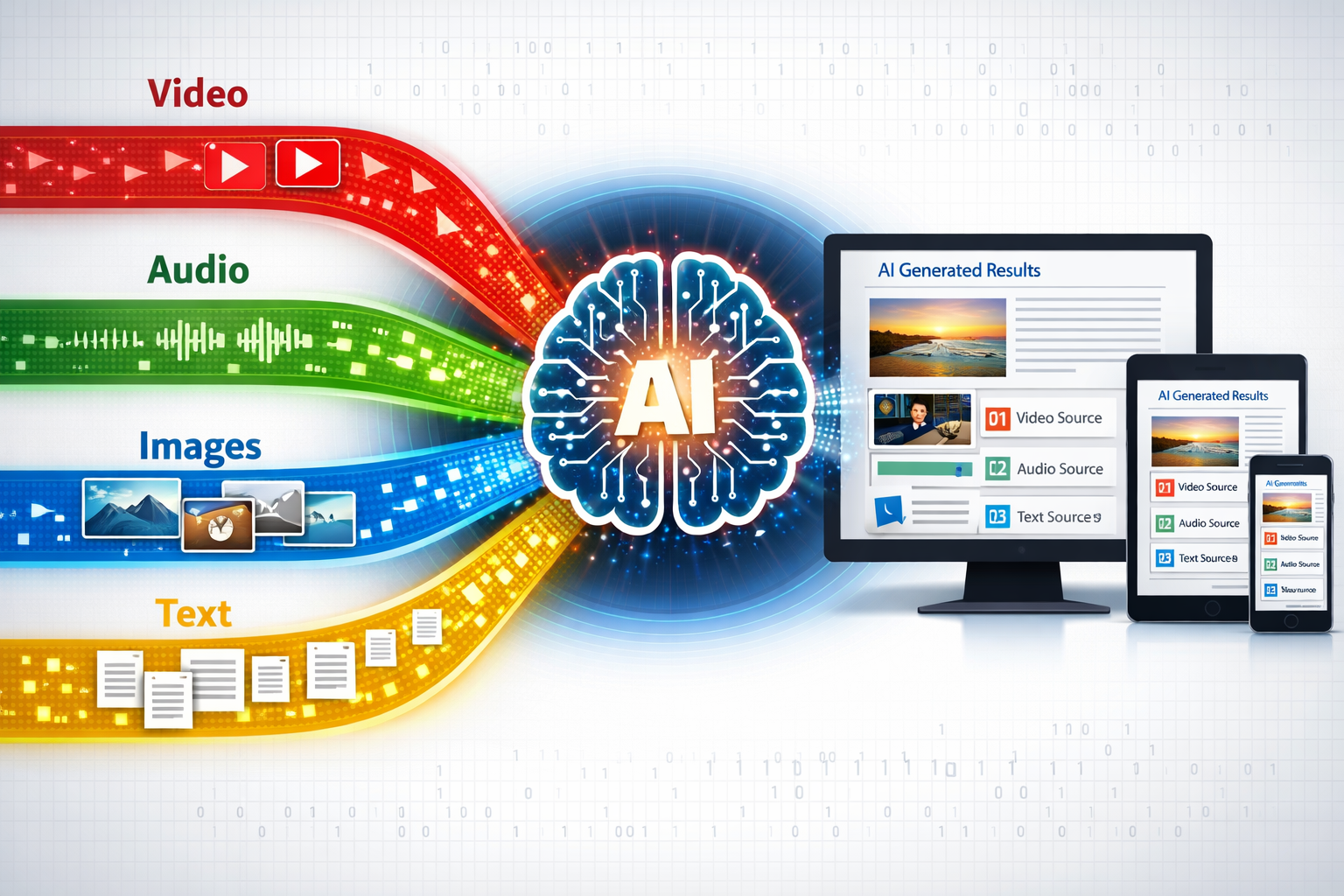
Generative AI engines operate fundamentally differently than traditional search algorithms. Rather than simply matching keywords, these systems employ vector-based retrieval that matches queries by conceptual similarity[5]. When a user asks an AI assistant about "best wireless headphones for running," the system doesn't just search for those exact words—it understands the underlying intent and pulls from text descriptions, video reviews, product images, and audio quality comparisons to construct a comprehensive answer.
Why Multi-Modal Content Reduces AI Uncertainty
AI systems face a critical challenge: reducing uncertainty in their recommendations. When multiple content formats corroborate the same information, AI engines gain higher confidence in citing that source. Consider this scenario:
| Content Type | Information Provided | AI Confidence Level |
|---|---|---|
| Text-only review | Product specifications, written opinion | Moderate |
| Text + Product images | Specifications, visual confirmation | Higher |
| Text + Video demo | Specifications, real-world usage proof | Very High |
| All formats combined | Complete multi-sensory validation | Maximum |
YouTube and social media content is heavily cited by AI systems precisely because video provides multiple validation signals simultaneously—visual product demonstration, audio explanation, on-screen text, and contextual usage scenarios[1]. This cross-validation makes AI systems far more likely to reference and recommend your content.
The Citation Economy: New Metrics for Success
Traditional SEO focused on click-through rates and page rankings. In 2026, AI visibility is measured by citation rates and mentions rather than direct traffic[5]. Your content might never receive a click, yet still generate substantial affiliate revenue if AI systems consistently cite your recommendations in their answers to thousands of queries.
This fundamental shift requires rethinking success metrics. Affiliate marketers must now track:
- Citation frequency in AI-generated responses
- Brand mention volume across AI platforms
- Multi-modal coverage (how many formats reference your products)
- Authority signals that increase AI trust
Understanding these dynamics is essential for developing effective affiliate marketing strategies that align with AI-powered search behavior.
Creating Video Content That AI Systems Cite
Video has emerged as the dominant format for AI citations in 2026[1]. Platforms like YouTube serve as massive training datasets for AI systems, and content that performs well on these platforms naturally flows into AI recommendations.
Structuring Video Demos for Maximum Extractability
AI systems excel at extracting specific information from well-structured videos. To maximize citation potential, create video content with these elements:
🎬 Clear Chapter Markers
Divide videos into distinct sections with descriptive titles. AI systems can reference specific timestamps when answering granular questions.
📝 Comprehensive Transcripts
Upload complete, accurate transcripts. AI systems rely heavily on text-based retrieval even for video content—transcripts serve as the indexable foundation[3].
🔍 On-Screen Text Overlays
Display key specifications, prices, and product names directly in the video. This redundancy helps AI systems extract accurate information even if audio transcription fails.
⭐ Comparison Frameworks
Structure product comparisons using consistent criteria. AI systems favor content that presents information in predictable, extractable patterns[2].
Video Formats That Perform Best
Different video lengths and styles serve distinct purposes in the AI citation ecosystem:
- Long-form reviews (10-20 minutes): Comprehensive product evaluations that AI systems cite for detailed inquiries
- Short-form demos (60-90 seconds): Quick feature highlights optimized for TikTok and YouTube Shorts that capture trending queries
- Comparison videos (5-8 minutes): Side-by-side evaluations that AI systems reference for "versus" queries
- Tutorial series: Step-by-step guides that establish topical authority over time
For those new to video creation, understanding proper YouTube Shorts video size specifications ensures your content displays correctly across platforms.
Cross-Platform Amplification Strategy
Publishing video content across multiple platforms significantly improves discoverability within AI-generated answers[1]. A single product review should appear on:
- YouTube (primary platform for AI training data)
- TikTok (captures trending searches and younger demographics)
- Instagram Reels (visual discovery and brand building)
- LinkedIn (B2B products and professional recommendations)
- Your website (embedded with schema markup for direct indexing)
This multi-platform approach ensures AI systems encounter your content through multiple retrieval pathways, dramatically increasing citation probability.
Optimizing Images and Visual Content for AI Recognition
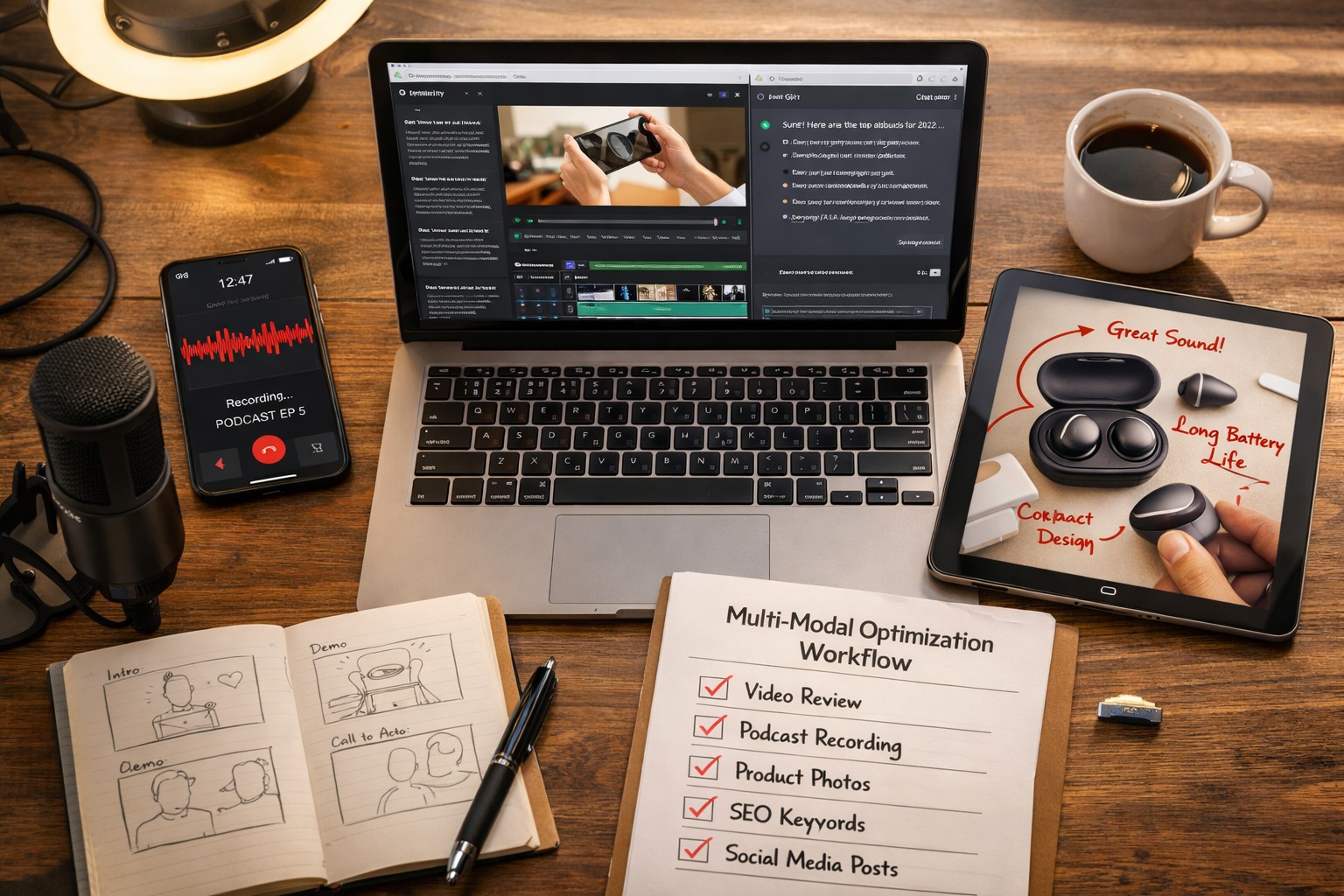
Visual content serves dual purposes in 2026: it enhances user experience and provides critical data points for AI interpretation. However, AI systems cannot properly interpret visual content without appropriate metadata[2][3].
Essential Image Optimization Techniques
Alt Text That Describes AND Informs
Move beyond basic accessibility. Write alt text that includes:
- Product names and model numbers
- Key visual features being demonstrated
- Context of use or comparison
- Relevant specifications visible in the image
Example: Instead of "wireless headphones," use "Sony WH-1000XM5 wireless headphones showing touch controls and foldable design with carrying case"
Detailed Captions and Annotations
Add text captions directly to images highlighting:
- ✅ Pros with green checkmarks
- ❌ Cons with red X marks
- 💰 Price points and value indicators
- 📊 Specification comparisons
These visual annotations help both users and AI systems quickly extract key information[2].
Structured Image Schemas
Implement schema markup for:
- Product images (with price, availability, ratings)
- How-to images (step numbers, instructions)
- Comparison images (entities being compared)
Image Formats That Drive AI Citations
Different image types serve strategic purposes:
| Image Type | AI Citation Value | Best Use Case |
|---|---|---|
| Annotated product photos | High | Feature explanations |
| Comparison tables | Very High | "Best" and "versus" queries |
| Infographics | High | Statistical claims and data |
| Before/after images | Moderate | Results-based products |
| Lifestyle context shots | Moderate | Use case demonstrations |
Comparison tables perform exceptionally well because they present information in the highly extractable, structured format that AI systems prefer[2]. Create visual comparison charts that include product images alongside specification grids.
The Power of Original Visual Content
AI systems are increasingly trained to detect and reward original research and first-person reviews[1]. Stock photos and manufacturer-provided images carry less weight than authentic, original photography that demonstrates real-world testing.
Invest in creating:
- 📸 Original product photography from multiple angles
- 🎨 Custom infographics with unique data visualizations
- 📹 Behind-the-scenes testing footage
- 📊 Proprietary comparison charts with your own testing metrics
This original visual content establishes expertise signals that AI systems increasingly prioritize when making citation decisions.
Leveraging Audio Content and Podcasts for AI Visibility
Audio content represents an underutilized opportunity in multi-modal affiliate strategies. While video dominates current AI citations, audio-first platforms are rapidly integrating with AI systems, and early adopters gain significant advantages.
Creating AI-Optimized Podcast Content
Podcasts offer unique benefits for affiliate marketers:
🎙️ Depth and Authority
Long-form audio allows detailed product discussions that establish expertise far beyond what text or short videos can achieve.
🔄 Repurposing Efficiency
A single podcast episode generates:
- Full transcript for blog post
- Audio clips for social media
- Quote graphics for visual content
- Chapter-based YouTube videos
📱 Platform Diversity
Audio content reaches audiences on Spotify, Apple Podcasts, Google Podcasts, and emerging AI-powered audio platforms.
Transcript Optimization for AI Retrieval
The transcript is the critical bridge between audio content and AI systems[3]. Optimize transcripts by:
- Editing for clarity: Clean up filler words while maintaining authenticity
- Adding timestamps: Mark key discussion points for AI extraction
- Including speaker labels: Identify experts and guests for authority signals
- Embedding links: Reference products and resources mentioned
- Structuring with headers: Break long transcripts into topical sections
Audio Explainers and Voice Notes
Beyond traditional podcasts, consider creating:
- Product audio guides: 3-5 minute deep dives on specific products
- FAQ audio responses: Voice answers to common questions
- Audio comparison summaries: Quick verbal rundowns of product differences
- Voice reviews: Authentic first-person impressions
These shorter audio formats integrate well with emerging voice search and AI assistant queries, positioning your content for citation in voice-based AI responses.
Building Topical Authority Through Multi-Modal Content Clusters
AI systems increasingly assess topical authority through comprehensive topic coverage rather than isolated page relevance[5]. The most effective multi-modal strategy involves creating content clusters where each format reinforces the others.
The Content Cluster Framework
Start with a pillar topic relevant to your affiliate marketing niche. For example, "Wireless Noise-Canceling Headphones." Build out:
📄 Pillar Content (Text)
- Comprehensive buying guide (3,000+ words)
- Structured with Q&A blocks, comparison tables, step-by-step selection criteria
- Internal links to all supporting content
🎥 Video Content
- Individual product reviews (10-15 minutes each)
- Head-to-head comparisons (5-8 minutes)
- Feature tutorials (3-5 minutes)
- Short-form highlights (60-90 seconds)
🖼️ Visual Content
- Comparison infographic
- Feature annotation images
- Size and fit comparison photos
- Specification charts
🎙️ Audio Content
- Podcast episode discussing category trends
- Audio reviews for each product
- Expert interview with audio engineer
🔗 Internal Linking Structure
Connect all formats through strategic internal links that signal topical relationships to AI systems. This reinforces your comprehensive coverage and increases the likelihood of citation across multiple query types.
Repurposing Research Across Formats
Single pieces of original research should be adapted into multiple formats to ensure AI systems can reference your content across various surfaces[1]. When you conduct product testing or gather original data:
- Publish findings as detailed blog post with data tables
- Create video presenting results with visual charts
- Design infographic summarizing key findings
- Record podcast episode discussing methodology and implications
- Share social media clips highlighting surprising discoveries
This multi-format approach doesn't just increase reach—it creates multiple citation opportunities for AI systems encountering queries from different angles.
Technical Implementation: Metadata and Structured Data
The technical foundation of multi-modal AI visibility rests on comprehensive metadata and structured data that helps AI systems understand, categorize, and cite your content appropriately.
Essential Metadata Elements
For every piece of content, regardless of format, implement:
Video Metadata:
- Descriptive titles with product names and key features
- Detailed descriptions with timestamps
- Comprehensive tags covering product categories and use cases
- Closed captions and full transcripts
- Chapter markers for key sections
Image Metadata:
- Descriptive filenames (not "IMG_1234.jpg")
- Complete alt text with context
- Image captions with additional information
- EXIF data including copyright and creator information
- Schema markup for product images
Audio Metadata:
- Episode titles optimized for search queries
- Detailed show notes with links and references
- Complete transcripts with speaker labels
- Chapter markers and timestamps
- RSS feed optimization with proper categories
Schema Markup for Multi-Modal Content
Implement structured data to help AI systems understand content relationships:
- Product schema (name, image, price, reviews, availability)
- HowTo schema (steps, images, videos)
- VideoObject schema (upload date, duration, thumbnail)
- FAQPage schema (questions and answers)
- Article schema (author, publish date, images)
This structured data serves as explicit signals that AI systems use when determining citation worthiness and relevance[3].
Content Freshness and Updates
AI systems increasingly prioritize up-to-date, credible content[2]. Establish a regular update schedule:
- Quarterly reviews of all pillar content
- Monthly updates to comparison tables and pricing
- Weekly additions of new product reviews
- Daily social media content for trending topics
Mark updates clearly with "Last Updated" dates and changelog sections. AI systems reward regularly refreshed authoritative sources over static pages.
Measuring Multi-Modal AI Visibility Success
Traditional analytics don't capture the full picture of AI citation performance. In 2026, affiliate marketers need new measurement frameworks.
Key Performance Indicators for AI Visibility
Track these metrics across your multi-modal content:
Citation Metrics:
- 📊 Mention frequency in AI-generated responses
- 🎯 Citation context (primary source vs. supporting reference)
- 🔍 Query diversity (how many different queries cite your content)
- 📈 Citation trend over time
Engagement Metrics:
- 👁️ Impression volume across platforms
- ⏱️ Average engagement time by format
- 🔄 Cross-format navigation patterns
- 💬 Comment quality and depth
Conversion Metrics:
- 💰 Affiliate revenue by content format
- 🛒 Conversion rate by traffic source
- 📱 Device and platform performance
- 🎁 Product recommendation acceptance rate
Tools for Tracking AI Citations
Monitor your AI visibility using:
- Manual monitoring: Regular queries in ChatGPT, Perplexity, Google AI Mode
- Brand mention tracking: Tools that scan AI responses for your brand/content
- Traffic source analysis: Identify referrals from AI platforms
- Conversion attribution: Track which formats drive actual affiliate sales
Understanding these metrics helps optimize your multi-modal strategy over time, doubling down on formats and topics that generate the highest AI citation rates.
Advanced Strategies: Getting Featured in Authoritative Sources
Brand mentions in authoritative sources correlate strongly with AI recommendations[4]. Rather than only creating your own content, strategically work to get your products and expertise featured in sources that AI systems frequently cite.
The Citation Influence Strategy
- Identify high-citation sources: Research which websites and publications AI systems frequently reference in your niche
- Analyze their content patterns: Understand what formats and topics they cover
- Pitch expert contributions: Offer original research, data, or expert commentary
- Provide visual assets: Supply high-quality images, charts, and videos they can use
- Build relationships: Establish ongoing contributor relationships with key publishers
When authoritative sources cite your products or include your expert input, AI systems inherit that trust signal and are far more likely to recommend your affiliate products[4].
Collaborative Multi-Modal Projects
Partner with complementary creators to produce multi-format content:
- Video collaborations: Cross-promote product reviews with other trusted reviewers
- Podcast guest appearances: Share expertise on established shows in your niche
- Visual content licensing: Allow authoritative sites to use your original images and infographics
- Research partnerships: Co-author studies and reports that multiple parties promote
These collaborative efforts expand your citation footprint across the web, increasing the probability that AI systems encounter and reference your content.
Conclusion
Multi-Modal Affiliate Content Strategies: Mastering Video, Audio, and Images for AI Search Visibility in 2026 represents far more than a tactical adjustment—it's a fundamental reimagining of how affiliate content creates value. As AI systems become the primary gateway between consumers and information, success depends on creating comprehensive, multi-format content that AI engines can confidently cite across diverse query contexts.
The affiliate marketers who thrive in this new landscape will be those who embrace format diversity, invest in original visual and audio content, optimize metadata rigorously, and build genuine topical authority through interconnected content clusters. Traditional text-only strategies simply cannot compete with the citation advantages that well-executed multi-modal approaches deliver.
Your Next Steps
Ready to transform your affiliate strategy for AI visibility? Start here:
- Audit your current content: Identify your top-performing text content and plan multi-format adaptations
- Choose one new format: If you're text-focused, add video or audio; if you create video, enhance with detailed transcripts and image assets
- Optimize existing metadata: Update alt text, captions, and transcripts on all current content
- Create your first content cluster: Select a pillar topic and build out supporting content in 3+ formats
- Monitor AI citations: Begin tracking where and how AI systems reference your content
The future of affiliate marketing belongs to those who master multi-modal content creation. The tools, platforms, and AI systems are already here. The question is: will you adapt your strategy to meet them?
For those ready to dive deeper into modern affiliate approaches, explore our comprehensive guide on how to succeed in affiliate marketing and discover proven strategies to boost your earnings.
References
[1] The State Of Ai And Seo In 2026 With Lily Ray – https://www.affiliatesummit.com/blogs/the-state-of-ai-and-seo-in-2026-with-lily-ray
[2] Ai Search Trends – https://www.semrush.com/blog/ai-search-trends/
[3] How To Optimize For Google Ai Mode – https://www.e2msolutions.com/blog/how-to-optimize-for-google-ai-mode/
[4] Ai Advertising – https://cpvlab.pro/blog/marketing-industry/ai-advertising/
[5] Ai Search Trends – https://www.nonofojoel.com/ai-search-trends/