

The affiliate marketing landscape has undergone a seismic transformation. Gone are the days when generic promotional emails and one-size-fits-all advertising campaigns could drive meaningful conversions. In 2026, success in affiliate marketing demands something far more sophisticated: One-to-One Affiliate Messaging: AI-Generated Personalization at Scale for 2026 represents the cutting edge of customer engagement, where artificial intelligence crafts messages that feel handwritten while reaching thousands of prospects simultaneously.
The challenge facing affiliate marketers today is clear: consumers expect personalized experiences, yet scaling personalization manually is impossible. This is where AI-powered personalization transforms the game. By leveraging machine learning, behavioral data, and predictive analytics, modern affiliate marketers can now create genuinely personalized customer journeys that drive commissions through lifecycle retention rather than one-time conversions.
Key Takeaways 💡
- AI personalization tools enable affiliate marketers to create individualized messaging at scale using behavioral data and machine learning algorithms
- Lifecycle retention strategies powered by AI-generated personalization drive 40%+ higher commission rates compared to traditional one-time conversion approaches
- Privacy-compliant tracking systems and headless attribution models are essential for measuring AI-driven affiliate campaigns in 2026
- Custom AI models can be configured to match brand voice while automatically generating personalized emails, ads, and content across customer segments
- Real-time behavioral triggers combined with predictive analytics allow affiliate messages to reach customers at precisely the right moment in their journey
Understanding One-to-One Affiliate Messaging in 2026
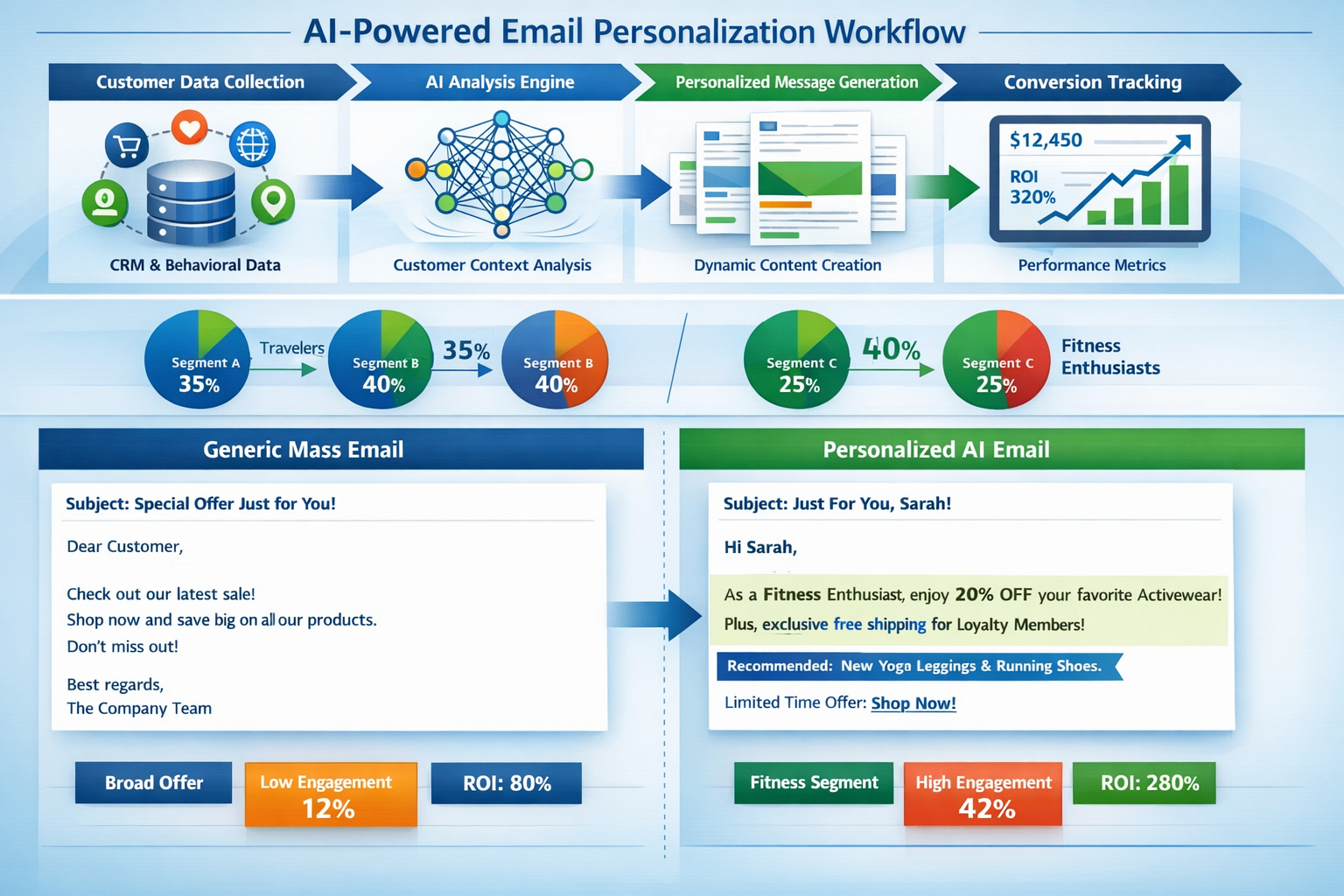
One-to-One Affiliate Messaging represents a fundamental shift from broadcast-style affiliate promotion to individualized customer communication. Rather than sending identical promotional content to entire email lists or displaying the same ads to broad audiences, this approach treats each customer as a unique individual with specific needs, preferences, and behavioral patterns.
The foundation of this strategy rests on three pillars:
- Comprehensive customer context – gathering and analyzing behavioral signals, purchase history, engagement patterns, and preference data
- AI-powered message generation – using machine learning to craft personalized content that resonates with individual recipients
- Lifecycle-based timing – delivering messages at optimal moments throughout the customer journey
The Evolution from Mass Marketing to Personalization
Traditional affiliate marketing relied heavily on volume. Marketers would blast promotional content to large audiences, hoping that a small percentage would convert. This approach generated diminishing returns as consumers became increasingly immune to generic advertising.
The 2026 affiliate economy demands a different approach. According to recent industry analysis, successful brands now strategically invest in affiliate relationships with publishers producing high-quality, machine-readable content that AI systems prioritize, enabling better visibility and more effective connection with high-intent consumers[3]. This shift reflects broader changes in how consumers discover and purchase products.
For affiliate marketers looking to unleash their earnings potential with affiliate marketing, understanding these fundamental changes is crucial to staying competitive.
How AI-Generated Personalization Works at Scale
The magic of One-to-One Affiliate Messaging: AI-Generated Personalization at Scale for 2026 lies in sophisticated AI systems that can analyze vast amounts of customer data and generate highly relevant, personalized content automatically. These systems leverage multiple technologies working in concert:
Machine Learning and Behavioral Analysis
Modern AI personalization platforms use machine learning algorithms to identify patterns in customer behavior that humans would never detect. These systems analyze:
- Browsing patterns – which products customers view, how long they spend on pages, and navigation paths
- Email engagement – open rates, click patterns, time of day preferences, and content preferences
- Purchase history – previous transactions, average order value, purchase frequency, and product categories
- Social signals – interactions with brand content, influencer engagement, and peer recommendations
- Device and channel preferences – whether customers prefer mobile or desktop, email or social media
By processing this behavioral data, AI systems can predict what type of message will resonate with each individual customer and when they’re most likely to engage[5][6].
Natural Language Generation for Personalized Content
Once the AI understands customer context, it generates personalized content using natural language processing (NLP) and generation capabilities. Affiliate marketers can now create custom GPTs specifying tone of voice, video format, content length, and affiliate link integration, enabling standardized yet personalized content generation at scale[1].
This technology allows marketers to:
- Generate unique email subject lines tailored to individual interests
- Create personalized product recommendations with custom explanations
- Craft social media ad copy that speaks directly to specific customer segments
- Develop video scripts that address individual pain points
- Write blog content that answers questions specific customers are asking
The result? Messages that feel handcrafted even though they’re generated automatically for thousands of recipients.
Predictive Analytics and Send-Time Optimization
Advanced AI personalization tools include behavior-based send time optimization, analyzing when individual customers are most likely to engage with messages[5]. Rather than sending all emails at the same time, the system delivers each message when that specific recipient is most receptive.
This predictive capability extends beyond timing to include:
- Next-best-action recommendations – suggesting which product or content to promote to each customer
- Churn prediction – identifying customers at risk of disengagement and triggering retention campaigns
- Lifetime value forecasting – prioritizing high-value customers for premium offers
- Cross-sell and upsell opportunities – recognizing when customers are ready for complementary products
For those exploring proven strategies to boost affiliate marketing income, implementing predictive analytics represents a significant competitive advantage.
Implementing One-to-One Affiliate Messaging: AI-Generated Personalization at Scale for 2026
Moving from theory to practice requires a structured approach. Here’s how affiliate marketers can implement AI-generated personalization effectively:
Step 1: Build Your Data Foundation
Quality personalization requires quality data. Before implementing AI-driven messaging, establish robust data collection and management systems:
| Data Category | Examples | Collection Methods |
|---|---|---|
| Demographic | Age, location, gender, occupation | Registration forms, surveys |
| Behavioral | Page views, clicks, video watches | Website tracking, analytics |
| Transactional | Purchase history, cart abandonment | E-commerce platform integration |
| Engagement | Email opens, social interactions | Email service provider, social APIs |
| Preference | Content interests, communication frequency | Preference centers, surveys |
Importantly, all data collection must comply with privacy regulations. Privacy-compliant and stable tracking systems have become essential as U.S. state regulations on data privacy and protection rise[3].
Step 2: Select AI Personalization Tools
The market offers numerous AI personalization platforms designed specifically for affiliate marketers. When evaluating options, consider:
- Integration capabilities – Does it connect with your existing email platform, CRM, and affiliate networks?
- Customization options – Can you configure brand voice, messaging rules, and content templates?
- Attribution tracking – Does it support modern tracking methods beyond simple click-based attribution?
- Scalability – Can it handle your current volume and grow with your business?
- Ease of use – Does it require technical expertise or offer user-friendly interfaces?
Many successful affiliate marketers now use platforms that consolidate influencer relationships, commissions, payments, and performance data in a single platform alongside other channels[3], creating unified affiliate infrastructure.
Step 3: Create Customer Segments and Personas
While AI enables one-to-one personalization, starting with well-defined customer segments helps train your AI models effectively. Develop detailed personas based on:
- Purchase behavior – first-time buyers, repeat customers, high-value clients
- Engagement level – highly engaged, occasionally engaged, dormant
- Product interests – specific categories or product types they prefer
- Customer lifecycle stage – awareness, consideration, purchase, retention, advocacy
These segments become the foundation for your AI training data, helping the system understand what “good” personalization looks like for different customer types.
Step 4: Design Lifecycle-Based Message Flows
One-to-One Affiliate Messaging: AI-Generated Personalization at Scale for 2026 excels when integrated into comprehensive lifecycle marketing strategies. Map out customer journeys and identify key touchpoints where personalized affiliate messages add value:
Awareness Stage:
- Welcome series for new subscribers
- Educational content introducing product categories
- Soft affiliate recommendations based on browsing behavior
Consideration Stage:
- Comparison content highlighting product benefits
- Social proof and reviews from similar customers
- Limited-time offers tailored to browsing history
Purchase Stage:
- Abandoned cart recovery with personalized incentives
- Product bundle recommendations
- Urgency messaging customized to individual buying patterns
Retention Stage:
- Post-purchase follow-up with complementary products
- Loyalty rewards personalized to purchase history
- Re-engagement campaigns for dormant customers
Advocacy Stage:
- Referral program invitations for satisfied customers
- User-generated content requests
- VIP offers for brand advocates
For marketers working in specific verticals, understanding affiliate marketing niches helps tailor these lifecycle flows to industry-specific customer behaviors.
Step 5: Configure AI Content Generation Rules
Modern AI platforms allow you to set parameters that guide content generation while maintaining brand consistency. Configure:
- Tone and voice guidelines – formal vs. casual, enthusiastic vs. understated
- Content structure templates – email formats, ad layouts, social post structures
- Affiliate disclosure requirements – ensuring FTC compliance in all generated content
- Brand safety rules – prohibited language, competitive mentions, sensitive topics
- Call-to-action variations – different CTAs for different customer segments
Using AI-driven frameworks, affiliate businesses can now produce 30-40 articles in a week while maintaining quality through the combination of AI handling heavy lifting and humanized elements added by creators[1].
Step 6: Implement Advanced Attribution Tracking
The traditional click-based tracking model has become obsolete in 2026. Instead, affiliate systems now require “Headless Tracking” with unique attribution tokens or promo codes that can be read by AI models and credited via API calls when purchases are made[4].
This modern attribution approach:
- Tracks conversions across multiple devices and sessions
- Attributes value to touchpoints throughout the customer journey
- Integrates with AI agent interactions and voice commerce
- Provides more accurate commission calculations
- Enables better optimization of personalization strategies
Real-World Applications and Use Cases
One-to-One Affiliate Messaging: AI-Generated Personalization at Scale for 2026 delivers measurable results across various affiliate marketing scenarios:
E-commerce Affiliate Campaigns
An affiliate marketer promoting fashion products can use AI personalization to:
- Send personalized style recommendations based on browsing history and previous purchases
- Generate unique email content for each subscriber featuring products matching their size, color preferences, and price range
- Create dynamic ad creative that shows different products to different audience segments
- Adjust messaging tone based on customer engagement patterns (enthusiastic for engaged customers, re-engagement focused for dormant subscribers)
SaaS and Digital Product Promotion
Affiliates marketing software and digital products leverage AI to:
- Identify which features resonate with specific customer segments
- Generate personalized comparison content highlighting relevant use cases
- Create educational email sequences tailored to individual skill levels
- Deliver timely upgrade promotions when customers show signs of outgrowing current plans
Content-Based Affiliate Marketing
Bloggers and content creators use AI personalization to:
- Recommend relevant articles based on reading history
- Insert contextually appropriate affiliate links that match reader interests
- Generate personalized email newsletters featuring content aligned with individual preferences
- Create custom landing pages that adapt to visitor characteristics
Those interested in high ticket affiliate marketing can particularly benefit from personalization, as high-value purchases require more sophisticated nurturing and trust-building.
The Nano-Influencer Strategy and AI Personalization
One of the most significant trends in 2026 is the rise of “Nano-Armies”—groups of hundreds of smaller creators (1k-10k followers) paid on performance-based commission rather than flat fees[4]. These nano-influencers demonstrate engagement rates exceeding 4%, significantly outperforming macro-influencers.
AI-generated personalization empowers nano-influencers by:
- Providing ready-to-customize content templates that maintain their authentic voice
- Generating personalized promotional messages for their specific audience demographics
- Automating follow-up sequences while preserving personal connection
- Tracking attribution across fragmented, niche audiences
With the influencer market projected to reach approximately $33 billion by the end of 2025[3], affiliate marketers who combine nano-influencer strategies with AI personalization gain significant competitive advantages.
Measuring Success: Key Performance Indicators
To optimize One-to-One Affiliate Messaging: AI-Generated Personalization at Scale for 2026, track these essential metrics:
Engagement Metrics
- Open rates by segment – comparing personalized vs. generic messages
- Click-through rates – measuring relevance of personalized recommendations
- Time on page – indicating content resonance
- Social sharing – showing message value to recipients
Conversion Metrics
- Conversion rate – percentage of recipients taking desired actions
- Average order value – whether personalization drives higher-value purchases
- Customer acquisition cost – efficiency of personalized campaigns
- Commission per email/message – direct revenue attribution
Lifecycle Metrics
- Customer lifetime value – long-term impact of personalization
- Retention rate – whether personalized messaging improves loyalty
- Repeat purchase rate – frequency of subsequent conversions
- Churn rate – effectiveness of retention campaigns
AI Performance Metrics
- Prediction accuracy – how well AI forecasts customer behavior
- Personalization relevance score – recipient feedback on message relevance
- Content generation quality – human review of AI-generated content
- Automation efficiency – time saved vs. manual content creation
For comprehensive performance tracking, consider implementing strategies from 10 proven strategies to boost your affiliate marketing income.
Overcoming Common Challenges
Implementing AI-generated personalization isn’t without obstacles. Here’s how to address common challenges:
Challenge 1: Data Quality and Completeness
Problem: AI personalization requires substantial customer data, but many affiliates lack comprehensive data sets.
Solution:
- Start with basic segmentation and expand as data accumulates
- Implement progressive profiling to gather information gradually
- Use third-party data enrichment services ethically and compliantly
- Focus on behavioral data, which is easier to collect than demographic information
Challenge 2: Maintaining Authenticity
Problem: Over-automation can make messages feel robotic rather than personal.
Solution:
- Add human review for high-value customer communications
- Include genuine personal touches in AI-generated content
- Use AI for structure and personalization variables while maintaining human creativity
- Test different automation levels to find the right balance
Challenge 3: Privacy Compliance
Problem: Personalization requires data collection, which must comply with evolving privacy regulations.
Solution:
- Implement transparent data collection practices
- Provide clear opt-in/opt-out mechanisms
- Use privacy-compliant tracking technologies
- Regularly audit data practices for regulatory compliance
Challenge 4: Technology Integration
Problem: AI personalization tools must integrate with existing marketing technology stacks.
Solution:
- Choose platforms with robust API capabilities
- Work with integration specialists if needed
- Start with pilot programs before full implementation
- Prioritize tools that offer pre-built integrations with popular platforms
Marketers can learn from common affiliate marketing mistakes and how to avoid them to navigate these challenges more effectively.
Future Trends: What’s Next for AI Personalization
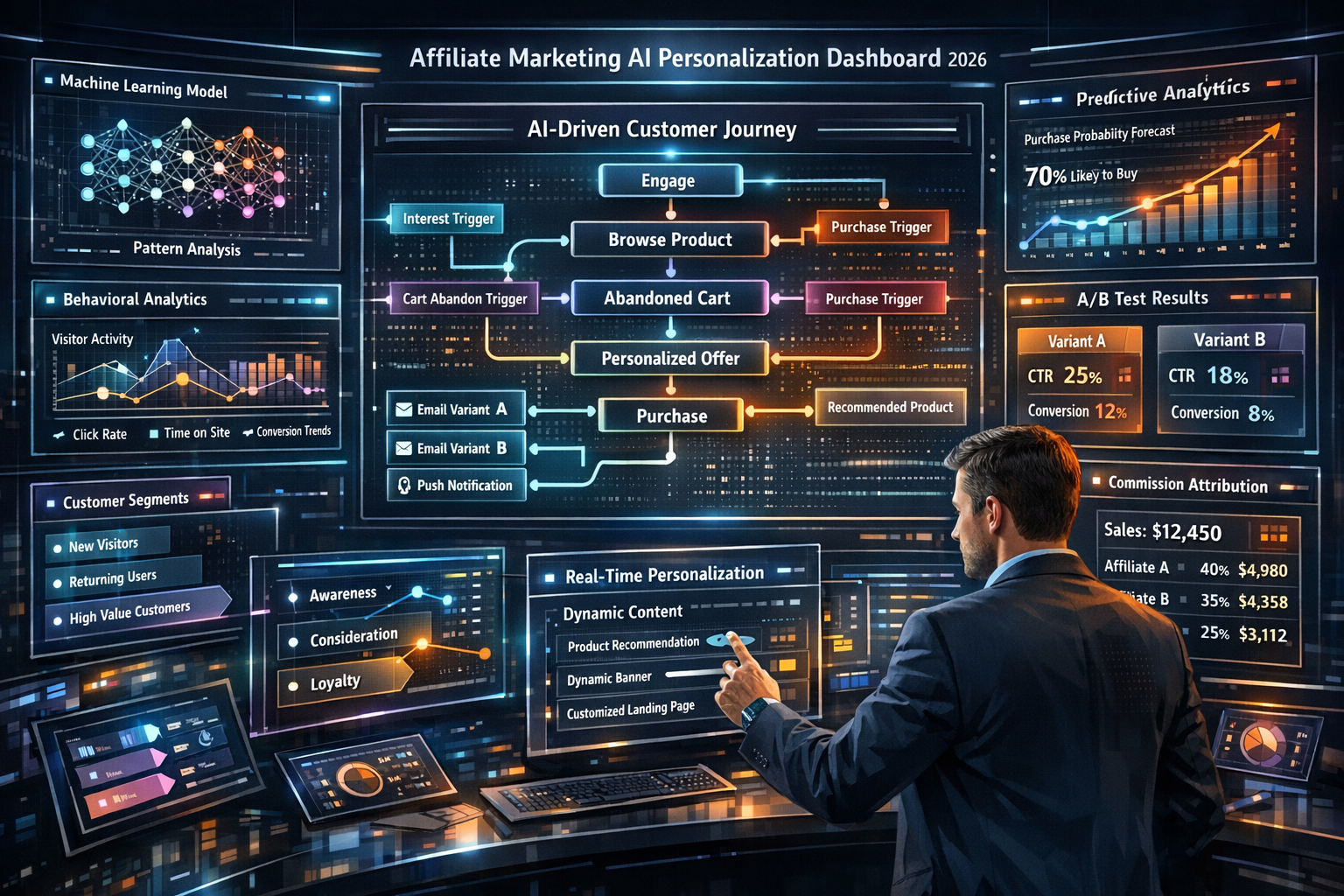
As we progress through 2026 and beyond, several emerging trends will shape One-to-One Affiliate Messaging: AI-Generated Personalization at Scale for 2026:
Voice and Conversational Commerce
AI-powered voice assistants increasingly facilitate purchases. Affiliate marketers must adapt personalization strategies to:
- Optimize content for voice search queries
- Create conversational recommendation flows
- Implement voice-activated affiliate tracking
- Generate audio content personalized to listener preferences
Hyper-Personalized Video Content
AI video generation tools enable creation of personalized video messages at scale, where:
- Product demonstrations adapt to viewer interests
- Video thumbnails and titles customize based on recipient data
- Interactive video elements respond to viewer choices
- Affiliate calls-to-action adjust based on engagement patterns
Predictive Product Development
AI analysis of personalized messaging performance will inform:
- Product creation based on unmet customer needs identified through message engagement
- Feature prioritization driven by personalization data
- Pricing strategies optimized for different customer segments
- Launch timing based on predictive customer readiness
Cross-Platform Identity Resolution
As customers interact across multiple devices and platforms, AI will improve:
- Unified customer profiles across touchpoints
- Consistent personalization regardless of channel
- More accurate attribution across fragmented journeys
- Seamless experience transitions between platforms
AI Agent Economy Integration
The rise of AI shopping agents requires affiliate marketers to:
- Create machine-readable content that AI agents can process
- Implement API-based attribution systems
- Optimize for AI agent recommendation algorithms
- Develop partnerships with AI agent platforms
Both AI systems and social platforms now prioritize fresh, up-to-date content, requiring brands to maintain robust, real-time data capabilities to remain visible[3].
Building Your AI Personalization Strategy: Action Plan
Ready to implement One-to-One Affiliate Messaging: AI-Generated Personalization at Scale for 2026? Follow this 90-day action plan:
Days 1-30: Foundation Phase
✅ Week 1: Audit current data collection and customer information
✅ Week 2: Research and select AI personalization platform
✅ Week 3: Develop customer segments and personas
✅ Week 4: Create lifecycle journey maps and identify personalization opportunities
Days 31-60: Implementation Phase
✅ Week 5: Configure AI platform and integrate with existing systems
✅ Week 6: Set up tracking and attribution mechanisms
✅ Week 7: Create content templates and personalization rules
✅ Week 8: Launch pilot campaigns with small customer segments
Days 61-90: Optimization Phase
✅ Week 9: Analyze pilot campaign performance and gather insights
✅ Week 10: Refine AI configuration based on results
✅ Week 11: Expand personalization to additional customer segments
✅ Week 12: Document processes and scale successful strategies
AI now generates comprehensive 90-day business plans including article topics, video content, monetization roadmaps, affiliate program recommendations, email funnel strategies, and SEO keyword targeting[1], enabling faster validation and execution.
For those just starting their journey, reviewing affiliate marketing for beginners provides essential foundational knowledge.
Tools and Technologies for 2026
The AI personalization ecosystem includes several categories of tools:
Email Personalization Platforms
- Dynamic content insertion based on customer data
- Behavioral trigger automation
- Predictive send-time optimization
- A/B testing with AI-powered recommendations
Content Generation Tools
- Natural language generation for email copy
- Social media post creation
- Blog article drafting and optimization
- Video script development
Customer Data Platforms (CDPs)
- Unified customer profile management
- Cross-channel data integration
- Segment creation and management
- Privacy compliance automation
Attribution and Analytics
- Multi-touch attribution modeling
- Headless tracking implementation
- Commission calculation automation
- Performance dashboard creation
AI Model Configuration
- Custom GPT development for brand voice
- Prompt engineering interfaces
- Training data management
- Output quality control
Understanding search engine optimization techniques remains important, as personalized content must still rank well in search engines.
Ethical Considerations and Best Practices
As AI personalization becomes more sophisticated, ethical implementation becomes crucial:
Transparency
- Clearly disclose affiliate relationships in all personalized content
- Inform customers about data collection and usage
- Provide easy access to privacy policies
- Offer simple opt-out mechanisms
Data Security
- Implement robust cybersecurity measures
- Encrypt sensitive customer information
- Regularly audit data access and usage
- Comply with data breach notification requirements
Fairness and Bias Prevention
- Monitor AI systems for discriminatory patterns
- Ensure personalization doesn’t exclude or disadvantage groups
- Regularly review AI decision-making processes
- Maintain human oversight of automated systems
Value Exchange
- Ensure personalization genuinely benefits customers
- Don’t manipulate vulnerable populations
- Provide real value in exchange for data
- Respect customer communication preferences
Conclusion: Embracing the Future of Affiliate Marketing
One-to-One Affiliate Messaging: AI-Generated Personalization at Scale for 2026 represents far more than a technological advancement—it’s a fundamental reimagining of how affiliate marketers build relationships with customers. By leveraging AI to craft messages that feel handcrafted while reaching thousands simultaneously, marketers can drive affiliate commissions through lifecycle retention rather than one-time conversions.
The transformation is already underway. Affiliate marketers who embrace AI-powered personalization now will establish competitive advantages that compound over time. Those who delay risk becoming irrelevant in an increasingly sophisticated marketplace where consumers expect—and reward—genuine personalization.
Your Next Steps 🎯
- Assess your current capabilities: Evaluate your data collection, customer segmentation, and technology infrastructure
- Start small and scale: Begin with pilot campaigns targeting specific customer segments before expanding
- Invest in learning: Develop AI literacy and stay current with emerging personalization technologies
- Prioritize privacy: Build trust through transparent, compliant data practices
- Measure relentlessly: Track performance metrics and continuously optimize your approach
- Maintain the human touch: Use AI to enhance—not replace—authentic customer relationships
The affiliate marketing landscape of 2026 rewards those who combine technological sophistication with genuine customer focus. AI-generated personalization at scale makes this combination not just possible, but practical and profitable.
Whether you’re just beginning your affiliate marketing journey or looking to transform an established business, the principles and practices of One-to-One Affiliate Messaging: AI-Generated Personalization at Scale for 2026 provide a roadmap to sustainable success. The technology exists. The strategies are proven. The only question is: will you take action?
Start today by implementing even one element of AI personalization in your affiliate marketing. Monitor the results. Refine your approach. Scale what works. The future of affiliate marketing isn’t coming—it’s already here, and it’s personalized, intelligent, and more effective than ever before.
References
[1] Watch – https://www.youtube.com/watch?v=Mh3ECoqvEo8
[2] Ai Personalization Tools – https://reply.io/blog/ai-personalization-tools/
[3] How Affiliate Marketing Powers Ai Search And Creator Commerce – https://martech.org/how-affiliate-marketing-powers-ai-search-and-creator-commerce/
[4] Affiliate Marketing Trends And What To Leave Behind – https://www.postaffiliatepro.com/blog/affiliate-marketing-trends-and-what-to-leave-behind/
[5] Ai Personalization Tools – https://www.mailmodo.com/guides/ai-personalization-tools/
[6] Ai Marketing Tools – https://www.pushwoosh.com/blog/ai-marketing-tools/
[7] Sales Chatbot – https://www.gotolstoy.com/blog/sales-chatbot
[8] Building Better Connections With AI-Powered Customer Experience Orchestration – https://hbr.org/sponsored/2026/02/building-better-connections-with-ai-powered-customer-experience-orchestration
