

The search landscape has fundamentally transformed. When someone asks ChatGPT for product recommendations or queries Google’s AI Overviews for buying advice, traditional SEO tactics no longer guarantee visibility. Affiliate marketers who master Answer Engine Optimization (AEO) and Generative Engine Optimization (GEO) now dominate the discovery phase, where purchasing decisions actually happen. As traditional search fades into the background, the future belongs to those who understand how AI agents select, surface, and synthesize affiliate content in conversational contexts.
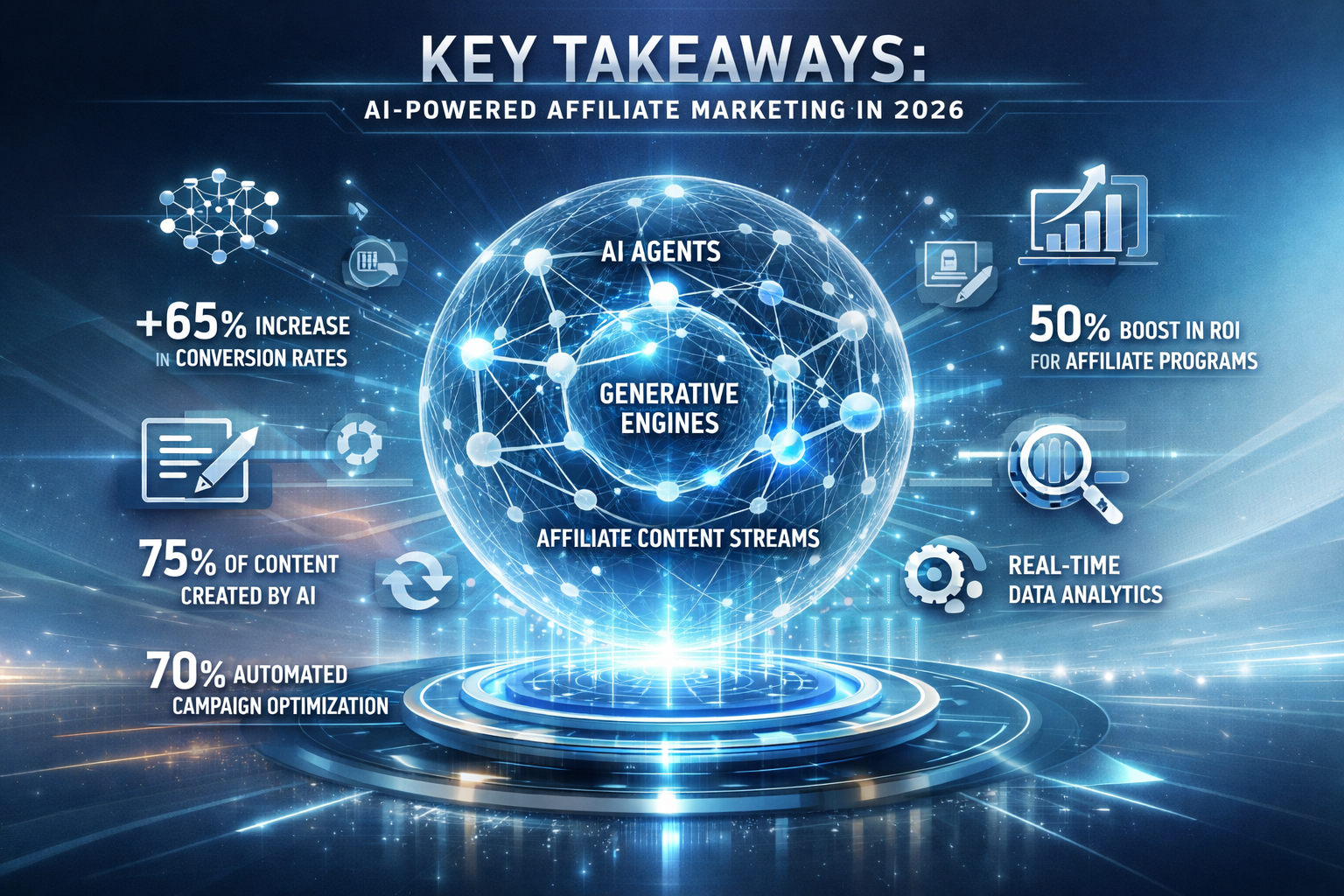
Optimizing Affiliate Content for AI Agents and Generative Engines in 2026 represents the single most critical skill shift for affiliate marketers this year. The data tells a compelling story: affiliate and user-generated content now account for significantly more AI search sources than brand websites, which represent only 5-10% of sources[1]. This isn’t a gradual evolution—it’s a seismic shift in how consumers discover products and where affiliate commissions originate.
Key Takeaways
- AI-powered search prioritizes affiliate content over brand sites, with affiliate sources dominating 90-95% of AI-generated recommendations, making GEO and AEO essential for visibility[1]
- Data quality and machine-readability trump traditional keyword optimization, requiring structured data, semantic markup, and entity-based content strategies for AI discoverability[1]
- Content freshness is algorithmically critical across all AI platforms, with real-time updates and continuous content refreshes determining whether your affiliate links surface in AI responses[1]
- Modern AI tools accelerate affiliate operations by 10x, enabling marketers to launch with 30-50 optimized pieces instead of months of manual content creation[3]
- Multi-platform AI monitoring is now mandatory, with tools tracking affiliate content visibility across ChatGPT, Perplexity, Google AI Overviews, Gemini, Copilot, and Claude simultaneously[6]
Understanding the AI Search Revolution in Affiliate Marketing
The Death of Traditional Search and Rise of AI Agents
Traditional search engines are becoming discovery engines. Users no longer click through ten blue links—they receive synthesized answers from AI systems that aggregate, analyze, and recommend products directly within conversational interfaces. This fundamental shift impacts every aspect of affiliate marketing opportunities in 2026.
AI agents now serve as the primary gatekeepers between affiliate content and potential buyers. When someone asks “What’s the best project management software for small teams?” they receive curated recommendations from ChatGPT, Perplexity, or Google’s AI Overviews—not a list of search results. The affiliate content that surfaces in these responses captures the commission.
The creator economy reached $33 billion by the end of 2025, with budgets shifting toward influencer and affiliate partners whose content drives visibility in LLMs and AI-powered search environments[1]. This massive market shift reflects where actual purchasing decisions now occur.
Why Affiliate Content Dominates AI Search Results
Affiliate content possesses inherent advantages that AI systems value:
✅ Comparative analysis – AI agents prioritize content that compares multiple options objectively
✅ User experience focus – Real-world testing and hands-on reviews provide the context AI needs
✅ Updated information – Affiliate publishers update content more frequently than brand sites
✅ Authentic voice – Third-party perspectives carry more weight in AI recommendation algorithms
✅ Structured data richness – Affiliate sites increasingly implement comprehensive schema markup
This explains why affiliate and user-generated content account for 90-95% of AI search sources, while brand content accounts for only 5-10%[1]. AI systems trust affiliate publishers because their content aligns with how these algorithms evaluate quality and relevance.
For those wondering about the difference between affiliate marketing and digital marketing, this AI revolution highlights affiliate marketing’s unique positioning as third-party recommendation content that AI systems inherently prefer.
Core Principles of Optimizing Affiliate Content for AI Agents and Generative Engines in 2026
Data Quality Over Keyword Density
The paradigm has shifted completely. Visibility in AI-powered search hinges on data quality rather than keywords[1]. While traditional SEO focused on keyword density, placement, and backlink profiles, AI agents evaluate content through entirely different criteria:
| Traditional SEO Focus | AI Agent Optimization Focus |
|---|---|
| Keyword density 1-3% | Entity recognition and relationships |
| Title tag optimization | Structured data completeness |
| Meta descriptions | Semantic clarity and context |
| Backlink quantity | Data accuracy and freshness |
| Page speed | Machine-readable formatting |
| Mobile responsiveness | Multi-modal content signals |
This doesn’t mean abandoning Google search engine optimization principles entirely—it means expanding your optimization framework to include AI-specific signals.
Machine-Readable Content Architecture
Brands must strategically invest in affiliate relationships with publishers that produce high-quality, machine-readable content[1]. But what makes content “machine-readable” for AI agents?
🔧 Structured Data Implementation
- Product schema for affiliate items
- Review schema with aggregate ratings
- FAQ schema for common questions
- How-to schema for tutorials
- Article schema with proper metadata
🔧 Entity-Based Content Structure
- Clear entity definitions (products, brands, features)
- Explicit relationships between entities
- Consistent entity naming conventions
- Entity attributes in structured formats
🔧 Semantic HTML Markup
- Proper heading hierarchy (H1→H2→H3)
- Descriptive alt text for images
- Table markup for comparisons
- List markup for features
AI agents parse this structured information to understand context, relationships, and relevance—determining whether your affiliate content surfaces in their responses.
The Content Freshness Imperative
Both AI systems and social platforms prioritize fresh, up-to-date content through their algorithms, requiring robust real-time data capabilities to maintain visibility[1]. Static affiliate content from 2024 won’t compete with continuously updated alternatives in 2026.
Consider implementing:
- Monthly content audits to identify outdated information
- Automated price checking for affiliate products
- Availability monitoring to remove discontinued items
- Feature update tracking for software and digital products
- Seasonal refresh schedules for evergreen content
The affiliate marketers who avoid common affiliate marketing mistakes understand that content freshness directly impacts AI visibility and conversion rates.
Advanced Strategies for Optimizing Affiliate Content for AI Agents and Generative Engines in 2026
Leveraging AI-Powered Content Creation Tools
AI accelerates content production timelines dramatically. Affiliate marketers can now launch fully operational businesses with 30-50 pieces of content, rather than spending months creating 20 articles or videos[3]. This velocity advantage compounds when combined with quality optimization.
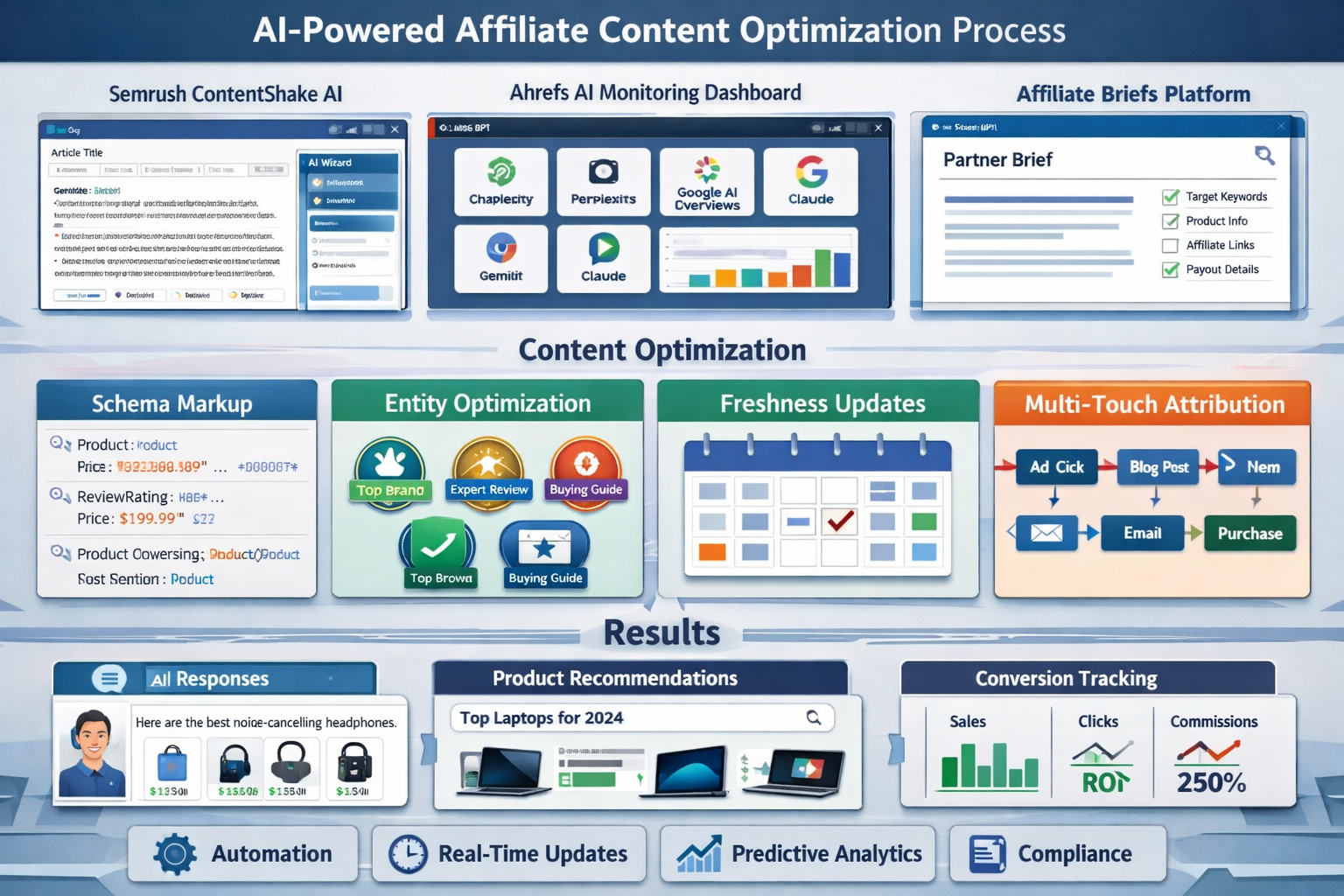
Semrush’s 2026 update includes the ContentShake AI tool for SEO-optimized content creation and the AI SEO Toolkit, combining proprietary keyword and competitor data with LLM-powered writing assistance and real-time optimization scores[6]. These tools help affiliates:
- Generate comprehensive product comparisons
- Create FAQ sections optimized for AI agents
- Develop structured buying guides
- Produce video scripts for multi-modal content
- Draft email sequences for affiliate promotions
However, AI-generated content requires human oversight for accuracy, authenticity, and strategic positioning. The goal isn’t to replace human expertise—it’s to amplify productivity while maintaining quality standards that AI agents reward.
Multi-Platform AI Visibility Monitoring
Ahrefs’ AI features now monitor brand mentions across ChatGPT, Perplexity, Google AI Overviews, Gemini, Copilot, and Claude[6], providing critical visibility data into how affiliate content appears across generative engines. This represents a fundamental shift in performance measurement.
Traditional analytics tracked:
- Organic search rankings
- Click-through rates
- Bounce rates
- Conversion rates
AI-era analytics must track:
- ✨ Mention frequency across AI platforms
- ✨ Position in AI-generated recommendations
- ✨ Context of affiliate content citations
- ✨ Competitor comparison appearances
- ✨ Product recommendation inclusion rates
Without multi-platform monitoring, affiliate marketers operate in the dark about where their content actually surfaces in the AI-powered discovery phase that precedes conversions.
Implementing Synthetic Data and Conversational Optimization
As AI agents become the primary interface for product discovery, conversational content optimization becomes essential. This means structuring affiliate content to answer the specific questions users ask AI systems.
Synthetic data strategies involve:
- Query pattern analysis – Identifying common conversational queries related to your niche
- Answer formatting – Structuring content as direct answers to these queries
- Context layering – Providing background information AI agents need for synthesis
- Comparison frameworks – Creating structured comparisons AI can easily parse
- Attribution clarity – Making affiliate relationships transparent for AI systems
For example, instead of writing “This product has many great features,” write “The XYZ Software includes automated reporting, real-time collaboration, and 256-bit encryption—making it ideal for teams of 5-50 people who need secure project management.” The second version provides entities, attributes, and context that AI agents can extract and synthesize.
Technical Implementation for AI Agent Optimization
Schema Markup for Affiliate Content
Implementing comprehensive schema markup isn’t optional for AI visibility—it’s foundational. Focus on these schema types:
Product Schema
- name
- description
- image
- brand
- aggregateRating
- offers (price, availability, url)
- review (author, datePublished, reviewRating)
Review Schema
- itemReviewed
- reviewRating
- author
- datePublished
- reviewBody
- pros/cons (using custom properties)
FAQ Schema
- question
- acceptedAnswer
- dateModified
These structured data elements help AI agents understand your content’s purpose, extract relevant information, and determine when to surface your affiliate recommendations.
Entity Optimization and Knowledge Graph Alignment
AI systems rely heavily on entity recognition and knowledge graph relationships. Optimizing affiliate content for entities means:
🎯 Using canonical entity names – “Apple MacBook Pro 16-inch M3” instead of “the laptop” or “this device.”
🎯 Defining entity relationships – “Adobe Photoshop integrates with Lightroom and Creative Cloud.”
🎯 Providing entity attributes – “Price: $1,999 | Weight: 4.7 lbs | Battery: 22 hours”
🎯 Linking to authoritative sources – Official product pages, manufacturer specifications
🎯 Maintaining entity consistency – Same naming conventions throughout content
This entity-focused approach aligns with how AI agents parse and understand content, dramatically increasing the likelihood that your affiliate recommendations surface in AI-generated responses.
Content Gap Analysis with AI Tools
AI-driven content gap analysis identifies ranking opportunities by revealing topics competitors rank for that you don’t[2]. For affiliate marketers, this translates to discovering:
- Product categories you haven’t covered
- Comparison angles competitors dominate
- Question-based content opportunities
- Seasonal trends you’ve missed
- Emerging product categories
Predictive analytics now forecast which keywords and topics will trend before they peak[2], allowing affiliate publishers to position content ahead of demand curves. This proactive approach builds authority before competition intensifies.
Tools like AI-powered competitor analysis can identify gaps in your content strategy and reveal opportunities where AI agents currently lack quality sources to cite.
Automation and Scaling for AI-Optimized Affiliate Programs
AI Co-Pilots for Affiliate Operations
Modern affiliate platforms now include AI co-pilots that automatically generate partner briefs, tracking links, and initial content drafts, with built-in compliance checklists and automated workflows[5]. These systems:
- Monitor link health across all published content
- Refresh landing pages at scale without manual oversight
- Generate performance reports with AI-powered insights
- Identify optimization opportunities based on conversion data
- Automate compliance checking for disclosure requirements
This automation allows affiliate marketers to manage larger portfolios of content and partnerships while maintaining quality standards that AI agents reward.
Multi-Touch Attribution for AI-Driven Journeys
Enhanced multi-touch attribution models are providing better insights into customer journeys, ensuring affiliates receive fair payouts for their contributions to conversions[4]. This becomes critical as AI agents introduce new touchpoints in the buyer journey:
Traditional Journey:
Search → Click → Landing Page → Conversion
AI-Powered Journey:
AI Query → Affiliate Content Citation → Brand Research → AI Comparison → Affiliate Review → Conversion
The complexity requires sophisticated attribution that recognizes affiliate contributions across multiple AI platforms and touchpoints. Without proper attribution, affiliate marketers can’t optimize for the channels and content types that actually drive conversions.
Best Practices for Sustainable AI Visibility
Maintaining Authenticity While Optimizing for Machines
The tension between machine optimization and human authenticity represents one of 2026’s central challenges. AI systems increasingly detect and penalize content created solely for algorithmic manipulation without genuine user value.
Best practices include:
✅ Real product testing – Hands-on experience with affiliate products
✅ Transparent limitations – Honest discussions of product weaknesses
✅ Updated experiences – Refreshing reviews based on software updates or new versions
✅ User feedback integration – Incorporating reader comments and questions
✅ Clear disclosure – Transparent affiliate relationships that build trust
For those exploring high ticket affiliate marketing, authenticity becomes even more critical as AI agents evaluate trustworthiness signals when recommending expensive products.
Building for Multiple AI Platforms Simultaneously
Different AI platforms prioritize different signals:
ChatGPT – Conversational structure, clear answers, authoritative tone
Perplexity – Citation-worthy facts, structured data, recent updates
Google AI Overviews – Traditional SEO signals plus entity optimization
Claude – Detailed explanations, nuanced comparisons, ethical considerations
Gemini – Multi-modal content, visual elements, comprehensive coverage
Copilot – Integration with Microsoft ecosystem, business focus
Rather than optimizing for a single platform, create comprehensive content that satisfies multiple AI agent preferences simultaneously. This diversification protects against algorithm changes and maximizes total visibility.
Continuous Learning and Adaptation
The AI landscape evolves rapidly. Strategies that work in early 2026 may need adjustment by mid-year. Successful affiliate marketers:
📚 Monitor AI platform updates – Stay informed about algorithm changes
📚 Test new content formats – Experiment with video, audio, interactive elements
📚 Track visibility metrics – Measure performance across all AI platforms
📚 Engage with AI communities – Learn from other marketers’ experiences
📚 Invest in ongoing education – Understand emerging AI capabilities
Those who started with the best affiliate marketing programs for beginners must now evolve their skills to include AI optimization or risk obsolescence.
Measuring Success in the AI-Powered Affiliate Landscape
Key Performance Indicators for 2026
Traditional metrics remain important, but AI-era success requires additional KPIs:
Traditional Metrics:
- Organic traffic volume
- Conversion rate
- Average order value
- Commission earnings
- Click-through rate
AI-Era Metrics:
- AI platform mention frequency
- Position in AI recommendations
- Citation context quality
- Multi-platform visibility score
- AI-driven traffic attribution
- Generative search impression share
The most successful affiliate marketers in 2026 balance both metric categories, understanding that AI visibility increasingly drives the traditional metrics they’ve always tracked.
Tools and Platforms for AI Optimization
Building a comprehensive AI optimization stack requires:
Content Creation & Optimization:
- Semrush ContentShake AI for content generation[6]
- AI SEO Toolkit for real-time optimization scores[6]
- Grammar and readability tools with AI integration
Visibility Monitoring:
- Ahrefs AI monitoring across six major platforms[6]
- Custom tracking for AI-generated recommendations
- Brand mention alerts across AI systems
Automation & Scaling:
- Affiliate platform AI co-pilots[5]
- Automated link health monitoring
- Content refresh scheduling systems
Analytics & Attribution:
- Multi-touch attribution platforms[4]
- AI traffic source identification
- Conversion path analysis tools
For marketers seeking to understand AI marketing comprehensively, these tools represent the foundation of competitive advantage in 2026.
Future-Proofing Your Affiliate Strategy
Preparing for Voice and Multi-Modal Search
AI agents increasingly operate across multiple modalities—text, voice, image, and video. Optimizing affiliate content for voice search requires:
- Natural language question formats
- Conversational answer structures
- Featured snippet optimization
- Local intent consideration (for relevant niches)
Multi-modal optimization means creating:
- Video reviews with detailed transcripts
- Image-based product comparisons
- Infographics with structured data
- Audio content for podcast platforms
- Interactive tools and calculators
The affiliate marketers who build multi-modal content libraries position themselves for visibility regardless of how users interact with AI agents.
Building Sustainable Competitive Advantages
As AI tools democratize content creation, sustainable competitive advantages come from:
🏆 Proprietary data – Original research, surveys, testing results
🏆 Brand authority – Recognition as a trusted source in your niche
🏆 Community engagement – Active audience providing feedback and questions
🏆 Technical excellence – Superior implementation of structured data and optimization
🏆 Content depth – Comprehensive coverage that AI agents cite repeatedly
These advantages compound over time and prove difficult for competitors to replicate quickly—even with AI assistance.
Conclusion: Mastering the AI-Powered Affiliate Future
Optimizing Affiliate Content for AI Agents and Generative Engines in 2026 isn’t a optional skill—it’s the fundamental requirement for affiliate marketing success. The data proves that AI-powered search has fundamentally shifted where product discovery occurs, with affiliate content dominating 90-95% of AI sources while brand content captures only 5-10%[1].
The marketers who thrive in this new landscape understand that data quality supersedes keyword density, machine-readability determines visibility, and content freshness drives algorithmic preference. They’ve invested in comprehensive schema markup, entity optimization, and multi-platform monitoring while maintaining the authenticity that builds genuine trust.
Actionable Next Steps
Ready to optimize your affiliate content for AI agents? Start here:
- Audit your existing content – Identify gaps in structured data, entity optimization, and freshness
- Implement comprehensive schema markup – Focus on Product, Review, and FAQ schemas first
- Set up multi-platform monitoring – Track visibility across ChatGPT, Perplexity, Google AI Overviews, Gemini, Copilot, and Claude
- Create a content refresh schedule – Update your top-performing content monthly with new information
- Test AI-powered content tools – Experiment with Semrush ContentShake AI or similar platforms to accelerate production
- Build entity-focused content – Restructure product reviews around clear entity definitions and relationships
- Measure AI-specific KPIs – Track mention frequency, recommendation position, and citation context
The affiliate marketing landscape has transformed completely. Those who adapt their strategies to prioritize AI agent optimization will capture the majority of commissions in 2026 and beyond. Those who cling to traditional SEO-only approaches will watch their visibility—and earnings—decline as AI-powered search becomes the dominant discovery mechanism.
The future of affiliate marketing belongs to those who understand how AI agents think, what they value, and how they select content to surface in their recommendations. Start optimizing today, and position yourself at the forefront of this revolutionary shift in how consumers discover and purchase products online.
For those ready to dive deeper into building a successful affiliate business in this AI-powered era, explore our comprehensive guides on unlocking the secrets of successful affiliate marketing and discover whether you can make money with affiliate marketing in 2026’s transformed landscape.
References
[1] How Affiliate Marketing Powers Ai Search And Creator Commerce – https://martech.org/how-affiliate-marketing-powers-ai-search-and-creator-commerce/
[2] Best Ai Tools Marketing 2026 – https://thesmarketers.com/blogs/best-ai-tools-marketing-2026/
[3] Watch – https://www.youtube.com/watch?v=Mh3ECoqvEo8
[4] Affiliate Marketing – https://www.imd.org/blog/marketing/affiliate-marketing/
[5] Where Affiliate Marketing Programs Are Headed In 2026 – https://www.advertisepurple.com/where-affiliate-marketing-programs-are-headed-in-2026/
[6] Ai Marketing Tools – https://www.pushwoosh.com/blog/ai-marketing-tools/