

The days of manual bid adjustments and keyword-level micromanagement are fading fast. Paid Media Automation in 2026: How Platform-Led Optimization Is Shifting Marketer Roles from Tactics to Strategy represents a fundamental transformation in digital advertising. Meta Advantage Plus, Google Performance Max, and TikTok Smart Campaigns now handle targeting and optimization automatically, forcing affiliate marketers to evolve from mechanical bid managers into strategic orchestrators who set intent parameters and creative guardrails.
This shift isn't just about convenience—it's about survival. As AI-powered platforms take control of tactical execution, marketers who cling to manual optimization methods find themselves outpaced by algorithms that process millions of data points per second. The question isn't whether automation will replace tactical work, but whether marketers can elevate their value by mastering strategic oversight.
Key Takeaways
- 🤖 Platform automation now controls targeting, bidding, and placement across Meta, Google, and TikTok, eliminating manual tactical work
- 📊 Strategic input matters more than tactical execution—marketers must focus on intent-setting, creative guardrails, and first-party data quality
- 🔗 SEO and PPC integration is non-negotiable for Performance Max and AI Max campaigns to perform effectively
- 💬 Conversational commerce is emerging as the next PPC frontier, with AI assistants becoming monetized advertising platforms
- ✅ Human oversight remains essential to prevent commoditized campaigns and maintain brand differentiation
The Automation Takeover: What Changed in 2026
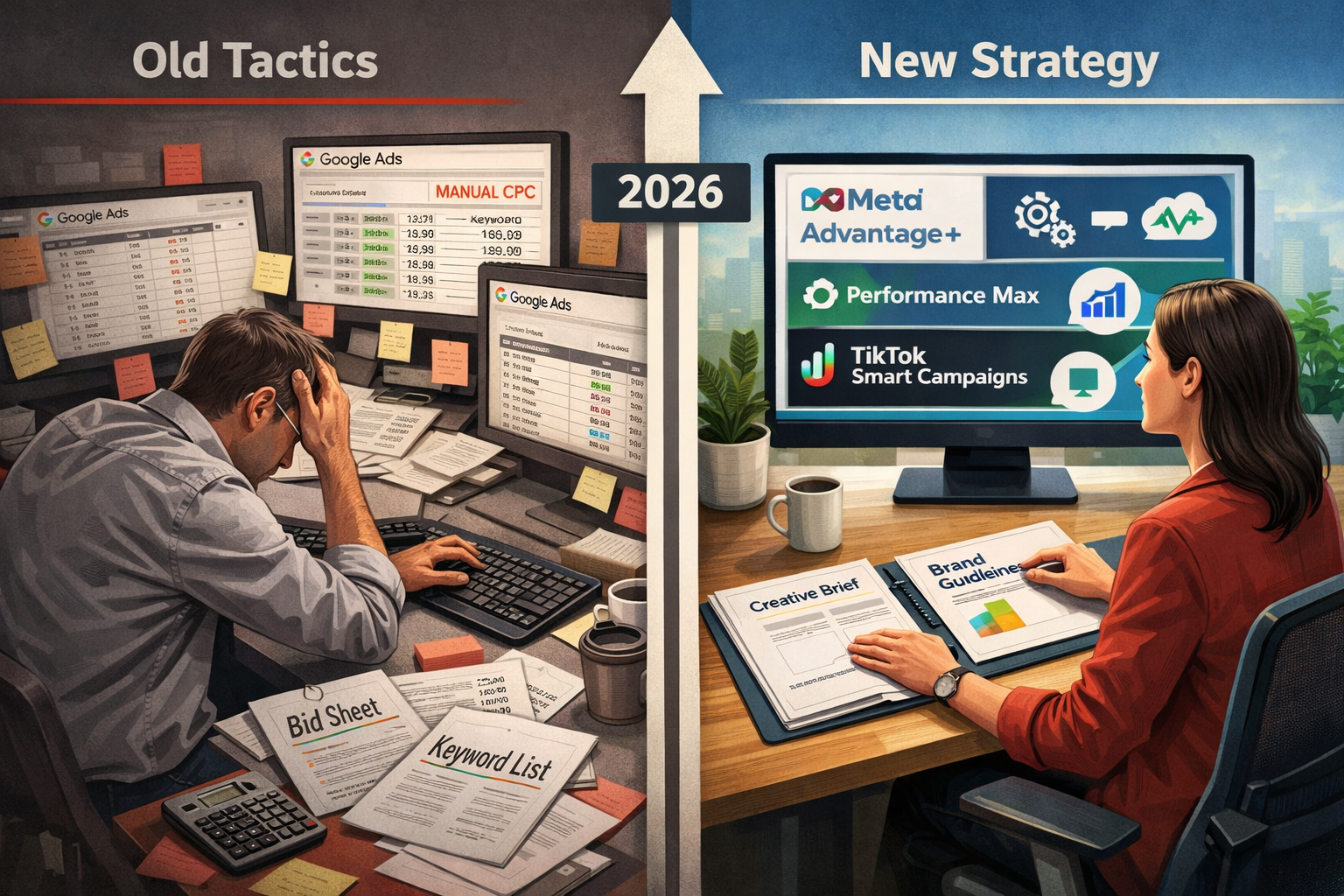
Platform-led optimization has reached maturity in 2026, fundamentally altering how paid media campaigns operate. Google's Performance Max, Meta's Advantage Plus, and TikTok's Smart Campaigns represent a new generation of advertising tools that remove granular control from marketers' hands.
Value-Based Bidding Replaces Manual Control
Manual cost-per-click (CPC) bidding once allowed precise budget control, but modern PPC requires models that adapt faster than human decision-making. Google now prioritizes three automated approaches[1]:
- Max Conversions: Real-time optimization for volume
- Target CPA: Historical data-driven efficiency targeting
- Value-Based Bidding: Prioritizing conversion quality over quantity
This evolution mirrors broader affiliate marketing optimization techniques that emphasize outcome-focused automation rather than input control.
Broad Match with Smart Bidding Expands Reach
The combination of Broad Match keywords with Smart Bidding strategies has transformed keyword targeting. This pairing surfaces new, high-intent queries while using first-party data and conversion signals to filter irrelevant traffic[1].
The result? Campaigns discover profitable search terms that manual keyword research would never identify, but only when supported by clean conversion tracking and quality data infrastructure.
Platform Consolidation Creates Structural Advantages
Google's dual-platform control over early-stage research (AI assistants) and bottom-funnel conversions (traditional search) provides cleaner intent signals and tighter attribution loops than competitors[2]. This structural advantage means marketers working within Google's ecosystem benefit from superior data integration—but only if they align their strategies with how these platforms interpret intent.
How Paid Media Automation in 2026 Demands Strategic Thinking
The shift from tactics to strategy requires marketers to develop new competencies. Platform automation handles execution, but strategic direction determines whether that execution drives profitable outcomes.