

{"cover":"Professional landscape format (1536x1024) hero image with bold text overlay 'Search Everywhere Optimization Mastery for Affiliates' in extra large 72pt white sans-serif font with dark gradient shadow, centered upper third. Background shows futuristic digital ecosystem with interconnected platforms: AI chat interface, voice assistant waveform, visual search camera icon, social media feeds, and search results, all glowing with neon blue and purple accents. Modern tech aesthetic with holographic elements, high contrast editorial quality, magazine cover style, representing multi-platform search visibility beyond traditional SEO.","content":["Landscape format (1536x1024) detailed infographic showing the Search Everywhere ecosystem as interconnected nodes: center shows affiliate marketer avatar, radiating connections to ChatGPT logo, Google Gemini icon, Perplexity AI, voice assistant speaker, Pinterest visual search, YouTube video thumbnails, Reddit threads, and review platforms like G2 and Capterra. Each node labeled with platform name and visibility metric percentages. Clean white background with blue and orange connecting lines, modern flat design style, professional data visualization aesthetic.","Landscape format (1536x1024) split-screen comparison image showing traditional SEO versus Search Everywhere Optimization. Left side: single Google search bar with declining graph, muted gray tones, old-fashioned keyword list. Right side: vibrant multi-platform dashboard displaying AI assistant responses, voice search results, visual discovery pins, zero-click featured snippets, social media mentions, and affiliate commission tracking metrics. Bright modern colors (teal, coral, yellow), dynamic arrows showing traffic flow, professional marketing analytics aesthetic with clear labels and data points."]}
The rules of search have fundamentally changed. In 2026, affiliate marketers who rely solely on Google rankings are leaving money on the table. With audiences now engaging across 7+ platforms daily and spending over 4 hours navigating different search surfaces[1], the traditional SEO playbook no longer delivers the visibility affiliates need to drive conversions. Search Everywhere Optimization Mastery for Affiliates: Winning Visibility in Agentic AI, Voice, Visual, and Zero-Click Environments Beyond Traditional SEO represents the evolution from single-channel optimization to multi-platform discovery strategies that capture attention wherever your audience searches.
Key Takeaways
- 🎯 Multi-platform presence is mandatory: Audiences discover products through AI assistants, voice search, visual platforms, and social communities—not just Google search results
- 🤖 AI systems are primary discovery channels: ChatGPT, Gemini, and Perplexity pull from authoritative databases, making visibility on review platforms critical for affiliate recommendations
- 📊 Intent pillars replace keyword targeting: Map keywords to underlying questions, then validate where conversations happen across platforms before creating content
- 💡 Customer interviews reveal platform priorities: Ask 5-10 recent buyers "How did you find us?" to identify which platforms deserve optimization focus
- ⚡ Incremental rollout beats perfection: Start with 2-3 platforms your audience uses most, measure visibility, then expand strategically
Understanding Search Everywhere Optimization for Affiliate Success
Search has transformed from a ranking game into a discovery ecosystem[3]. Today's consumers don't just type queries into Google—they ask AI assistants for recommendations, watch YouTube reviews, browse visual discovery platforms like Pinterest, and seek advice in Reddit communities. For affiliate marketers, this shift demands a fundamental strategy change.
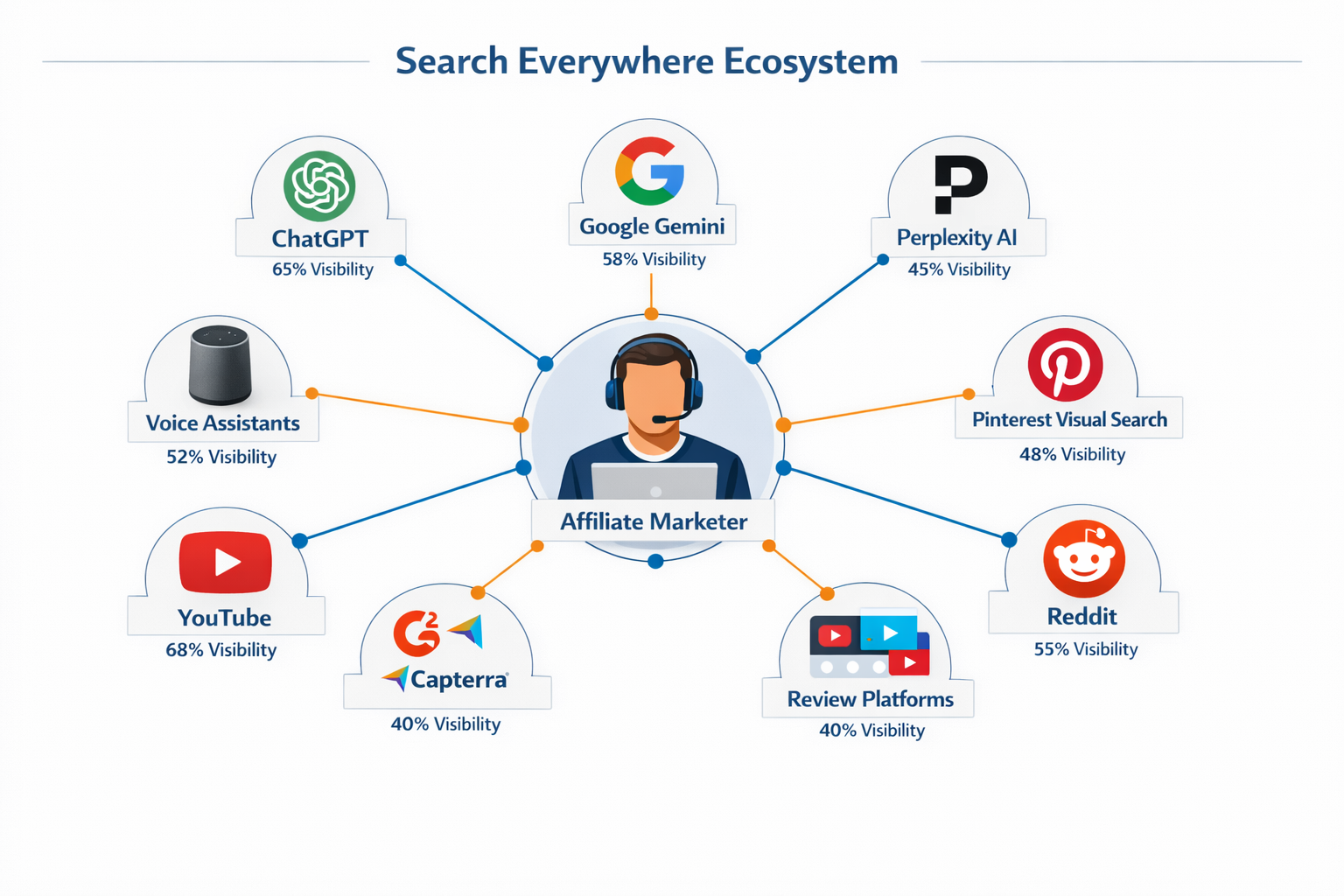
Search Everywhere Optimization means ensuring your affiliate content, product recommendations, and brand mentions appear across every platform where potential buyers conduct research. This includes:
- Traditional search engines (Google, Bing)
- AI assistants (ChatGPT, Google Gemini, Perplexity)
- Voice search (Alexa, Siri, Google Assistant)
- Visual search platforms (Pinterest Lens, Google Lens, Amazon visual search)
- Social media discovery (Instagram, TikTok, LinkedIn, X)
- Community forums (Reddit, Quora, niche forums)
- Video platforms (YouTube, TikTok)
- Review aggregators (G2, Capterra, TrustRadius, Trustpilot)
The affiliate marketers who master this multi-platform approach capture commissions at every stage of the buyer journey. Those who don't become invisible to increasingly fragmented audiences. Understanding search engine optimization techniques provides the foundation, but Search Everywhere Optimization extends far beyond traditional tactics.
Why Traditional SEO No Longer Delivers for Affiliates
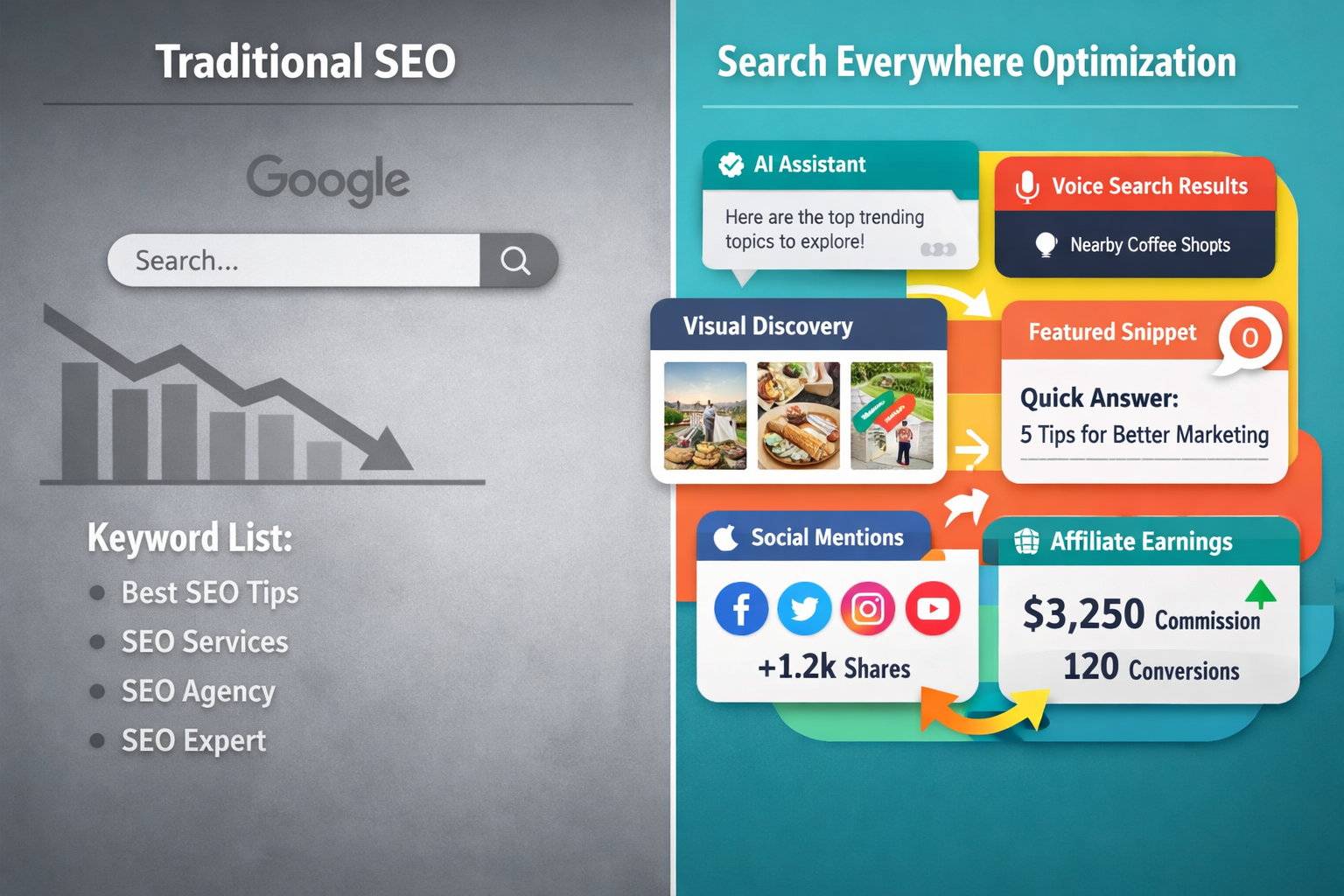
Traditional SEO focused on ranking #1 on Google for target keywords. That strategy worked when Google dominated discovery. But in 2026, several forces have disrupted this model:
The Rise of Zero-Click Searches
Google now answers many queries directly in featured snippets, knowledge panels, and AI-generated overviews—users get information without clicking through to websites. For affiliates, this means visibility doesn't guarantee traffic, and traffic doesn't guarantee commissions.
AI Assistants as Gatekeepers
AI systems like ChatGPT and Gemini have become primary discovery channels[2]. When users ask "What's the best project management software for small teams?", these AI assistants synthesize information from review platforms, comparison sites, and authoritative databases—often without mentioning specific affiliate sites. If your recommended products aren't represented in the sources AI systems trust, you're excluded from recommendations.
Platform Fragmentation
Audiences now split attention across multiple platforms. A potential buyer might:
- Ask ChatGPT for initial recommendations
- Watch YouTube comparison videos
- Search Pinterest for visual examples
- Read Reddit threads about user experiences
- Check G2 reviews for detailed ratings
- Finally search Google for specific product details
If you're only optimized for step 6, you've missed five earlier opportunities to influence the decision. This is why understanding affiliate marketing strategies must now include multi-platform visibility tactics.
Voice and Visual Search Growth
Voice searches tend to be conversational and question-based ("What's the easiest accounting software for freelancers?"). Visual searches bypass text entirely—users snap photos and expect relevant product matches. Traditional keyword optimization doesn't address these search modalities.
Core Pillars of Search Everywhere Optimization for Affiliates
Mastering Search Everywhere Optimization Mastery for Affiliates: Winning Visibility in Agentic AI, Voice, Visual, and Zero-Click Environments Beyond Traditional SEO requires focusing on these strategic pillars:
1. Audience-Driven Platform Selection 🎯
Don't optimize for every platform—optimize for the platforms your audience actually uses[1]. The most reliable method is direct customer research:
- Interview 5-10 recent buyers with one question: "Walk me through how you found us and researched before purchasing"
- Track patterns in their discovery journey
- Prioritize the 2-3 platforms mentioned most frequently
- Monitor brand searches across those platforms (not just Google Search Console)
This approach is more effective than analyzing generic platform statistics. Your specific audience's behavior matters more than industry averages. For those new to affiliate marketing, starting with best affiliate marketing programs for beginners can help identify which platforms align with specific product categories.
2. AI Authority Building Through Reviews 🤖
AI assistants pull recommendations from authoritative databases like G2, Capterra, TrustRadius, and Trustpilot[2]. To appear in AI-generated recommendations:
- Encourage detailed customer reviews on these platforms for products you promote
- Focus on specificity: "What did you like and why?" provides context AI systems evaluate
- Build profiles on review platforms as an affiliate expert or agency
- Create comparison content that links to these authoritative sources
- Monitor how AI assistants respond to queries in your niche
Example: If you promote project management software, ensure the tools you recommend have strong G2 profiles with recent, detailed reviews. When users ask ChatGPT for recommendations, it's more likely to suggest products with robust review data.
3. Intent Pillars Replace Single Keywords 📊
Modern optimization maps high-priority keywords to underlying questions and problems[1], then validates where conversations happen:
| Traditional Approach | Search Everywhere Approach |
|---|---|
| Target "best CRM software" | Map to questions: "How do I manage customer relationships?", "What CRM works for small teams?", "CRM vs spreadsheet?" |
| Optimize one blog post | Search these questions across Google, Reddit, YouTube, Quora |
| Hope for Google ranking | Create platform-specific content where conversation is most active |
| Measure organic traffic | Track visibility across all platforms |
This approach ensures you're creating content where your audience actually searches, not just where you hope they'll find you. Learn more about this strategic shift in our guide to keyword optimization.
4. Platform-Specific Content Optimization 📱
Each platform has unique content requirements and ranking factors:
For AI Assistants:
- Structure content with clear headings and schema markup
- Include original data and specific examples AI can reference
- Build citations from authoritative sources
- Create FAQ sections that directly answer common questions
For Voice Search:
- Use conversational, natural language
- Answer questions in the first paragraph
- Target long-tail, question-based queries
- Optimize for local search if relevant
For Visual Search:
- Use high-quality, properly tagged images
- Include detailed alt text with product names and attributes
- Create Pinterest-optimized pins with text overlays
- Ensure product images are clean and well-lit
For Social Platforms:
- Adapt content format to platform norms (short videos for TikTok, carousels for Instagram)
- Engage in community discussions authentically
- Use platform-specific hashtags and discovery features
- Build genuine relationships, not just promotional posts
For Reddit and Forums:
- Provide genuine value without overt promotion
- Build reputation through helpful contributions
- Use affiliate disclosures transparently
- Link to comprehensive resources, not just product pages
5. E-E-A-T Signals Across All Platforms 🏆
Google's Experience, Expertise, Authoritativeness, and Trustworthiness (E-E-A-T) principles apply universally[4]:
- Experience: Share first-hand product testing and real results
- Expertise: Demonstrate deep knowledge through detailed comparisons
- Authoritativeness: Get mentioned on credible, high-authority sites
- Trustworthiness: Use clear affiliate disclosures and honest recommendations
These signals help both traditional search engines and AI systems recognize you as a reliable source. Building these foundations through SEO fundamentals for beginners creates cross-platform credibility.
6. Strategic Digital PR for AI Visibility 📰
AI systems trust mentions from credible, high-authority sites[2]. To increase your visibility:
- Guest post on established industry blogs
- Get featured in niche comparison articles
- Participate in expert roundups
- Build relationships with journalists covering your niche
- Create original research that earns natural citations
When AI assistants scan authoritative sources for recommendations, these mentions increase the likelihood your affiliate products appear in responses.
Practical Implementation for Affiliate Marketers
Implementing Search Everywhere Optimization Mastery for Affiliates doesn't require overwhelming effort. Follow this incremental, audience-focused rollout[3]:
Phase 1: Research and Prioritize (Week 1-2)
- Interview customers to identify top 2-3 platforms
- Audit current visibility on those platforms
- Analyze competitor presence across identified platforms
- Document platform-specific requirements for each channel
Phase 2: Foundation Building (Week 3-6)
- Optimize existing content with clear structure and schema markup
- Create platform profiles where needed (YouTube, Pinterest, Reddit)
- Establish review platform presence on G2, Capterra, or relevant databases
- Build initial content for priority platforms
Phase 3: Content Expansion (Week 7-12)
- Create platform-specific content addressing intent pillars
- Engage authentically in community discussions
- Build strategic partnerships for authoritative mentions
- Test AI assistant responses to queries in your niche
Phase 4: Measurement and Iteration (Ongoing)
- Track brand searches across all platforms (not just Google)
- Monitor AI assistant mentions of your recommended products
- Measure platform-specific engagement and conversions
- Expand to additional platforms based on results
For those looking to scale their efforts, exploring affiliate marketing opportunities across multiple platforms can diversify income streams.
Measuring Success Beyond Traditional Metrics
Traditional SEO metrics like organic traffic and keyword rankings remain important but incomplete. Track these additional indicators:
- AI assistant visibility: How often do AI tools mention your recommended products?
- Multi-platform brand searches: Are people searching for your brand on YouTube, Reddit, and social platforms?
- Alternative searches: Monitor "[your brand] alternatives" queries—these represent conversion opportunities
- Platform-specific engagement: Comments, shares, saves, and community interactions
- Cross-platform attribution: Which platforms assist conversions even if they're not the last click?
- Review platform ratings: How do products you promote perform on authoritative review sites?
These metrics provide a complete picture of your Search Everywhere Optimization effectiveness. Understanding how to track these requires evolving beyond traditional foundations of SEO for affiliate marketing.
Common Pitfalls and How to Avoid Them
❌ Trying to optimize everything at once: Start with 2-3 platforms where your audience is most active. Expand gradually based on results.
❌ Treating all platforms the same: Each platform has unique content requirements and community norms. Adapt your approach accordingly.
❌ Ignoring authentic engagement: Dropping affiliate links without providing value damages reputation across platforms. Focus on genuine helpfulness first.
❌ Neglecting mobile optimization: Voice and visual searches happen primarily on mobile devices. Ensure your content and affiliate links work seamlessly on smartphones.
❌ Forgetting affiliate disclosures: Transparency builds trust across all platforms. Always disclose affiliate relationships clearly.
❌ Overlooking local search: For location-specific products or services, local optimization across platforms (Google Business, Yelp, local directories) drives significant affiliate revenue.
Many of these mistakes align with broader common affiliate marketing mistakes that limit earning potential.
The Future of Affiliate Discovery
The shift toward Search Everywhere Optimization will only accelerate. As AI assistants become more sophisticated, voice interfaces more prevalent, and visual search more accurate, affiliates must adapt or become invisible.
The opportunity lies in early adoption. Most affiliate marketers still focus exclusively on traditional SEO. Those who master multi-platform visibility now will capture disproportionate attention and commissions as these channels mature.
The key is maintaining consistency across platforms while respecting each platform's unique characteristics. Your core message and recommended products should remain consistent, but how you present them must adapt to each environment.
Conclusion
Search Everywhere Optimization Mastery for Affiliates: Winning Visibility in Agentic AI, Voice, Visual, and Zero-Click Environments Beyond Traditional SEO represents the future of affiliate marketing success. The days of ranking a single blog post on Google and collecting passive commissions are ending. Today's winning affiliates build visibility across the entire discovery ecosystem—from AI assistants to voice search, visual platforms to community forums.
The transition doesn't require abandoning traditional SEO fundamentals. Instead, it demands expanding your optimization strategy to meet audiences wherever they search. By focusing on audience-driven platform selection, building authority through reviews, mapping intent pillars, creating platform-specific content, demonstrating E-E-A-T signals, and pursuing strategic partnerships, affiliates can capture attention and commissions across every search surface.
Start today with these action steps:
- Interview 5 recent customers about their discovery journey
- Audit your visibility on the top 2-3 platforms they mention
- Create one piece of platform-specific content this week
- Monitor how AI assistants respond to queries in your niche
- Track brand searches across multiple platforms, not just Google
The affiliate marketers who embrace this multi-platform reality will thrive in 2026 and beyond. Those who cling to outdated single-channel strategies will watch their visibility—and commissions—steadily decline. The choice is clear: evolve your optimization approach or become irrelevant in an increasingly fragmented search landscape.
References
[1] Search Everywhere Optimization – https://www.semrush.com/blog/search-everywhere-optimization/
[2] Search Everywhere Optimization – https://surferseo.com/blog/search-everywhere-optimization/
[3] Search Everywhere Strategy 2026 – https://augmentifyinc.com/search-everywhere-strategy-2026/
[4] Search Everywhere Optimization – https://neilpatel.com/blog/search-everywhere-optimization/