

The digital landscape of 2026 presents a paradox: while 80% of affiliate marketers now use AI tools to automate content creation and optimization[3], the very ubiquity of these tools has created an ocean of indistinguishable content. Standing Out in the AI-Native Creative Flood: Affiliate Tactics for Human-Like Differentiation has become the defining challenge for affiliate success. The question is no longer whether to use AI, but how to use it in ways that preserve—and amplify—authentic human connection.
The flood is real. Generic AI-generated product reviews, cookie-cutter comparison posts, and templated promotional content saturate every niche. Yet amid this uniformity, a countertrend is emerging: authenticity is the primary 2026 trend, with audiences gravitating toward genuine, relatable content over polished perfection[1]. This creates unprecedented opportunity for affiliates who master human-like differentiation.
Key Takeaways
- 🎯 Authenticity beats volume: With 91% of marketers using AI[1], differentiation comes from genuine creator voices, not more AI content
- 📊 Data-driven personalization: Successful affiliates blend AI efficiency with performance insights to create content that converts, not just ranks
- 🤝 Relationship-focused strategies: Formal retention programs and community-building outperform transactional commission-only approaches
- 🎭 Event-based activation: Live experiences and unscripted moments generate lasting differentiation versus static AI posts
- 🔄 Hybrid workflows: The winning formula combines AI automation with human taste, judgment, and strategic storytelling direction
Understanding the AI-Native Creative Landscape
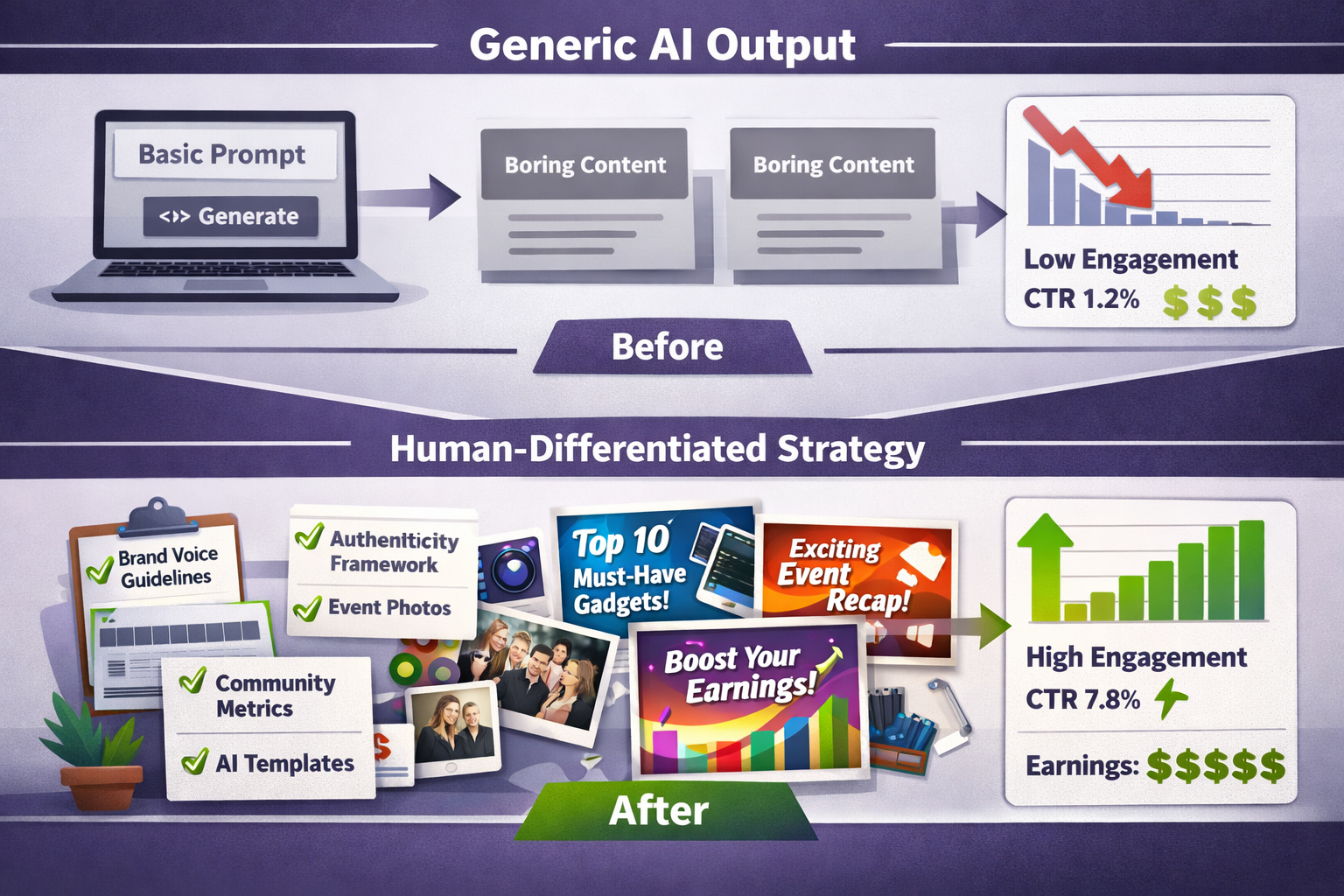
The affiliate marketing ecosystem has fundamentally transformed. 91% of marketers now use AI in their jobs[1], making AI adoption the baseline rather than the competitive advantage. This democratization of content creation tools has flooded every channel with similar-sounding product recommendations, reviews, and promotional materials.
The challenge intensifies as AI assistants become the primary discovery layer rather than traditional search engines[2]. When potential customers ask ChatGPT or Claude for product recommendations, these systems synthesize information from thousands of sources. Generic AI-generated content blends into background noise, while authentic, authoritative voices rise to the top of AI recommendations.
The Authenticity Imperative
Gen Z and younger millennials possess an almost instinctive ability to detect AI-generated content. Their preference for "realness" in online interactions isn't a passing trend—it's a fundamental shift in how audiences evaluate trustworthiness. This creates a critical opportunity for affiliates willing to invest in genuine affiliate marketing strategies that prioritize connection over automation.
Brands are responding accordingly. Those removing roadblocks for authentic creators see significantly higher promotional inclination from their affiliate partners[1]. The message is clear: standing out requires moving beyond transactional relationships toward deeper creator partnerships.
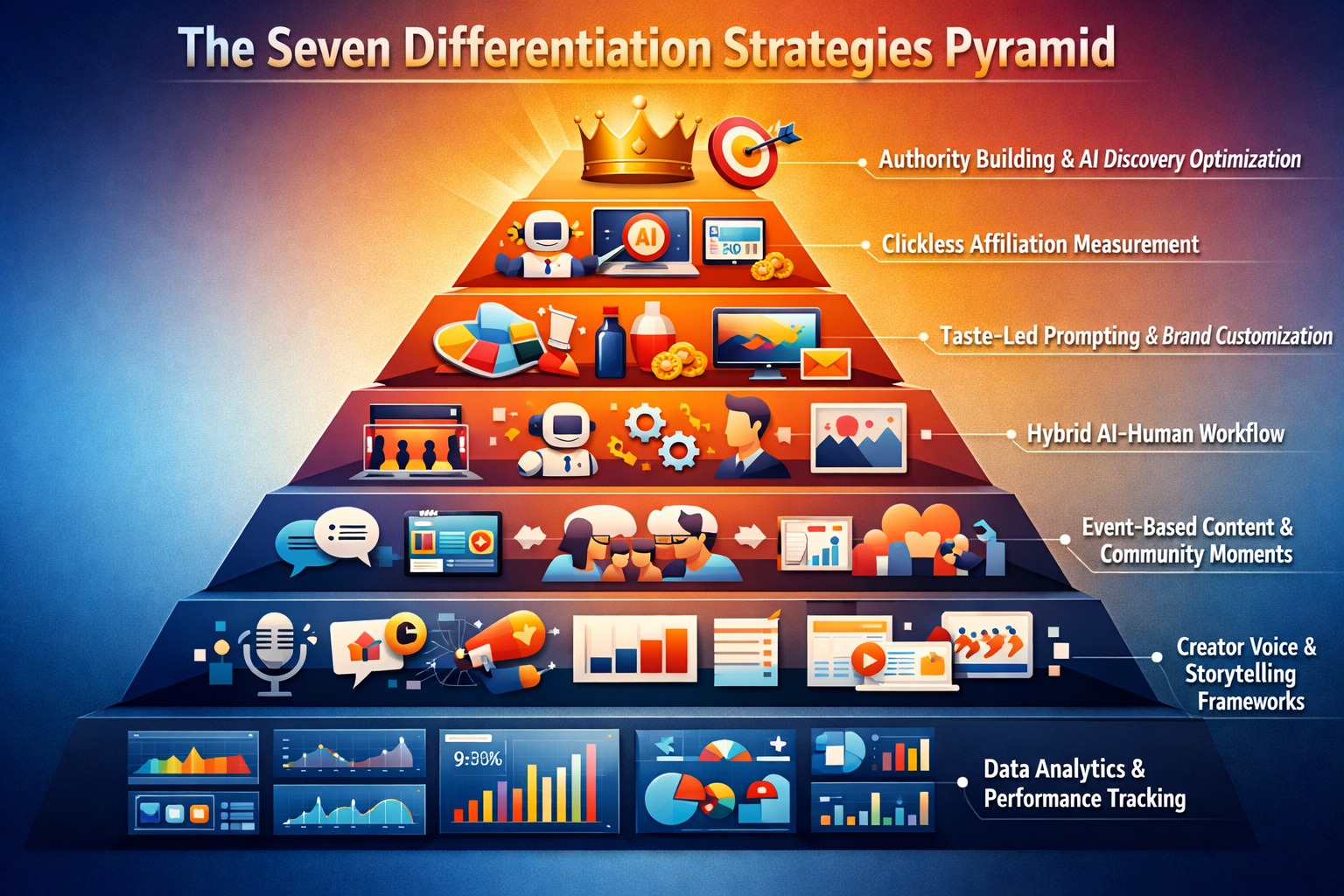
Seven Proven Strategies for Standing Out in the AI-Native Creative Flood: Affiliate Tactics for Human-Like Differentiation
1. Taste-Led Prompting and Custom AI Templates
Generic prompts produce generic results. The differentiation strategy starts with taste-led prompting—treating yourself as a product manager who guides AI through strong storytelling and narrative direction[4]. Rather than asking AI to "write a product review," successful affiliates create detailed templates that incorporate:
- Brand voice guidelines specific to their audience
- Performance data from previous top-converting content
- Storytelling frameworks that reflect authentic experiences
- Audience pain points gathered from community interactions
This approach transforms AI from a content generator into a customized assistant that blends proven styles with brand information[1], creating output that sounds distinctly human while maintaining efficiency.
2. Hybrid Workflow Integration
The most successful affiliates in 2026 don't choose between AI and human creativity—they architect workflows that leverage both. A typical hybrid approach might include:
| AI Handles | Human Contributes |
|---|---|
| Initial research and data gathering | Strategic direction and angle selection |
| First draft generation | Authentic anecdotes and personal experience |
| SEO optimization suggestions | Final editorial judgment and taste |
| Performance analytics compilation | Relationship building and community engagement |
This division of labor allows affiliates to scale content production while maintaining the authentic voice that differentiates them from purely AI-generated competitors. For those just starting, understanding how to do affiliate marketing with this hybrid mindset is essential.
3. Event-Based Creator Activation
Event-based creator activation is growing rapidly[2], offering a powerful differentiation strategy. Live launches, product experiences, community meetups, and collaborative events generate unscripted content that continues supporting discovery systems long after the initial event.
Consider these event-based tactics:
- 🎥 Behind-the-scenes content from product launches or brand partnerships
- 🎤 Live Q&A sessions addressing real customer questions
- 🤝 Community challenges that encourage user-generated content
- 📍 Local meetups creating authentic connection moments
This content type is nearly impossible for AI to replicate convincingly, creating lasting differentiation in a sea of static, generated posts.
4. Data-Driven Content Personalization
While creativity drives differentiation, data-driven strategies remain critical[1]. Brands use analytics to identify which content formats drive conversions, which affiliate approaches prove most effective, and whether commission structures align with results.
Smart affiliates mirror this approach by:
- Analyzing which blog posts, videos, or social content generate highest conversion rates
- Testing different storytelling angles against performance metrics
- Identifying audience segments that respond to specific messaging
- Adjusting content strategy based on trackable outcomes rather than assumptions
This performance-focused approach helps affiliates choose the right affiliate marketing niches and content strategies that actually convert.
5. Authority Building for AI Discovery
77% of people say AI helps them make decisions faster[2], compressing traditional sales funnels. This makes visibility in AI recommendations more valuable than ever. AI systems increasingly depend on mentions by high-quality publications when formulating recommendations.
Building this authority requires:
- Guest contributions to established industry publications
- Original research or data that other sources cite
- Thought leadership that positions you as an expert, not just a promoter
- Consistent quality that earns backlinks and mentions from authoritative sources
When AI assistants scan for trustworthy product recommendations, affiliates with established authority appear more frequently than those relying solely on SEO tactics.
6. Relationship-Focused Partnership Models
Formal retention and loyalty programs beyond commission checks are essential for 2026 success[1]. The shift from transactional to relational affiliate partnerships creates competitive advantages that AI cannot replicate.
Successful relationship strategies include:
- Regular communication with affiliate managers beyond performance updates
- Collaborative content planning that aligns with brand campaigns
- Exclusive access to products, data, or resources for top-performing affiliates
- Long-term partnership agreements that reward consistency over quick wins
These deeper relationships often lead to better commission structures, exclusive promotional opportunities, and insider knowledge that informs more effective content. For beginners, exploring best affiliate marketing programs for beginners with strong relationship-building components is crucial.
7. Clickless Affiliation Measurement and Influence Tracking
"Clickless affiliation" measurement is the single biggest anticipated development in 2026[5], reflecting the need to track influence that doesn't result in immediate clicks but still drives conversions. This is particularly important as AI discovery layers change how customers find and evaluate products.
Forward-thinking affiliates are:
- Tracking brand mention increases after content publication
- Monitoring direct traffic spikes correlated with content releases
- Using brand-specific discount codes that track offline or delayed conversions
- Measuring assisted conversions where content influences but doesn't directly convert
This broader view of affiliate influence aligns with how modern customers actually make decisions—through multiple touchpoints rather than single-click paths.
Implementing Standing Out in the AI-Native Creative Flood: Affiliate Tactics for Human-Like Differentiation
Start With Audience Understanding
Before implementing any differentiation tactic, deeply understand your audience's preferences, pain points, and content consumption habits. The most sophisticated AI workflow fails without this foundational knowledge.
Conduct audience research through:
- Direct surveys and feedback requests
- Community engagement and conversation monitoring
- Performance analysis of existing content
- Competitor analysis to identify gaps and opportunities
Build Your Differentiation Stack
Create a systematic approach that combines multiple strategies rather than relying on a single tactic. A sample differentiation stack might include:
- Custom AI templates based on your top-performing content (Strategy 1)
- Quarterly live events or community activations (Strategy 3)
- Weekly performance reviews adjusting content based on data (Strategy 4)
- Monthly authority-building contributions to industry publications (Strategy 5)
This multi-layered approach creates compounding differentiation that's difficult for competitors to replicate.
Measure What Matters
Track metrics that reflect genuine differentiation, not just vanity numbers:
- Engagement depth: Comments, shares, and meaningful interactions versus passive views
- Conversion quality: Customer lifetime value and repeat purchases versus one-time transactions
- Authority indicators: Backlinks, mentions, and citations from quality sources
- Relationship strength: Response rates from affiliate managers and exclusive opportunity invitations
These metrics reveal whether your differentiation strategies are working or need adjustment. Understanding how affiliate marketing works helps contextualize these measurements within the broader ecosystem.
The Future of Affiliate Differentiation
The trend toward AI ubiquity will only accelerate. Performance and affiliate models are replacing flat-fee sponsorships[2], rewarding creators based on measurable actions rather than impressions. This creates stronger alignment between authentic partnerships and business outcomes.
Comparison Shopping Services (CSS) are growing at an exponential rate[5], outpacing typical publisher types and offering better ROI. This represents a significant shift in where affiliate partnerships deliver value, favoring those who can demonstrate clear performance advantages.
The affiliates who thrive won't be those who resist AI adoption, but those who use it strategically while maintaining the authentic human elements that build trust, authority, and lasting audience relationships.
Conclusion
Standing Out in the AI-Native Creative Flood: Affiliate Tactics for Human-Like Differentiation isn't about rejecting AI tools—it's about using them strategically while amplifying the irreplaceable human elements that build genuine connections. The seven strategies outlined here—taste-led prompting, hybrid workflows, event-based activation, data-driven personalization, authority building, relationship focus, and clickless measurement—create a comprehensive framework for differentiation in 2026's crowded landscape.
Your Next Steps
- Audit your current content to identify opportunities for more authentic, human-centered approaches
- Develop custom AI templates that reflect your unique voice and audience insights
- Plan your first event-based activation to generate differentiated content
- Establish performance tracking for metrics that matter beyond clicks
- Invest in relationship building with both your audience and affiliate partners
The affiliate marketers who succeed in the AI-native era won't be those with the most content, but those whose content—and relationships—feel genuinely different. Start implementing these differentiation tactics today to position yourself ahead of the generic AI flood.
For those questioning is affiliate marketing legit in this AI-dominated landscape, the answer is increasingly yes—but only for those who differentiate through authentic human connection rather than automated content volume.
References
[1] Affiliate Marketing Trends – https://easyaffiliate.com/blog/affiliate-marketing-trends/
[2] Digital Marketing Trends 2026 Why Ai Systems Will Outperform Traditional Campaigns – https://jsmmtech.com/digital-marketing-trends-2026-why-ai-systems-will-outperform-traditional-campaigns/
[3] Affiliate Marketing Statistics – https://www.hostinger.com/tutorials/affiliate-marketing-statistics
[4] Marketing Trends 2026 – https://www.marketermilk.com/blog/marketing-trends-2026
[5] Watch – https://www.youtube.com/watch?v=Sfbgbzandgc