

The affiliate marketing landscape has transformed dramatically. While most marketers still rely on basic demographic splits like "women 25-34" or "men interested in fitness," a quiet revolution is underway. AI-powered demographic targeting is revealing hidden audience segments that traditional analytics miss entirely—and these micro-segments are converting at rates that seem almost impossible.
Consider this: affiliates using AI-driven audience analysis are seeing 30%+ conversion lifts by targeting ultra-specific segments like "Gen Z males who research products via ChatGPT before purchasing" or "millennial women who engage with AI shopping assistants for home goods." The era of broad demographic targeting is over. AI-Powered Demographic Targeting for Affiliate Niches: Unlocking Hidden Audience Segments in 2026 represents the new competitive advantage.
Key Takeaways 🔑
- 74% of consumers now use AI-powered tools for product discovery, creating entirely new targeting opportunities beyond traditional search behavior[2]
- Gender-specific AI adoption gaps (87% men vs. 60% women) require differentiated affiliate strategies and content approaches[2]
- High-intent AI search traffic converts at 4x the rate of traditional search, making optimization for ChatGPT and Google AI Overviews essential[3]
- Tools like Census GPT enable micro-segmentation based on behavioral patterns, purchase histories, and real-time engagement signals
- Verified expertise trumps volume as AI-generated content floods the market, rewarding affiliates who demonstrate authentic authority[3]
Understanding the New Demographic Landscape in Affiliate Marketing
The traditional demographic targeting model—age, gender, location, income—no longer captures the complexity of modern consumer behavior. In 2026, demographic targeting must account for AI adoption patterns, preferred discovery channels, and behavioral signals that reveal purchase intent.
Recent data shows that 62% of consumers use ChatGPT for product research, while 45% rely on Google AI Overviews[2]. These aren't just new channels; they represent fundamentally different user behaviors that require specialized affiliate approaches. When someone asks ChatGPT for "best noise-canceling headphones for remote work," they're displaying higher purchase intent than someone casually browsing a listicle.
The Gender and Generational Divide
The numbers reveal stark differences in AI adoption:
| Demographic Segment | AI Adoption Rate | Targeting Implications |
|---|---|---|
| Men | 87% | Optimize for AI-assisted research, technical comparisons |
| Women | 60% | Blend traditional and AI discovery channels |
| Gen Z | 80% | Native AI users, expect conversational recommendations |
| Millennials | 79% | High AI adoption, value efficiency and personalization |
| Gen X | 77% | Growing AI comfort, research-heavy purchase behavior |
| Baby Boomers | 50% | Traditional channels remain important, gradual AI adoption |
This 27-percentage-point gender gap[2] means affiliates in niches like technology, gaming, or SaaS should prioritize AI-optimized content, while beauty, wellness, or home decor niches require hybrid strategies that serve both traditional search and AI discovery.
Generational differences are equally pronounced. Gen Z, Millennials, and Gen X show adoption rates between 77% and 80%[2], suggesting that affiliate marketing strategies targeting these groups must prioritize AI-friendly content formats. Meanwhile, Baby Boomers at 50% adoption require continued investment in traditional SEO and social media approaches.
How AI-Powered Demographic Targeting Transforms Affiliate Niches
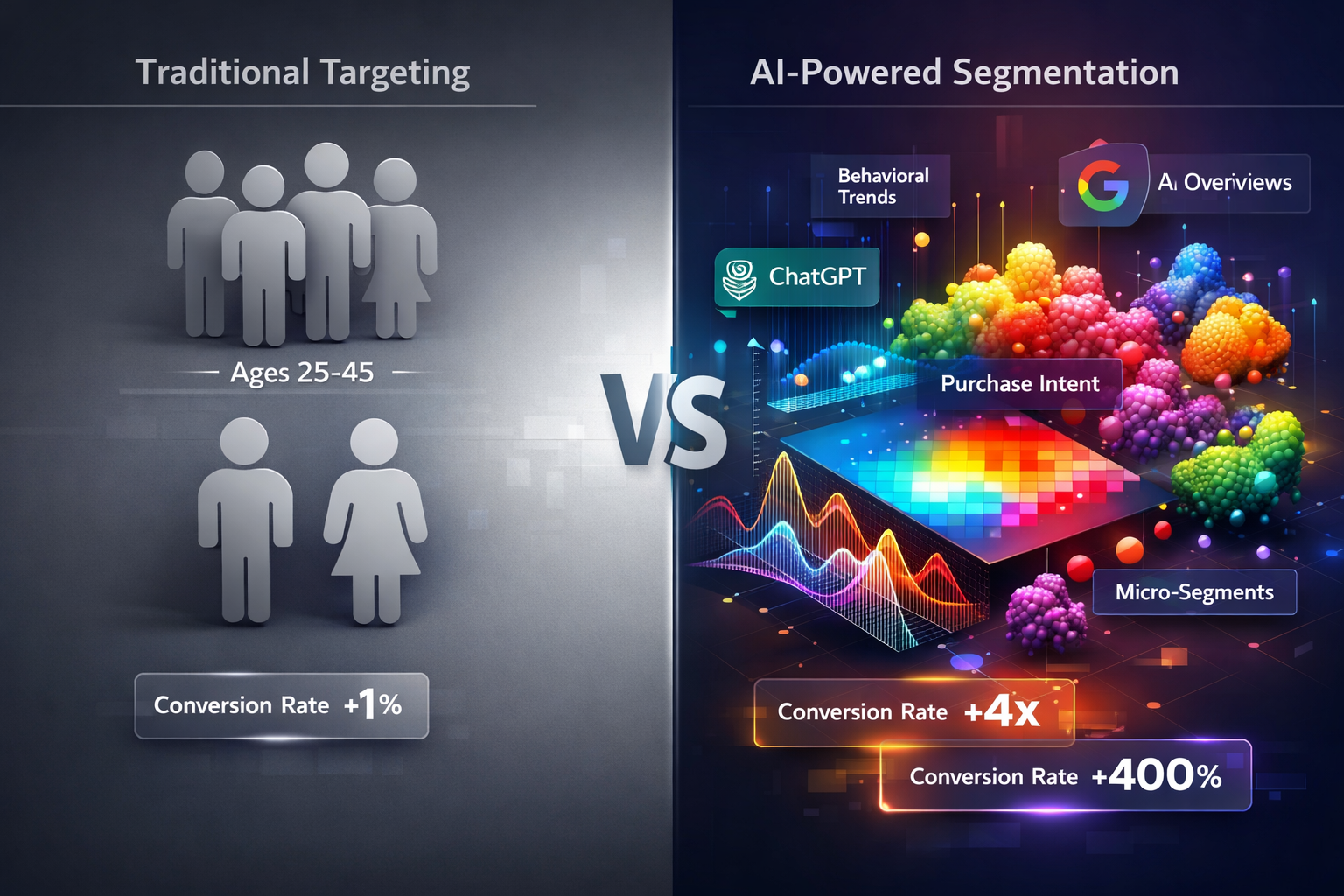
AI-Powered Demographic Targeting for Affiliate Niches: Unlocking Hidden Audience Segments in 2026 goes far beyond basic demographic filters. Modern AI tools analyze behavioral patterns, engagement signals, and contextual data to identify micro-segments with exceptional conversion potential.
Real-Time Behavioral Segmentation
Traditional demographic targeting is static. AI-powered targeting is dynamic. Tools now analyze:
- Scroll depth and engagement patterns to identify serious researchers versus casual browsers
- Return visit frequency indicating consideration stage in the purchase journey
- Cross-device behavior showing research on mobile, conversion on desktop
- Content consumption patterns revealing specific pain points and preferences
- AI tool usage (ChatGPT vs. Google AI vs. Amazon AI) indicating different discovery preferences
This enables next-best-action models that surface optimal content or offers at precise moments[5]. For example, a visitor who has read three product reviews, scrolled to comparison tables, and returned twice is displaying high-intent signals that trigger different affiliate offers than a first-time visitor.
Census GPT and Advanced Demographic Analysis
Tools like Census GPT represent a breakthrough for individual affiliates and small teams. By analyzing demographic data, purchase histories, and behavioral patterns, these platforms reveal:
- Untapped micro-niches within broader categories
- Demographic clusters with above-average conversion rates
- Behavioral patterns that predict purchase likelihood
- Content gaps where competitors aren't serving specific segments
Case Study: An affiliate in the SaaS productivity niche used Census GPT to identify "remote managers aged 35-44 who research via AI assistants and prefer video tutorials." By creating ChatGPT-optimized comparison content with embedded video walkthroughs, they achieved a 34% conversion lift compared to their general audience campaigns.
The Four Dominant AI Platforms Shaping Discovery
Affiliates must optimize for the platforms consumers actually use. In 2026, four tools dominate:
- ChatGPT (62% usage) – Conversational product research, comparison requests[2]
- Google AI Overviews (45%) – Quick answers, featured recommendations[2]
- Amazon AI (26%) – Product discovery within the Amazon ecosystem[2]
- Microsoft Copilot (24%) – Integration with productivity workflows[2]
No alternative platform exceeds 15% adoption[2], meaning affiliates should concentrate optimization efforts on these four rather than fragmenting across dozens of emerging tools. This is particularly important when developing content that converts.
Implementing AI Demographic Targeting: Practical Strategies for 2026
Understanding the landscape is one thing. Implementation is another. Here's how successful affiliates are leveraging AI-Powered Demographic Targeting for Affiliate Niches: Unlocking Hidden Audience Segments in 2026 right now.
Strategy 1: AI-Optimized Content for High-Intent Segments
High-intent visitors from AI-powered search convert at nearly 4x the rate of traditional search traffic[3]. This isn't surprising—someone asking ChatGPT "which project management tool is best for remote teams under 20 people" is further along the purchase journey than someone searching "project management software."
Optimization tactics:
- Create conversational content that answers specific questions AI assistants commonly receive
- Structure content with clear, quotable answers that AI tools can extract and cite
- Include comparison tables that AI can parse and present to users
- Add decision frameworks that help AI assistants make recommendations
- Optimize for long-tail conversational queries rather than just keywords
Affiliates promoting products in top affiliate niches like SaaS, e-commerce tools, and digital products see the highest returns from this approach.
Strategy 2: Gender-Specific AI Adoption Strategies
The 27-point gender gap in AI adoption[2] creates distinct opportunities:
For male-dominated niches (tech, gaming, finance):
- Prioritize ChatGPT and AI assistant optimization
- Create technical comparison content with detailed specifications
- Develop AI-friendly product databases and feature matrices
- Use data-driven decision frameworks
For female-dominated niches (beauty, wellness, home):
- Maintain strong traditional SEO and social presence
- Gradually introduce AI-optimized content alongside traditional formats
- Focus on visual platforms (Pinterest, Instagram) where AI adoption is growing
- Create hybrid content that serves both discovery methods
For balanced niches (fitness, travel, education):
- Develop parallel content strategies for both audiences
- A/B test AI-optimized versus traditional content formats
- Segment email lists by engagement patterns to identify AI adopters
- Create modular content that works in both contexts
Strategy 3: Generational Micro-Targeting
Different generations engage with AI tools differently, requiring tailored approaches:
Gen Z (80% AI adoption):
- Native AI users who expect conversational, personalized recommendations
- Optimize for voice search and mobile-first AI assistants
- Create short-form video content that AI can index and recommend
- Leverage TikTok and Instagram where AI discovery is emerging
Millennials (79% AI adoption):
- Value efficiency and comprehensive research
- Create detailed comparison content optimized for AI extraction
- Focus on time-saving and productivity angles
- Integrate with AI marketing automation tools
Gen X (77% AI adoption):
- Research-heavy, value-conscious buyers
- Provide detailed ROI calculations and long-term value analysis
- Create authoritative, expert-driven content
- Optimize for both AI and traditional search simultaneously
Baby Boomers (50% AI adoption):
- Maintain traditional SEO and content strategies
- Gradually introduce AI-friendly formats
- Focus on trust signals and verified expertise
- Provide clear, step-by-step guidance
Strategy 4: Contextual Commerce and Dynamic Matching
Contextual commerce is replacing static affiliate links as the 2026 baseline[3]. AI-driven engines now match products to editorial content in real-time based on:
- Reader intent signals from scroll behavior and engagement
- First-party data about previous purchases and interests
- Contextual relevance to the specific content being consumed
- Inventory and pricing to ensure recommendations are currently available
This means affiliates must:
✅ Implement behavioral tracking to capture intent signals
✅ Build first-party data assets through email lists and communities
✅ Use dynamic content platforms that adjust recommendations in real-time
✅ Partner with affiliate networks offering contextual matching capabilities
Strategy 5: Email Segmentation and Automation at Scale
AI-powered email marketing is now realistic for individual entrepreneurs[5]. Tools can:
- Generate dynamic content based on customer segments
- Analyze click-through behavior to refine future messaging
- Create personalized sequences without manual copywriting for each segment
- Optimize send times based on individual engagement patterns
An affiliate in the e-commerce tools niche implemented AI-driven email segmentation based on:
- Store size (solo, small team, enterprise)
- Platform (Shopify, WooCommerce, custom)
- AI tool usage (identified through content engagement)
- Purchase stage (research, consideration, decision)
The result? A 41% increase in email-driven conversions compared to their previous one-size-fits-all approach.
Overcoming Challenges: Verified Authority in an AI-Generated World
As the barrier to AI-generated content drops to near zero, verified authority has become essential[3]. In 2026, consumers pivot toward affiliates who demonstrate "boots-on-the-ground" expertise that large language models cannot replicate.
Building Unassailable Authority
Authenticity markers that AI cannot fake:
🏆 Original research and data – Surveys, case studies, proprietary analysis
🏆 Real product testing – Photos, videos, detailed usage experiences
🏆 Expert credentials – Certifications, industry experience, recognized expertise
🏆 Community engagement – Active forums, responsive comments, live Q&A sessions
🏆 Transparent methodology – Clear explanation of testing processes and criteria
Affiliates who invest in these authority signals see higher conversion rates and better long-term sustainability as AI-generated content commoditizes basic information.
The Importance of SEO Foundations
While AI discovery grows, traditional SEO remains crucial. Understanding foundations of SEO for affiliate marketing ensures your content ranks in both traditional search results and gets indexed by AI assistants for recommendations.
Key focus areas:
- Technical SEO for crawlability and indexing
- Structured data to help AI parse your content
- E-E-A-T signals (Experience, Expertise, Authoritativeness, Trustworthiness)
- Internal linking to demonstrate topical authority
- Page speed and Core Web Vitals for user experience
Measuring Success: Metrics That Matter in 2026
Traditional affiliate metrics like clicks and conversions remain important, but AI-Powered Demographic Targeting for Affiliate Niches: Unlocking Hidden Audience Segments in 2026 requires new measurement approaches:
Essential Metrics for AI-Era Affiliates
Discovery Channel Attribution:
- Traffic from ChatGPT, Google AI Overviews, other AI assistants
- Conversion rate by discovery channel
- Revenue per visitor by AI platform
Segment Performance:
- Conversion rate by demographic micro-segment
- Average order value by segment
- Lifetime value by acquisition channel and segment
Content Effectiveness:
- AI citation rate (how often your content is referenced by AI assistants)
- Featured snippet and AI Overview appearances
- Engagement depth by content type and segment
Behavioral Signals:
- Scroll depth and engagement time by segment
- Return visitor rate and frequency
- Cross-device behavior patterns
Tools like Google Analytics 4, combined with affiliate network dashboards and AI-specific tracking platforms, provide the data needed to optimize these metrics continuously.
Real-World Success Stories: 30%+ Conversion Lifts
Case Study 1: SaaS Affiliate in Project Management Niche
By implementing Census GPT demographic analysis, this affiliate identified "remote team leaders aged 30-45 researching via ChatGPT." They created:
- Conversational comparison content optimized for AI extraction
- Video walkthroughs addressing specific AI-generated queries
- Dynamic email sequences based on engagement patterns
Result: 37% conversion increase and 28% higher average commission per sale.
Case Study 2: E-commerce Tools Affiliate
Targeting "Shopify store owners using AI for product descriptions," this affiliate:
- Developed AI-optimized buying guides for e-commerce automation
- Created segment-specific landing pages with dynamic product matching
- Implemented behavioral triggers for high-intent visitors
Result: 32% conversion lift and 45% increase in email-driven revenue.
Case Study 3: Fitness Equipment Affiliate
Recognizing the gender gap in AI adoption, this affiliate:
- Maintained strong Pinterest and Instagram presence for female audience
- Created ChatGPT-optimized technical comparisons for male audience
- Developed hybrid content serving both discovery methods
Result: 29% overall conversion increase with balanced growth across both segments.
Future-Proofing Your Affiliate Strategy
The AI revolution in demographic targeting is accelerating, not slowing. Affiliates who adapt now will dominate their niches through 2026 and beyond.
Key principles for future-proofing:
- Invest in first-party data – Build email lists, communities, and direct relationships
- Develop verified expertise – Create authority signals AI cannot replicate
- Optimize for AI discovery – Ensure your content appears in ChatGPT, Google AI Overviews
- Implement behavioral tracking – Understand micro-segments through real-time signals
- Test continuously – AI tools and consumer behavior evolve rapidly
- Build modular content – Create assets that work across multiple discovery channels
- Focus on high-intent segments – Prioritize quality over volume in targeting
For those just starting their affiliate journey, understanding how to do affiliate marketing with AI-powered targeting from day one provides a significant competitive advantage.
Conclusion: Seizing the AI Demographic Targeting Opportunity
AI-Powered Demographic Targeting for Affiliate Niches: Unlocking Hidden Audience Segments in 2026 isn't just a trend—it's the new foundation of successful affiliate marketing. The data is clear: 74% of consumers use AI tools for product discovery[2], AI search traffic converts at 4x traditional rates[3], and affiliates implementing sophisticated demographic targeting see 30%+ conversion lifts consistently.
The opportunity is massive, but the window for early-mover advantage is closing. As more affiliates adopt these strategies, the competitive landscape will shift dramatically.
Your Action Plan for the Next 30 Days
Week 1: Analysis
- Audit your current traffic sources and identify AI-driven visitors
- Analyze demographic segments using available analytics tools
- Research AI adoption patterns in your specific niche
Week 2: Optimization
- Optimize top-performing content for ChatGPT and Google AI Overviews
- Implement behavioral tracking to capture intent signals
- Create demographic micro-segments based on AI usage patterns
Week 3: Content Development
- Develop conversational content targeting high-intent AI queries
- Create segment-specific landing pages with dynamic matching
- Build email sequences tailored to demographic micro-segments
Week 4: Testing and Refinement
- A/B test AI-optimized versus traditional content formats
- Measure conversion rates by discovery channel and segment
- Refine targeting based on performance data
The affiliates who master AI-powered demographic targeting in 2026 won't just see incremental improvements—they'll unlock entirely new revenue streams by reaching hidden audience segments their competitors don't even know exist. The tools, data, and strategies are available now. The question is: will you implement them before your competition does? 🚀
References
[1] The Future Of Ai In Affiliate Marketing In 2026 – https://aijourn.com/the-future-of-ai-in-affiliate-marketing-in-2026/
[2] How Affiliate Partnerships In 2026 Win In A 1 Trillion Ad Market – https://www.siteplug.com/blog/how-affiliate-partnerships-in-2026-win-in-a-1-trillion-ad-market
[3] 2026 Affiliate Marketing Predictions Industry Experts Sound Off On Winning With Ai Discovery – https://www.everflow.io/post/2026-affiliate-marketing-predictions-industry-experts-sound-off-on-winning-with-ai-discovery
[5] Best Ai Tools For Affiliate Marketing 2026 – https://coursiv.io/blog/best-ai-tools-for-affiliate-marketing-2026