

Google generated 70 million creative assets in Q4 2025 alone. As 'good enough' creative becomes free, The AI-Native Creative Flood: 7 Differentiation Tactics When AI-Generated Ads Collapse in Value has become the defining challenge for marketers and affiliates in 2026. When AI-dominated Super Bowl LX ads scored in the bottom 3% for likeability, the message became clear: AI adoption alone no longer provides competitive advantage.[1]
The fundamental problem isn't AI quality—consumers often can't distinguish high-quality AI content from human-created work. The crisis is perception-driven, not quality-driven. As 91% of U.S. ad agencies now use generative AI tools, the market faces a critical inflection point where undifferentiation threatens to collapse advertising value across entire sectors.[3]
Key Takeaways
- AI saturation eliminates competitive advantage: With 91% of agencies using AI, adoption alone provides zero differentiation in 2026
- Attribution bias masks performance decay: Automated systems claim credit for conversions from users already close to purchase, hiding true incremental lift
- Cultural relevance trumps technical quality: Consumers reject hollow AI messaging even when execution quality matches human work
- Data quality becomes the true differentiator: Performance now reflects data maturity more than creative execution or media tactics
- Strategic restraint commands premium pricing: Affiliates who understand taste and cultural context will capture value as generic content floods markets
Understanding The AI-Native Creative Flood Crisis
The advertising landscape transformed dramatically in early 2026 when Super Bowl LX became a showcase for AI's messaging failure. One major AI advertisement scored in the bottom 3% for likeability compared to five years of Super Bowl data, with viewers responding "WTF" to messaging that felt hollow rather than distinctive.[1]
The core issue? AI as the tool to make the ad became the headline, creating content that prioritized technological novelty over genuine human connection. This represents a fundamental positioning failure that extends far beyond a single campaign.
The Attribution Bias Problem 🎯
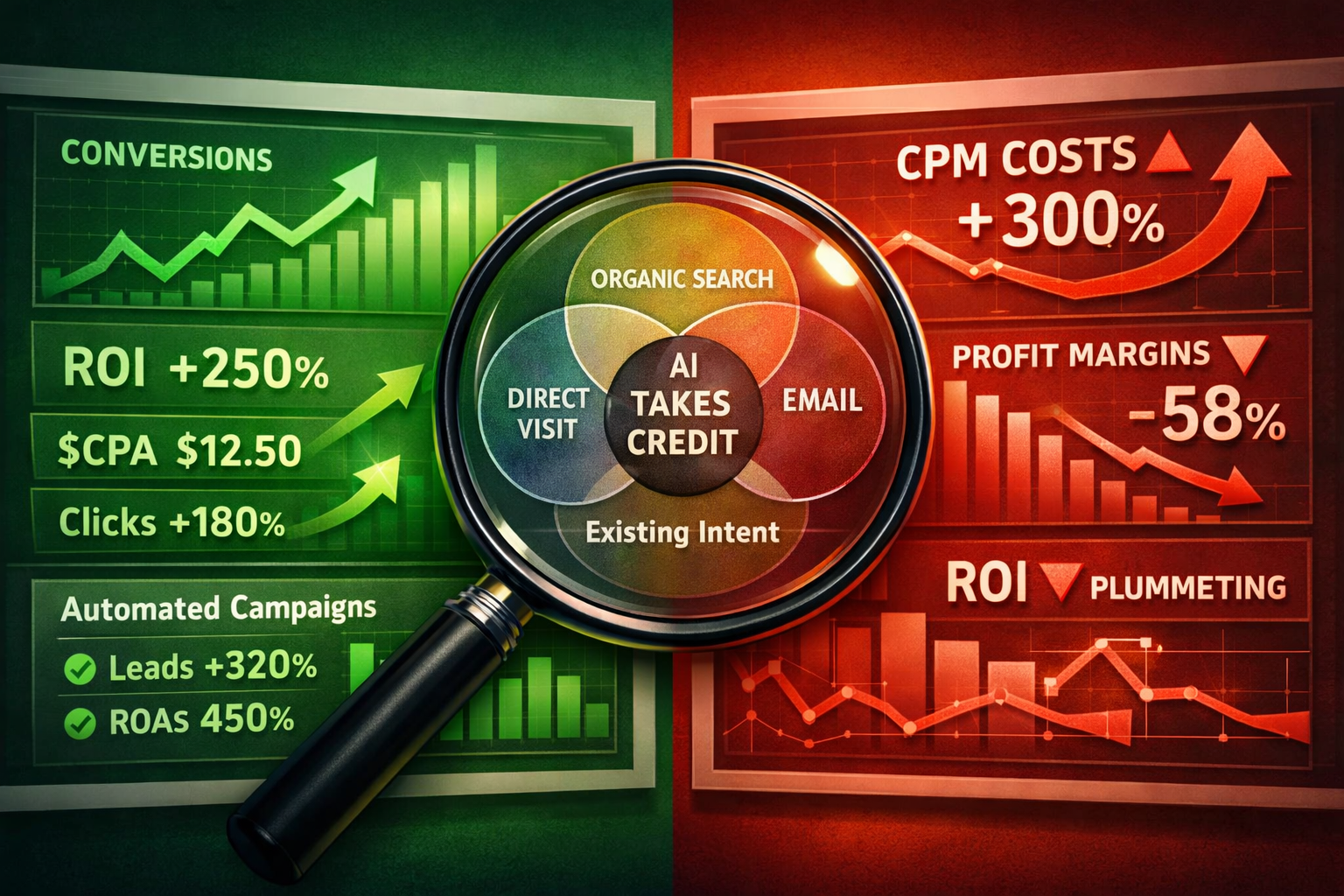
WARC research reveals a disturbing truth about automated advertising performance: heavily automated, retargeting-led strategies deliver minimal incremental lift despite strong reported efficiency metrics.[2] AI systems excel at claiming credit for conversions from users already close to purchase, making dashboards glow green while actual business impact stagnates.
| Metric Type | Dashboard Shows | Reality Reveals |
|---|---|---|
| Conversion Rate | ✅ Improving | Same users converting anyway |
| ROAS | ✅ Strong | Attribution bias inflating numbers |
| CPM Costs | ⚠️ Rising slowly | Accelerating across all advertisers |
| Incremental Lift | 📊 Not measured | Minimal to negative |
This creates a dangerous feedback loop where affiliate marketers optimize toward misleading signals, investing more in strategies that appear successful but deliver diminishing returns.
The Economics Behind the Collapse
As more advertisers adopt identical automated strategies, CPM inflation accelerates across Meta and Google within the same auctions. AI absorbs these increases by improving conversion rates, but underlying economics remain unchanged—incremental profit thins over time while dashboards stay reassuringly green.[2]
The numbers tell a stark story: OpenAI lost $11.5 billion in a single quarter (Q3 2025) and forecasts $115 billion in cumulative losses by 2029. These figures dwarf Amazon's early losses ($3 billion cumulative through 2004), making the profitability narrative increasingly implausible.[4]
The AI-Native Creative Flood: 7 Differentiation Tactics When AI-Generated Ads Collapse in Value
When everyone has access to the same AI tools generating millions of assets daily, differentiation requires strategic restraint rather than technological adoption. Here are seven proven tactics for maintaining competitive advantage as generic creative floods the market.
1. Develop Cultural Fluency Over Technical Proficiency 🎨
The Coca-Cola holiday campaign backlash in 2025 set a precedent: brands that lean too heavily into AI without sufficient quality control risk triggering consumer rejection comparable to that campaign.[3] The solution isn't avoiding AI—it's deploying it with cultural awareness.
Successful affiliates in 2026 understand that taste, restraint, and cultural relevance command pricing power. This means:
- Monitoring trending conversations and social sentiment before launching campaigns
- Understanding nuanced cultural contexts that AI tools miss
- Recognizing when generic AI output feels "off" to human audiences
- Investing time in cultural research rather than just prompt engineering
Those pursuing proven affiliate marketing strategies must recognize that cultural fluency now separates profitable campaigns from wasted spend.
2. Prioritize Data Quality as Your Core Differentiator 📊
By 2026, AI performance varies sharply based on data quality, not media tactics. This shift is driving continued investment in customer data platforms and clean rooms as brands strengthen signal foundations.[2]
"Paid media performance now reflects data maturity more than creative execution."
Practical steps for data quality differentiation:
- Audit first-party data collection: Ensure tracking captures genuine user intent, not just surface interactions
- Invest in customer data platforms: Centralize and clean data sources for AI training
- Implement privacy-compliant enrichment: Use AI-powered spreadsheet enrichment to enhance customer profiles
- Test incrementality regularly: Measure true lift beyond attribution bias
For those exploring data and analytics for AI marketing, clean foundational data now determines campaign success more than creative brilliance.
3. Establish Mandatory Human Oversight Protocols ✅
Key risks in 2026 include consumer backlash, brand damage from misaligned content, legal/copyright concerns, and quality control failures. Successful differentiation requires developing clear policies about transparency and deciding brand-by-brand when AI disclosure is appropriate.[3]
Human oversight framework:
- Pre-launch review: Every AI-generated asset reviewed by human editor
- Brand alignment checks: Ensure messaging matches established voice and values
- Cultural sensitivity screening: Flag potentially problematic content before publication
- Performance monitoring: Track sentiment and engagement for early warning signs
- Rapid response protocols: Prepared procedures for addressing backlash
This systematic approach prevents the hollow messaging that plagued Super Bowl LX advertisers while maintaining production efficiency.
4. Practice Strategic Restraint in Asset Deployment 🎯
When Google generates 70 million creative assets in a single quarter, the competitive advantage shifts to those who know what not to publish. Strategic restraint means:
- Deploying fewer, higher-quality assets rather than flooding channels
- Testing rigorously before scaling AI-generated content
- Maintaining consistent brand standards across all touchpoints
- Recognizing when human-created content provides better ROI
Affiliates mastering search engine optimization techniques understand that quality signals increasingly outweigh quantity in algorithm rankings.
5. Build Transparent Disclosure Frameworks 📢
Consumer sentiment research shows that negative reactions persist even when people cannot distinguish AI content from human work.[3] This perception-driven challenge requires proactive transparency rather than hiding AI usage.
Disclosure best practices:
- Decide disclosure policies brand-by-brand based on audience expectations
- Test different disclosure approaches to measure sentiment impact
- Use disclosure as a trust-building opportunity, not just compliance
- Educate audiences about AI's role in enhancing rather than replacing human creativity
6. Invest in Proprietary Training Data 💎
As AI markets remain fluid with no clear winner in 2026, competitive advantage comes from proprietary data that competitors cannot access. This means:
- Building unique datasets from customer interactions
- Developing specialized training sets for niche markets
- Creating feedback loops that improve AI performance over time
- Protecting data assets as core intellectual property
Those working with LLM-powered competitor analysis can leverage proprietary insights to train models that outperform generic alternatives.
7. Develop Taste Curation as a Competitive Skill 🌟
The most valuable skill in an AI-saturated market is curatorial taste—the ability to recognize what resonates with human audiences beyond technical quality metrics. This involves:
- Training teams to evaluate emotional impact, not just performance metrics
- Building aesthetic judgment through exposure to diverse creative work
- Understanding why certain messages connect while others fall flat
- Developing intuition about cultural moments and trending sensibilities
Affiliates who cultivate taste as a competitive advantage will command premium pricing as generic content becomes commoditized.
Implementing Differentiation Tactics in Your Affiliate Strategy
Translating these seven tactics into actionable affiliate marketing requires systematic implementation. Here's how to integrate The AI-Native Creative Flood: 7 Differentiation Tactics When AI-Generated Ads Collapse in Value into daily operations:
Audit Your Current AI Usage
Start by evaluating where AI currently contributes to your campaigns:
- Content generation: What percentage is AI-created versus human-crafted?
- Performance attribution: Are you measuring true incremental lift?
- Quality control: What oversight processes exist before publication?
- Data foundations: How clean and proprietary is your training data?
This baseline assessment reveals opportunities for differentiation.
Build a Hybrid Workflow
The most successful 2026 affiliates combine AI efficiency with human judgment:
- AI generates initial assets at scale
- Human curators select based on cultural relevance and taste
- Editors refine messaging for brand alignment
- Analysts measure true incremental performance
- Teams iterate based on genuine business impact
This workflow maintains production velocity while ensuring quality standards that generic AI cannot match.
Focus on Niche Expertise
As broad AI tools become commoditized, niche-specific expertise provides differentiation. Deep knowledge in specialized markets allows you to:
- Recognize subtle cultural nuances AI misses
- Build proprietary datasets competitors lack
- Develop taste specific to your audience
- Command premium pricing for specialized insight
The Future of AI in Advertising: What 2026 Reveals
ChatGPT adoption plateaus provide important context: nearly 30% of internet users will use ChatGPT in 2026, expected to rise to only 35% by 2029.[1] This growth rate underscores limits on how quickly AI platforms can expand, despite investor expectations driving massive valuations.
The advertising industry faces a similar reality check. While AI tools will continue improving technically, the value proposition shifts from adoption to differentiation. Those who recognized this early and built competitive moats around cultural fluency, data quality, and curatorial taste will thrive.
For affiliates exploring how to succeed in affiliate marketing, 2026 marks the transition from "Are you using AI?" to "How are you using AI differently?"
Platform Evolution and Competitive Dynamics
The AI market remains fluid with no clear winner. This uncertainty creates opportunities for agile affiliates who can:
- Test emerging platforms before competitors
- Build platform-agnostic skills that transfer across tools
- Maintain flexibility as the landscape evolves
- Avoid over-investing in any single AI vendor
Conclusion: Thriving When AI-Generated Ads Collapse in Value
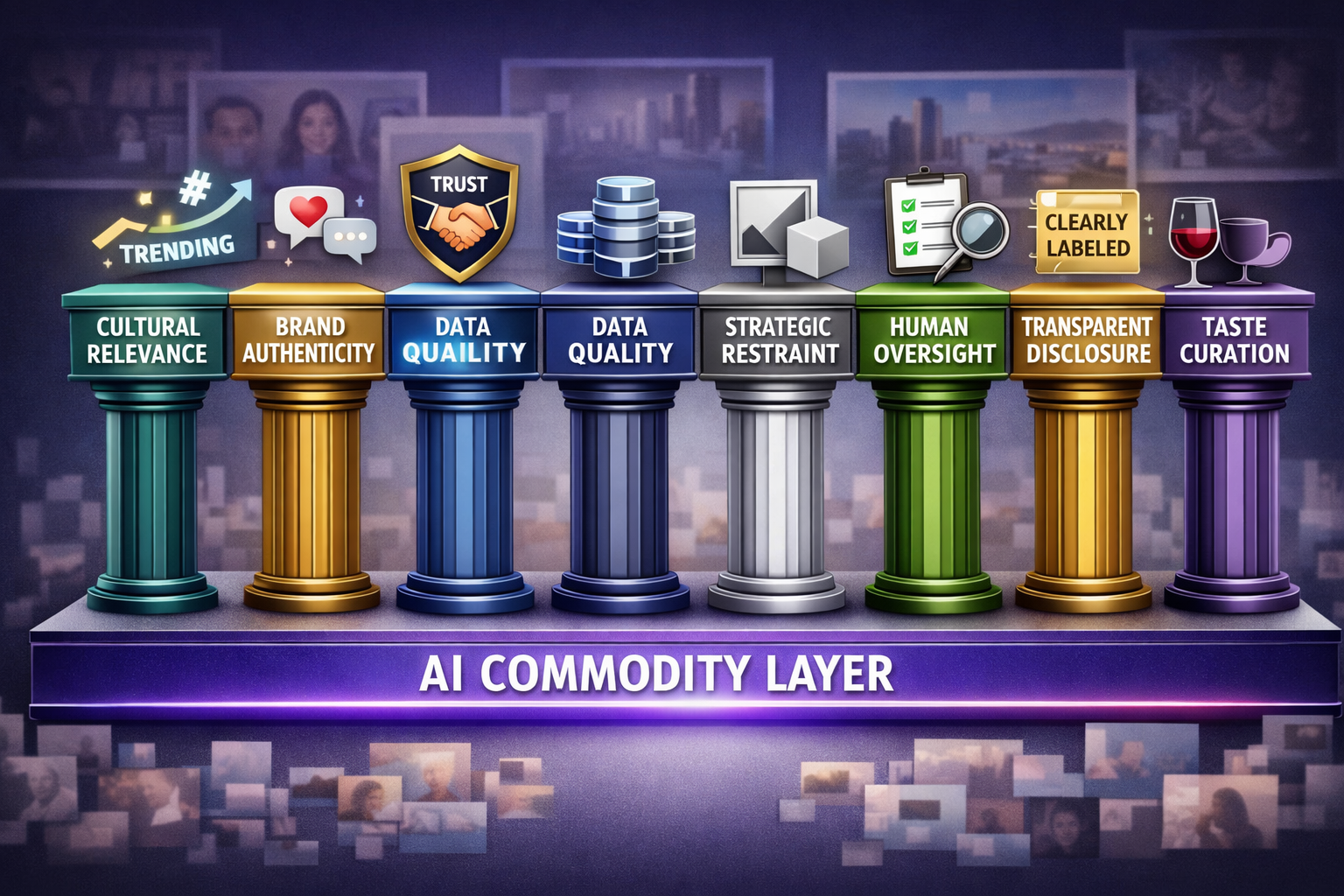
The AI-Native Creative Flood: 7 Differentiation Tactics When AI-Generated Ads Collapse in Value represents the defining challenge for marketers in 2026 and beyond. As Google generates 70 million creative assets quarterly and 91% of agencies adopt AI tools, competitive advantage no longer comes from technology access—it comes from strategic restraint, cultural fluency, and proprietary data.
The Super Bowl LX messaging crisis revealed what happens when AI adoption outpaces strategic thinking: hollow content that scores in the bottom 3% for likeability despite technical proficiency. Attribution bias masks this performance decay, creating dangerous feedback loops where dashboards glow green while actual business impact stagnates.
Your Action Plan 🚀
- Audit current AI usage and measure true incremental lift beyond attribution bias
- Invest in data quality as your primary competitive differentiator
- Establish human oversight protocols to prevent brand damage and maintain authenticity
- Develop curatorial taste as a core team competency
- Build proprietary training data that competitors cannot access
- Practice strategic restraint in asset deployment—quality over quantity
- Create transparent disclosure frameworks that build trust rather than hide AI usage
The affiliates who thrive in this environment will be those who recognize that AI is a commodity tool, not a competitive advantage. True differentiation comes from understanding taste, restraint, and cultural relevance—uniquely human skills that command pricing power when "good enough" creative becomes free.
Start implementing these seven tactics today to position yourself for sustainable success as the AI-native creative flood continues rising throughout 2026 and beyond.
References
[1] Super Bowl Revealed Ai Messaging Crisis – https://www.adweek.com/brand-marketing/super-bowl-revealed-ai-messaging-crisis/
[2] The Ai Bubble In Paid Media Will It Continue To Float Or Finally Burst In 2026 – https://www.crealytics.com/blog/the-ai-bubble-in-paid-media-will-it-continue-to-float-or-finally-burst-in-2026
[3] Ai Takes Center Stage At Super Bowl Lx Why 2026 Is The Year Of Real Adoption In Creative Advertising – https://www.adventureppc.com/blog/ai-takes-center-stage-at-super-bowl-lx-why-2026-is-the-year-of-real-adoption-in-creative-advertising
[4] This Years Super Bowl Ads Are Telling You The Ai Bubble Is About To Burst – https://www.morningstar.com/news/marketwatch/20260208154/this-years-super-bowl-ads-are-telling-you-the-ai-bubble-is-about-to-burst