

The affiliate marketing landscape has transformed dramatically in 2026, with voice-first interactions becoming the new frontier for customer engagement. Voice AI Engagement for Affiliates: Optimizing Natural Language Offers in Twilio and Intercom 2026 represents a paradigm shift in how marketers connect with audiences, moving beyond traditional text-based campaigns to conversational experiences that feel natural, immediate, and highly personalized. As consumers increasingly expect instant, voice-enabled support across multiple channels, affiliates who master these technologies gain a significant competitive advantage.
Key Takeaways
- ConversationRelay technology orchestrates real-time AI conversations through Twilio, reducing latency and creating natural-sounding voice interactions for affiliate offers
- Intent detection powered by large language models enables affiliates to deliver contextually relevant product recommendations during voice conversations
- WhatsApp voice integration with Click-to-Ad campaigns delivers 2x higher conversion rates compared to traditional messaging channels
- Cost-effective pricing models range from $0.0085/minute for basic calls to bundled packages at $349/month for predictable affiliate budgets
- 24/7 automated lead qualification through voice AI agents maximizes conversion opportunities while reducing operational overhead
Understanding Voice AI Architecture for Affiliate Marketing
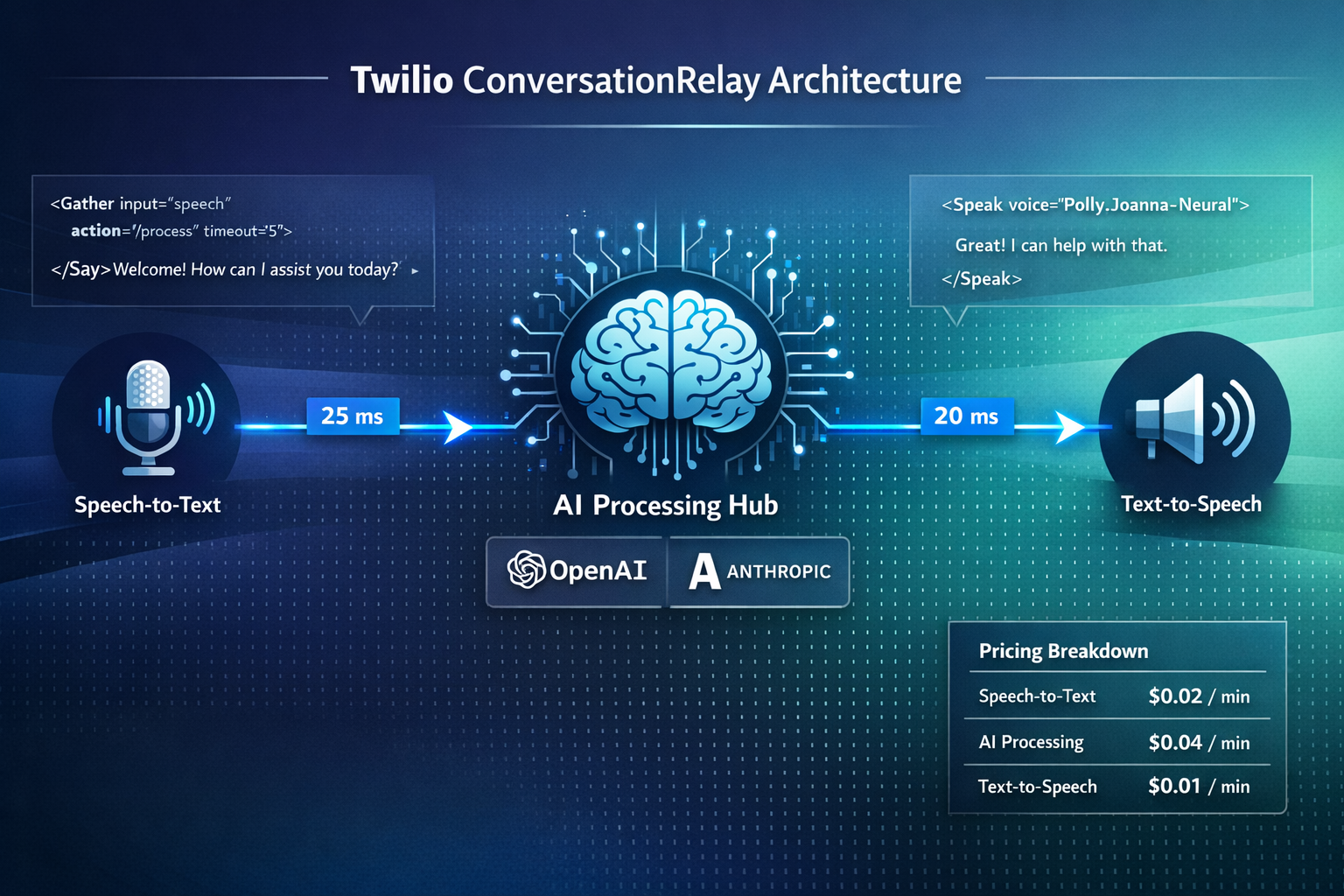
The foundation of Voice AI Engagement for Affiliates: Optimizing Natural Language Offers in Twilio and Intercom 2026 lies in understanding how modern conversational platforms process and respond to natural language. Twilio's ConversationRelay serves as the orchestration layer that manages the complex dance between speech recognition, artificial intelligence processing, and voice synthesis[1].
How ConversationRelay Works
ConversationRelay eliminates the robotic pauses and disconnected experiences that plagued earlier voice AI implementations. The system maintains a single, persistent connection that handles:
- Speech-to-text conversion in real-time
- LLM processing through integrated models from OpenAI, Mistral, or Anthropic
- Text-to-speech synthesis with natural-sounding voices
- Context preservation across multi-turn conversations[1]
For affiliates, this architecture means prospects can ask follow-up questions, request clarifications, and receive personalized product recommendations without experiencing frustrating delays or having to repeat information.
TwiML: The Foundation for Call Automation
TwiML (Twilio Markup Language) provides the scripting foundation that affiliates need to automate voice interactions. This XML-based language allows marketers to design conversation flows that guide prospects through qualification questions, product discovery, and offer presentation without requiring extensive programming knowledge[1].
Those new to affiliate marketing opportunities will find TwiML's accessibility particularly valuable, as it lowers the technical barrier to implementing sophisticated voice campaigns.
Implementing Natural Language Offer Delivery
The true power of Voice AI Engagement for Affiliates: Optimizing Natural Language Offers in Twilio and Intercom 2026 emerges when affiliates move beyond scripted responses to dynamic, intent-driven conversations. Modern voice AI systems analyze prospect statements in real-time to detect purchase intent, pain points, and product preferences.
Intent Detection and Product Matching
Large language models integrated with Twilio can identify subtle buying signals within natural conversation. For example, when a prospect mentions "looking for something to help with productivity," the AI can:
- Classify the intent (productivity improvement)
- Query product databases for relevant affiliate offers
- Generate personalized recommendations in conversational language
- Handle objections with contextually appropriate responses
This approach significantly outperforms traditional IVR systems that force prospects into rigid menu structures. Affiliates promoting high-ticket affiliate marketing products particularly benefit from this natural interaction style, as complex offerings require nuanced explanation.
Seamless Offer Integration
The most effective voice AI implementations weave affiliate offers naturally into conversations rather than interrupting with obvious sales pitches. Best practices include:
- Context-aware timing that introduces offers after establishing rapport
- Value-first positioning that emphasizes problem-solving over product features
- Multiple touchpoint design that allows prospects to request more information via text or email
- Transparent disclosure of affiliate relationships to maintain trust
WhatsApp Voice Integration: A Game-Changer for Affiliates
WhatsApp's integration with Twilio has created unprecedented opportunities for Voice AI Engagement for Affiliates: Optimizing Natural Language Offers in Twilio and Intercom 2026. The platform's Click-to-WhatsApp advertising feature enables high-intent prospects to transition seamlessly from social media ads to voice conversations[2].
The Click-to-WhatsApp Advantage
Research from Universidad UK demonstrates the power of this channel, reporting a 1.5-point lift in lead reply rates and 2x higher conversion compared to other advertising sources[2]. The key advantages include:
📱 Unified conversation thread that maintains context across text and voice
⏰ 72-hour fee-free window for user-initiated conversations from ads
🎯 High-intent audience already familiar with the brand from ad exposure
📊 Attribution tracking through Meta's ReferralCtwaClid parameter
For those learning how to do affiliate marketing, this integrated approach simplifies the customer journey while providing clear ROI metrics.
Conversion Tracking and Attribution
Twilio's WhatsApp webhook now includes ReferralCtwaClid (Meta's click ID), enabling precise attribution tracking. Affiliates can integrate this data with Segment and Meta's Conversions API to:
- Optimize ad targeting based on voice conversation outcomes
- Calculate true cost-per-acquisition including voice interaction costs
- Identify which ad creatives drive the most engaged voice conversations
- Refine offer positioning based on conversation analysis[2]
This level of attribution was impossible with traditional phone-based affiliate campaigns, making voice AI a measurable, optimizable channel.
Cost Structures and ROI Optimization
Understanding the economics of Voice AI Engagement for Affiliates: Optimizing Natural Language Offers in Twilio and Intercom 2026 is essential for building profitable campaigns. Twilio operates on a variable pricing model, while alternative platforms offer bundled packages[1].
Twilio Pricing Breakdown (March 2026)
| Service Component | Cost per Minute |
|---|---|
| Inbound Calls | $0.0085 |
| ConversationRelay | $0.0700 |
| Language Operator | $0.0040 |
| Total per Minute | $0.0825 |
For a 5-minute conversation, affiliates pay approximately $0.41 per prospect interaction. When promoting products with $100+ commissions, this represents a highly cost-effective acquisition channel[1].
Alternative Pricing Models
Platforms like Ringly offer bundled pricing that provides cost predictability:
- Grow Plan: $349/month for 1,000 minutes ($0.349 per minute)
- Unlimited conversations within minute allocation
- Predictable monthly budgeting for affiliate campaigns[1]
Affiliates should calculate their average conversation length and conversion rate to determine which pricing model optimizes profitability. Those focused on affiliate marketing programs with lower commission structures may prefer per-minute pricing, while high-ticket promoters benefit from unlimited plans.
Lead Qualification and Routing Strategies
Voice AI agents excel at lead qualification and routing, handling the time-consuming process of screening prospects before human follow-up. This capability proves particularly valuable for affiliates managing multiple offers or working with merchant partners who require qualified leads[1].
Automated Qualification Workflows
Effective voice AI qualification systems ask strategic questions that assess:
✅ Budget availability through conversational inquiry
✅ Timeline urgency to prioritize hot leads
✅ Decision-making authority for B2B offers
✅ Specific pain points that match product solutions
✅ Previous solution attempts to position differentiation
The AI scores responses in real-time, routing high-quality prospects to immediate human follow-up while nurturing lower-intent leads through automated sequences. This approach maximizes the value of affiliate traffic while reducing wasted effort on unqualified prospects.
24/7 Availability Advantage
Unlike human-staffed call centers, voice AI agents provide round-the-clock availability that captures international traffic and after-hours prospects. For affiliates driving traffic through SEO for affiliate marketing, this ensures no lead goes unanswered regardless of time zone or traffic surge timing[1].
Building Trust Through Conversational AI
The future of customer engagement in 2026 emphasizes continuous, trust-driven relationships rather than isolated transactions[5]. Voice AI enables affiliates to build this trust through consistent, helpful interactions that prioritize prospect needs over immediate sales.
Trust-Building Best Practices
🗣️ Transparent AI disclosure: Inform prospects they're speaking with an AI assistant
🎯 Value-first conversations: Provide useful information before introducing offers
🔒 Data privacy assurance: Clearly explain how conversation data is used
📞 Human escalation options: Always offer the ability to speak with a person
📝 Follow-up transparency: Set clear expectations for next steps
Those concerned about whether affiliate marketing is legitimate should recognize that transparent, value-driven voice AI interactions actually enhance credibility compared to aggressive traditional sales tactics.
Integration with Existing Affiliate Systems
Successful Voice AI Engagement for Affiliates: Optimizing Natural Language Offers in Twilio and Intercom 2026 requires seamless integration with existing marketing technology stacks. Modern platforms provide APIs and webhooks that connect voice interactions with:
- CRM systems for lead management and follow-up tracking
- Email marketing platforms for multi-channel nurture sequences
- Analytics dashboards for conversion funnel visualization
- Affiliate networks for automated commission tracking
- Payment processors for direct transaction handling
Twilio's Partner Program offers technical expertise and support for building these integrations, making it accessible even for affiliates without extensive development resources[8].
Advanced Strategies for 2026 and Beyond
As voice AI technology matures, forward-thinking affiliates are implementing advanced strategies that maximize Voice AI Engagement for Affiliates: Optimizing Natural Language Offers in Twilio and Intercom 2026:
Multi-Channel Voice Orchestration
Rather than treating voice as an isolated channel, successful affiliates orchestrate voice interactions across:
- Inbound phone calls from traditional advertising
- WhatsApp voice from social media campaigns
- Website voice widgets for real-time engagement
- SMS-to-voice escalation for high-intent prospects
This omnichannel approach ensures prospects can engage through their preferred medium while maintaining conversation context across touchpoints.
Conversation Intelligence and Optimization
Advanced affiliates analyze voice conversation transcripts to identify:
📊 Common objection patterns requiring script refinement
💡 Successful persuasion techniques to replicate
🎯 Product-market fit signals for offer selection
⚡ Optimal conversation length for conversion
🔄 Drop-off points indicating friction in the flow
This data-driven approach enables continuous improvement of voice AI performance, similar to how successful marketers optimize digital marketing campaigns through A/B testing.
AI-Powered Personalization at Scale
The most sophisticated implementations use voice AI to deliver hyper-personalized experiences by:
- Accessing CRM data during conversations to reference past interactions
- Analyzing voice tone to detect emotional state and adjust approach
- Customizing offer presentation based on demographic and behavioral data
- Generating unique follow-up sequences tailored to conversation outcomes
This level of personalization was previously impossible at scale, giving voice AI adopters a significant competitive advantage in crowded affiliate markets.
Avoiding Common Implementation Pitfalls
While the opportunities are substantial, affiliates should be aware of common mistakes when implementing Voice AI Engagement for Affiliates: Optimizing Natural Language Offers in Twilio and Intercom 2026. Many of these mirror the common affiliate marketing mistakes that plague traditional campaigns:
⚠️ Over-scripting conversations that sound robotic and inauthentic
⚠️ Neglecting call quality testing across different devices and networks
⚠️ Insufficient training data for intent recognition accuracy
⚠️ Ignoring compliance requirements for recorded conversations
⚠️ Failing to monitor AI responses for accuracy and appropriateness
Regular quality assurance reviews and prospect feedback collection help identify and correct these issues before they impact conversion rates.
Measuring Success: Key Performance Indicators
Effective measurement distinguishes profitable voice AI implementations from expensive experiments. Critical KPIs for Voice AI Engagement for Affiliates: Optimizing Natural Language Offers in Twilio and Intercom 2026 include:
| Metric | Target Range | Optimization Focus |
|---|---|---|
| Conversation Completion Rate | 70-85% | Engagement quality |
| Average Conversation Length | 3-7 minutes | Efficiency balance |
| Lead Qualification Rate | 40-60% | Screening effectiveness |
| Cost Per Qualified Lead | Varies by niche | Economic viability |
| Voice-to-Conversion Rate | 15-30% | Offer relevance |
| Customer Satisfaction Score | 4.0+ / 5.0 | Experience quality |
Tracking these metrics enables data-driven optimization and justifies continued investment in voice AI infrastructure.
The Future of Voice AI in Affiliate Marketing
The trajectory of Voice AI Engagement for Affiliates: Optimizing Natural Language Offers in Twilio and Intercom 2026 points toward increasingly sophisticated implementations. Emerging trends include:
🚀 Multilingual voice AI expanding global reach without language barriers
🧠 Emotion recognition enabling empathetic response adjustment
🔗 Blockchain-based attribution for transparent commission tracking
🎮 Voice commerce integration allowing direct purchases within conversations
📱 Wearable device support reaching prospects through smartwatches and earbuds
Affiliates who establish voice AI capabilities now position themselves to capitalize on these emerging opportunities as they mature. The introduction to AI in marketing provides additional context on broader AI trends shaping the industry.
Conclusion
Voice AI Engagement for Affiliates: Optimizing Natural Language Offers in Twilio and Intercom 2026 represents more than a technological upgrade—it's a fundamental reimagining of how affiliates connect with prospects. By leveraging ConversationRelay architecture, WhatsApp integration, and intelligent intent detection, marketers can deliver personalized, conversational experiences that build trust while driving conversions.
The economics are compelling, with per-minute costs under $0.10 enabling profitable campaigns across diverse commission structures. The 24/7 availability, instant response times, and seamless multi-channel orchestration provide competitive advantages that traditional methods cannot match.
Next Steps for Implementation
- Audit your current affiliate offers to identify those best suited for voice interaction
- Create a Twilio account and explore ConversationRelay capabilities through their sandbox environment
- Design your first conversation flow using TwiML, focusing on one high-value offer
- Implement basic intent detection using pre-built LLM integrations
- Test with small traffic volumes to refine scripts and optimize conversion paths
- Scale successful implementations while continuously monitoring KPIs and iterating
The affiliates who master voice AI engagement in 2026 will dominate their niches through superior customer experiences and conversion rates. The technology is accessible, the economics are favorable, and the competitive advantage is substantial. The question is not whether to implement voice AI, but how quickly you can begin capturing the benefits.
Start small, test rigorously, and scale what works. The future of affiliate marketing is conversational—and that future is now.
References
[1] Twilio Voice Ai Agent For Ecommerce – https://www.ringly.io/blog/twilio-voice-ai-agent-for-ecommerce
[2] 2026 Guide To Create Ads That Click To Whatsapp With Twilio – https://www.twilio.com/en-us/blog/products/2026-guide-to-create-ads-that-click-to-whatsapp-with-twilio
[4] Twilio Ai Startup Searchlight 2025 – https://www.twilio.com/en-us/lp/twilio-ai-startup-searchlight-2025
[5] Future Of Customer Engagement How Customers Win In 2026 – https://www.twilio.com/en-us/blog/insights/future-of-customer-engagement-how-customers-win-in-2026
[8] Become A Partner – https://www.twilio.com/en-us/partners/become-a-partner